Centre for Haemato-Oncology, Barts Cancer Institute, Queen Mary University of London, London, UK.
Department of Physiology and Croatian Institute for Brain Research, University of Zagreb School of Medicine, Zagreb, Croatia.
Leukemia. 2024 Nov;38(11):2395-2409. doi: 10.1038/s41375-024-02390-9. Epub 2024 Aug 26.
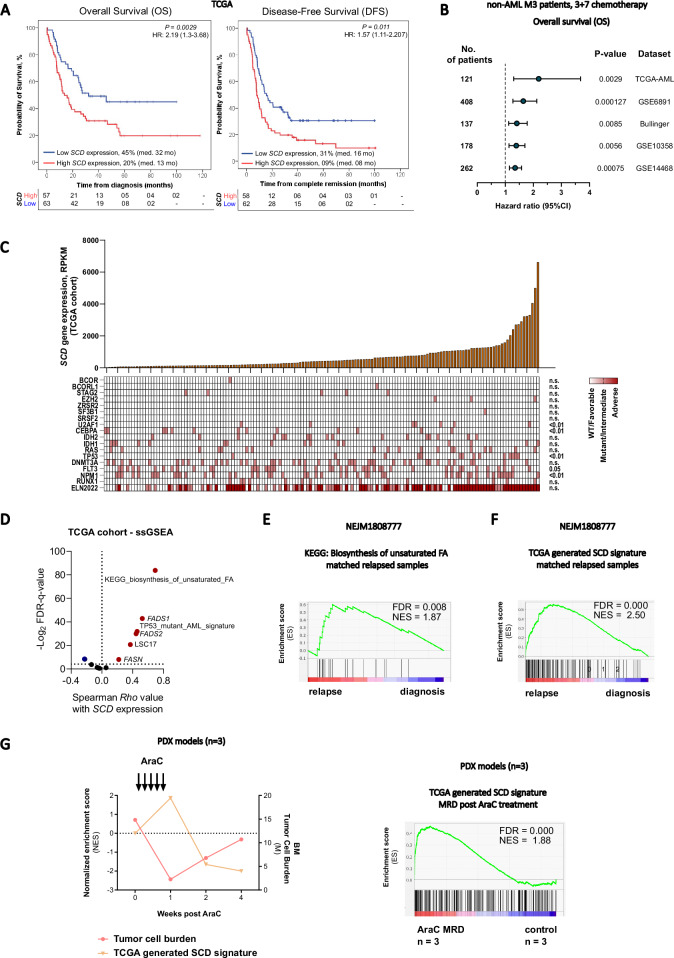
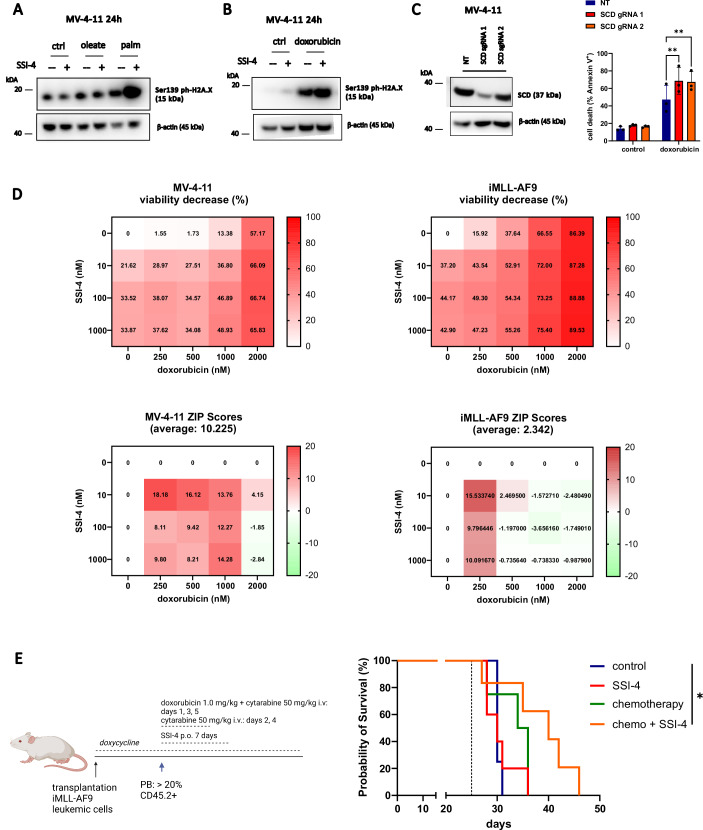
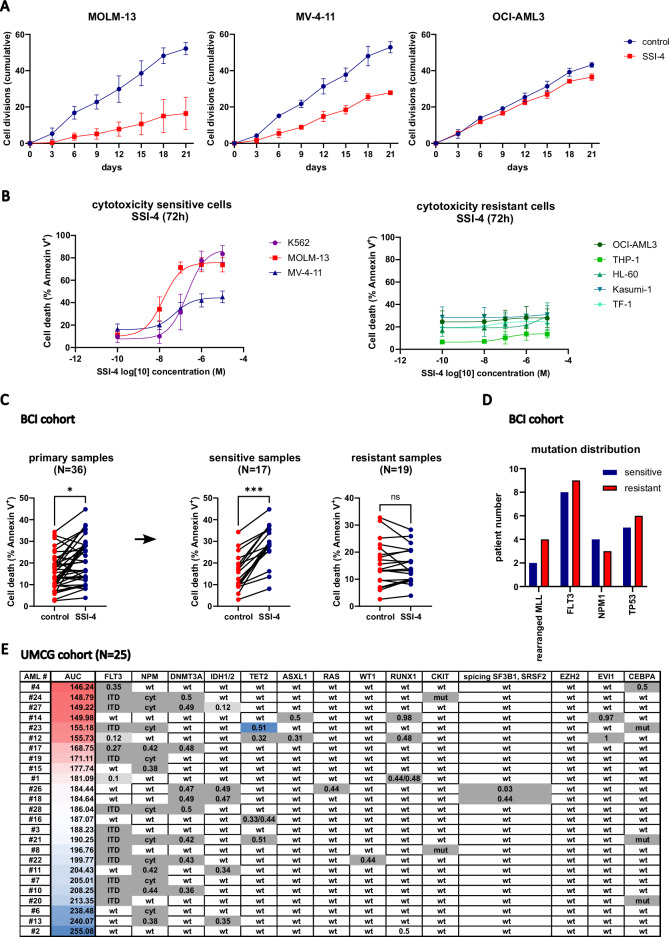
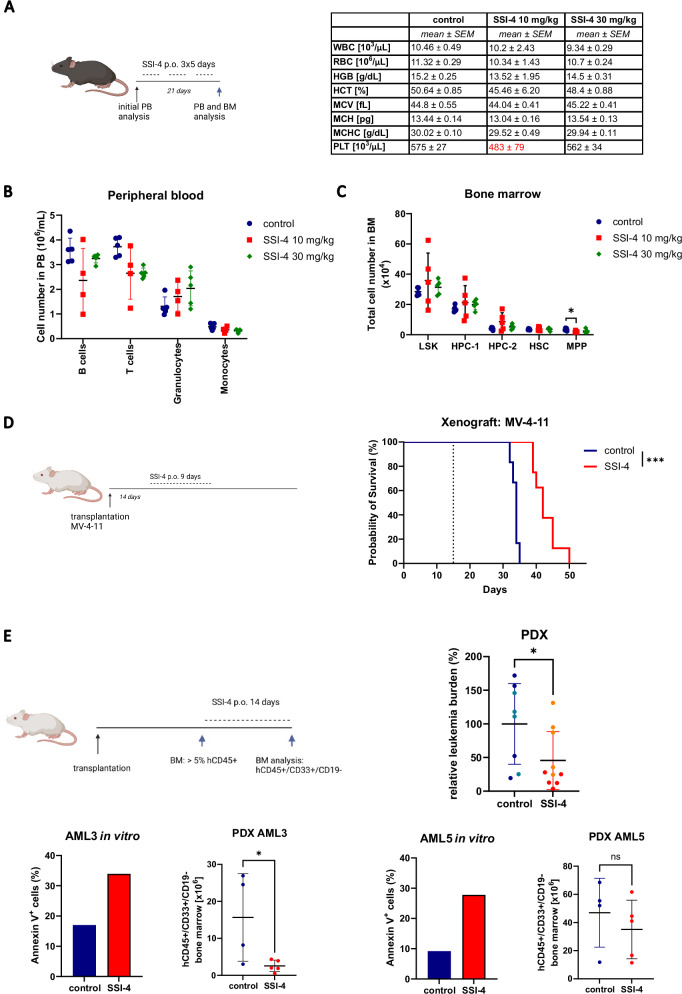
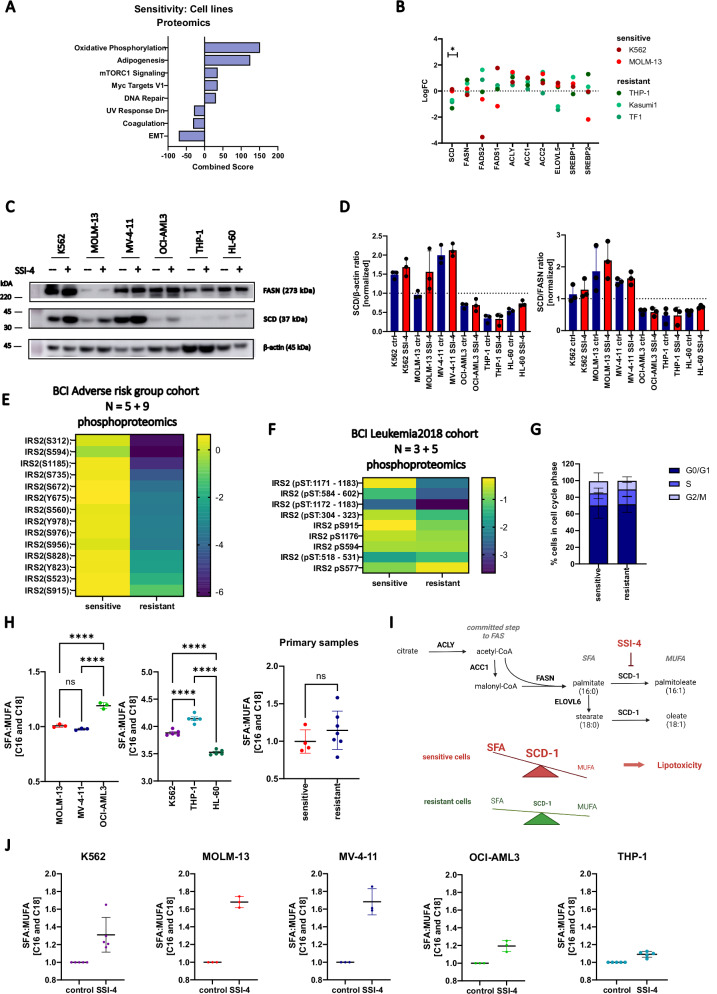
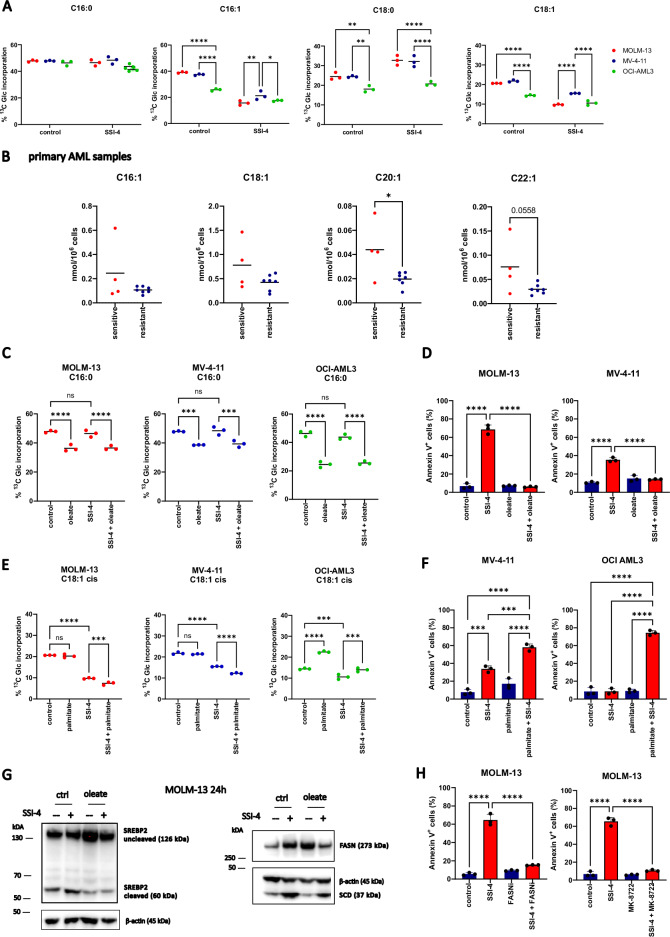
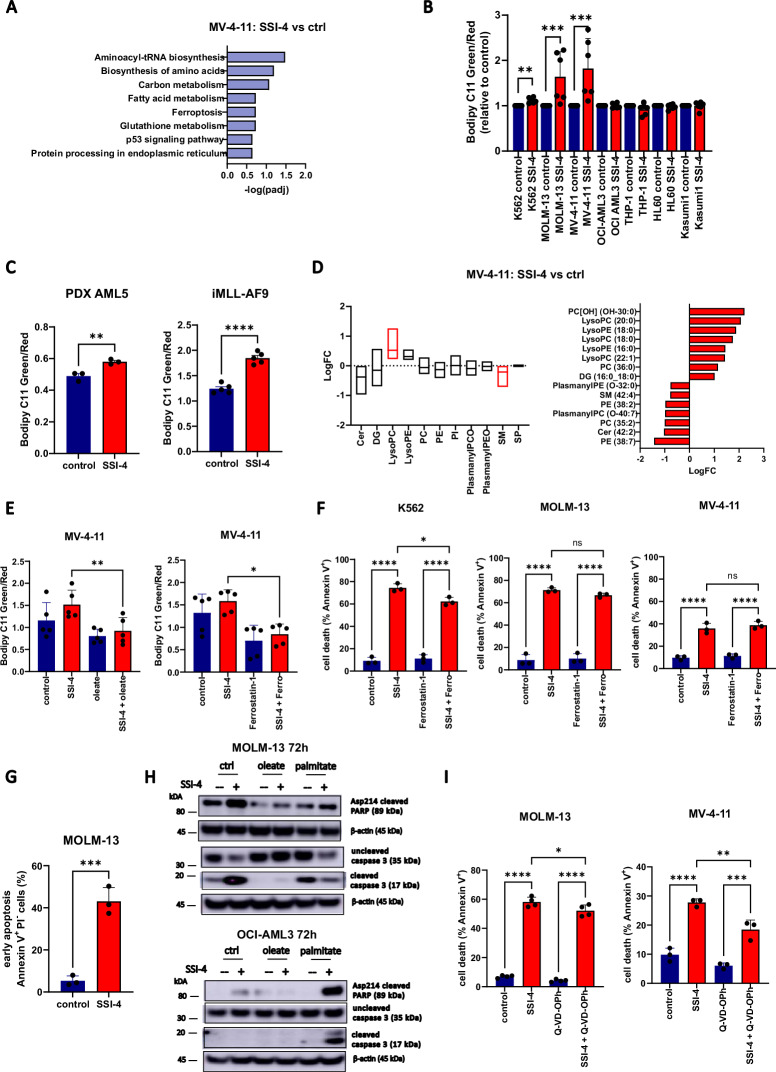
Identification of specific and therapeutically actionable vulnerabilities, ideally present across multiple mutational backgrounds, is needed to improve acute myeloid leukemia (AML) patients' outcomes. We identify stearoyl-CoA desaturase (SCD), the key enzyme in fatty acid (FA) desaturation, as prognostic of patients' outcomes and, using the clinical-grade inhibitor SSI-4, show that SCD inhibition (SCDi) is a therapeutic vulnerability across multiple AML models in vitro and in vivo. Multiomic analysis demonstrates that SCDi causes lipotoxicity, which induces AML cell death via pleiotropic effects. Sensitivity to SCDi correlates with AML dependency on FA desaturation regardless of mutational profile and is modulated by FA biosynthesis activity. Finally, we show that lipotoxicity increases chemotherapy-induced DNA damage and standard chemotherapy further sensitizes AML cells to SCDi. Our work supports developing FA desaturase inhibitors in AML while stressing the importance of identifying predictive biomarkers of response and biologically validated combination therapies to realize their full therapeutic potential.
需要鉴定具有特异性和治疗作用的弱点,理想情况下这些弱点应存在于多种突变背景中,以改善急性髓系白血病(AML)患者的预后。我们确定硬脂酰辅酶 A 去饱和酶(SCD)是脂肪酸(FA)去饱和的关键酶,它可以预测患者的预后,并且使用临床级抑制剂 SSI-4 表明,SCD 抑制(SCDi)是体外和体内多种 AML 模型的治疗弱点。多组学分析表明,SCDi 导致脂肪毒性,通过多效性作用诱导 AML 细胞死亡。对 SCDi 的敏感性与 AML 对 FA 去饱和的依赖性相关,而与突变特征无关,并受 FA 生物合成活性的调节。最后,我们表明脂肪毒性会增加化疗引起的 DNA 损伤,并且标准化疗会进一步使 AML 细胞对 SCDi 敏感。我们的工作支持在 AML 中开发 FA 去饱和酶抑制剂,同时强调确定反应预测性生物标志物和经过生物学验证的联合治疗方案的重要性,以充分发挥其治疗潜力。