Hoyberghs Jente, Coppens Axelle, Bars Chloé, Van Ginneken Chris, Foubert Kenn, Van Cruchten Steven
Comparative Perinatal Development, Department of Veterinary Sciences, University of Antwerp, Wilrijk, Belgium.
Natural Products & Food Research and Analysis-Pharmaceutical Technology (NatuRAPT), Department of Pharmaceutical Sciences, University of Antwerp, Wilrijk, Belgium.
Curr Res Toxicol. 2024 Jul 11;7:100186. doi: 10.1016/j.crtox.2024.100186. eCollection 2024.
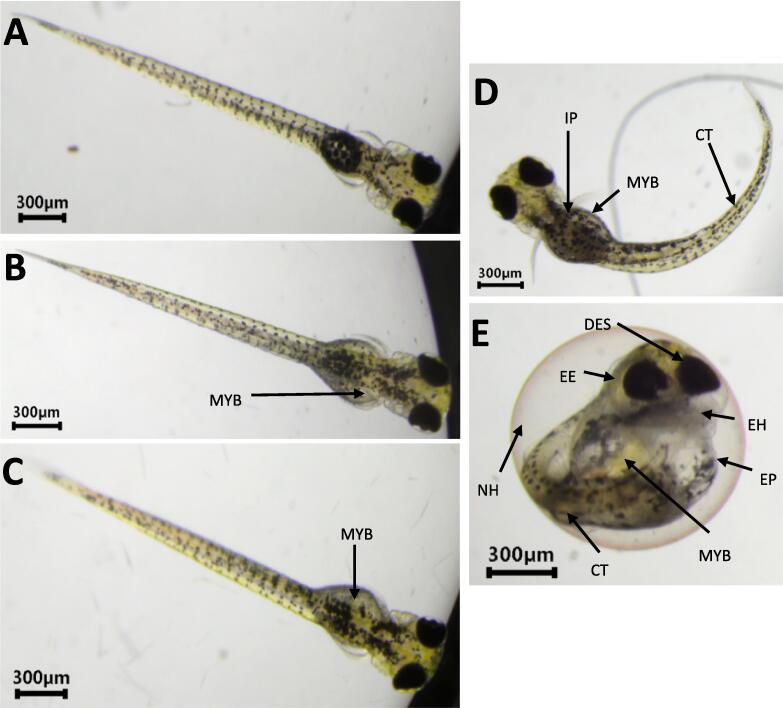
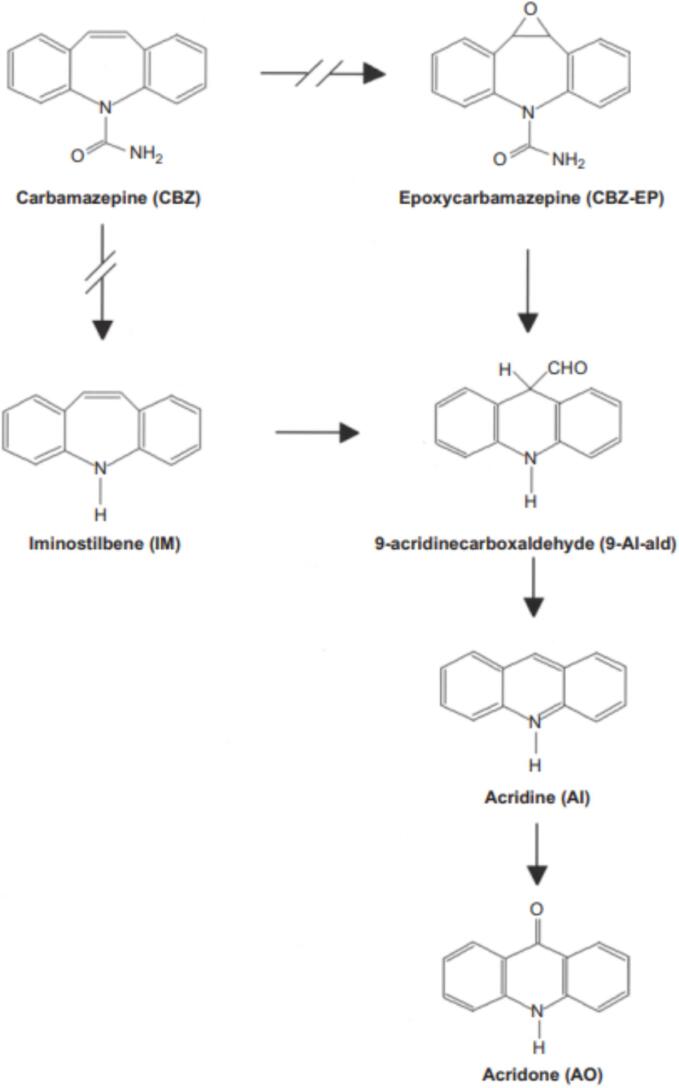
Zebrafish embryo-based assays are a promising alternative for animal testing to screen new compounds for developmental toxicity. However, recent studies in zebrafish embryos showed an immature intrinsic cytochrome P450 (CYP)-mediated biotransformation capacity, as most CYPs were only active at the end of the organogenesis period. Data on other phase I enzymes involved in the biotransformation of xenobiotics in zebrafish embryos is limited. This information is pivotal for proteratogens needing bioactivation to exert their teratogenic potential. Therefore, this study aimed to investigate whether carbamazepine (CBZ) and levetiracetam (LTC), two anti-epileptic drugs that require bioactivation to exert their teratogenic potential, are biotransformed into non-CYP mediated metabolites in the zebrafish embryo and whether one or more of these metabolites cause developmental toxicity in this species. In the first step, zebrafish embryos were exposed to LTC and CBZ and their non-CYP mediated human metabolites, etiracetam carboxylic acid (ECA) and 9-acridine carboxaldehyde (9ACA), acridine (AI), and acridone (AO), respectively, from 5.25 to 120 hpf and morphologically evaluated. Next, the uptake of all compounds and the formation of the metabolites were assessed using LC-MS methods. As LTC and ECA were, respectively, poorly or not taken up by zebrafish larvae during the exposure experiments, we could not determine if LTC and ECA are teratogenic. However, biotransformation of LTC into ECA was observed at 24 hpf and 120 hpf, which indicates that the special type of B-esterase is already active at 24 hpf. CBZ and its three metabolites were teratogenic, as a significant increase in malformed embryos was observed for all of them. All three metabolites were more potent teratogens than CBZ, with AI being the most potent, followed by 9ACA and AO. The myeloperoxidase (MPO) homologue is already active at 24 hpf, as CBZ was biotransformed into 9ACA and AO in 24 hpf zebrafish embryos, and into 9ACA in 120 hpf larvae. Moreover, 9ACA was also found to be biotransformed into AI and AO, and AI into AO. As such, one or more of these metabolites probably contribute to the teratogenic effects observed in zebrafish larvae after exposure to CBZ.
基于斑马鱼胚胎的试验是动物试验的一种有前景的替代方法,用于筛选具有发育毒性的新化合物。然而,最近对斑马鱼胚胎的研究表明,其内在的细胞色素P450(CYP)介导的生物转化能力不成熟,因为大多数CYP仅在器官发生期结束时才具有活性。关于斑马鱼胚胎中参与外源化合物生物转化的其他I相酶的数据有限。这些信息对于需要生物活化以发挥其致畸潜力的前致畸剂至关重要。因此,本研究旨在调查卡马西平(CBZ)和左乙拉西坦(LTC)这两种需要生物活化以发挥其致畸潜力的抗癫痫药物是否在斑马鱼胚胎中被生物转化为非CYP介导的代谢物,以及这些代谢物中的一种或多种是否会对该物种造成发育毒性。第一步,将斑马鱼胚胎分别从受精后5.25小时至120小时暴露于LTC、CBZ及其非CYP介导的人类代谢物乙拉西坦羧酸(ECA)、9-吖啶甲醛(9ACA)、吖啶(AI)和吖啶酮(AO),并进行形态学评估。接下来,使用液相色谱-质谱法评估所有化合物的摄取和代谢物的形成。由于在暴露实验期间斑马鱼幼虫对LTC和ECA的摄取分别很差或未摄取,我们无法确定LTC和ECA是否具有致畸性。然而,在受精后24小时和120小时观察到LTC生物转化为ECA,这表明特定类型的B-酯酶在受精后24小时就已经具有活性。CBZ及其三种代谢物具有致畸性,因为观察到它们都会使畸形胚胎显著增加。所有三种代谢物的致畸性都比CBZ更强,其中AI最强,其次是9ACA和AO。髓过氧化物酶(MPO)同源物在受精后24小时就已经具有活性,因为CBZ在受精后24小时的斑马鱼胚胎中被生物转化为9ACA和AO,在受精后120小时的幼虫中被生物转化为9ACA。此外还发现,9ACA也被生物转化为AI和AO,AI被转化为AO。因此,这些代谢物中的一种或多种可能导致斑马鱼幼虫在暴露于CBZ后出现致畸效应。