Mahmood Shahid, Sun Huaping, Ali Alhussan Amel, Iqbal Asifa, El-Kenawy El-Sayed M
School of Finance and Economics, Jiangsu University, Zhenjiang, China.
School of Economics and Management, University of Science and Technology Beijing, Beijing, 100083, China.
Sci Rep. 2024 Aug 27;14(1):19894. doi: 10.1038/s41598-024-70729-4.
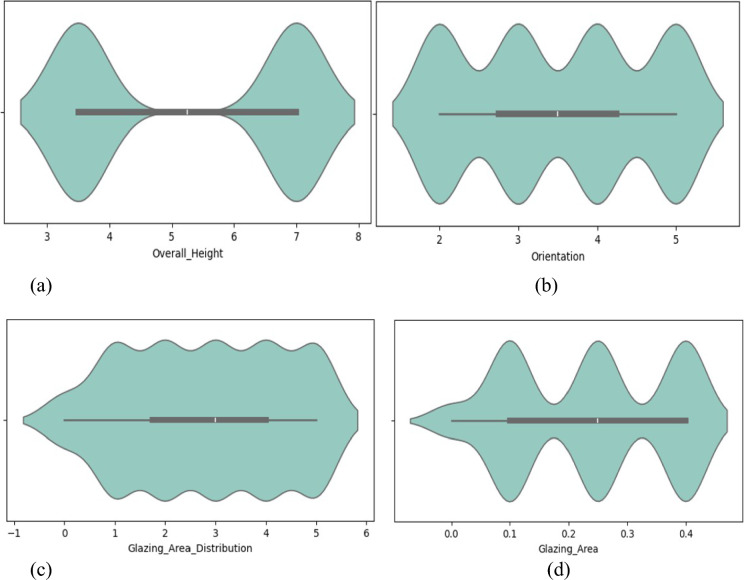
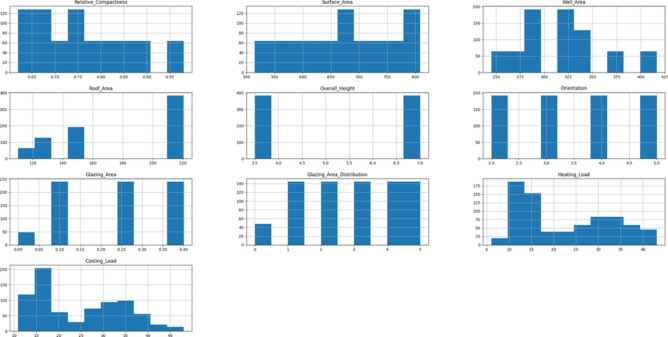
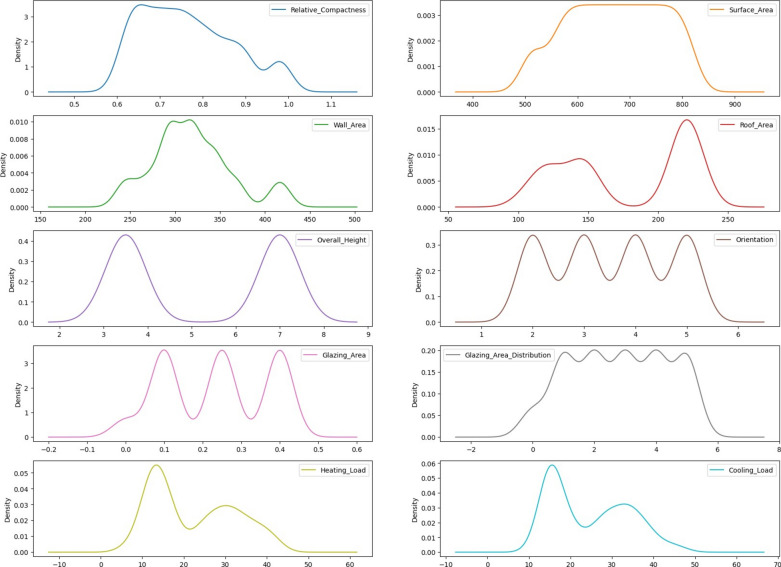
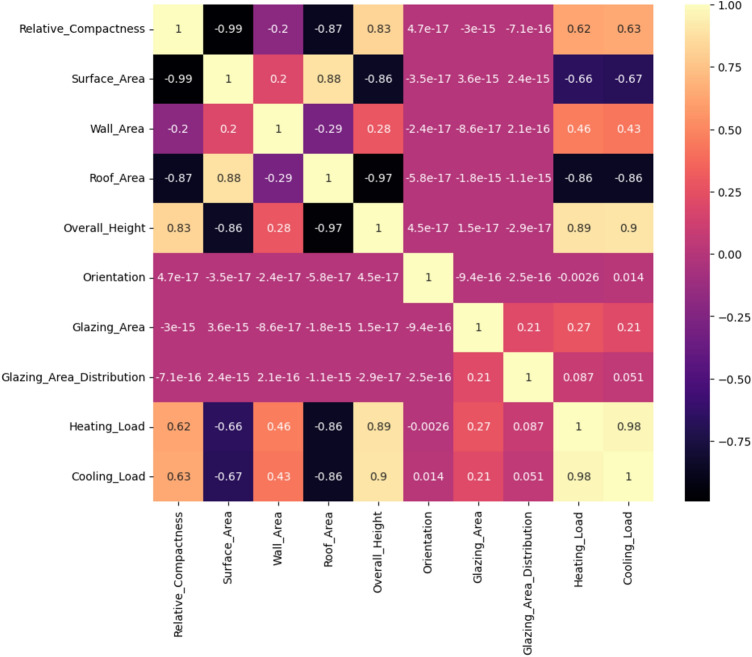
Green building (GB) techniques are essential for reducing energy waste in the construction sector, which accounts for almost 40% of global energy consumption. Despite their importance, challenges such as occupant behavior and energy management gaps often result in GBs consuming up to 2.5 times more energy than intended. To address this, Building Automation Systems (BAS) play a crucial role in enhancing energy efficiency. This research develops a predictive model for GB design using machine learning to minimize energy consumption and improve indoor sustainability. The dataset is utilized to predict cooling and heating individually, with data visualization by graphically illustrating dataset features and preprocessing through Z-Score normalization and dataset splitting. The proposed model, based on active learning and utilizing ML regressors such as Random Forest (RF), Decision Tree (DT), Gradient Boosting (GB), Extreme Gradient Boosting (XGBoost), CatBoost (CB), Light Gradient Boosting Machine (LGBM), K-Nearest Neighbor (KNN), and Logistic Regressor (LR), shows significant performance improvements. The CBR-AL model achieves impressive results with values of 0.9975 for cooling (Y1) and 0.9883 for heating (Y2), indicating a high level of accuracy. The model's success in reducing energy consumption and improving sustainability has potential ripple effects, including substantial cost savings, reduced carbon footprints, and improved operational efficiency in green buildings. This approach not only enhances environmental sustainability but also sets a benchmark for future advancements in predictive modelling for energy management.
绿色建筑(GB)技术对于减少建筑行业的能源浪费至关重要,该行业几乎占全球能源消耗的40%。尽管其重要性,但诸如居住者行为和能源管理差距等挑战往往导致绿色建筑的能源消耗比预期高出2.5倍。为了解决这一问题,楼宇自动化系统(BAS)在提高能源效率方面发挥着关键作用。本研究利用机器学习开发了一种用于绿色建筑设计的预测模型,以最大限度地减少能源消耗并提高室内可持续性。该数据集用于分别预测制冷和制热,通过图形化展示数据集特征进行数据可视化,并通过Z-Score标准化和数据集分割进行预处理。所提出的模型基于主动学习,并利用随机森林(RF)、决策树(DT)、梯度提升(GB)、极端梯度提升(XGBoost)、CatBoost(CB)、轻量级梯度提升机(LGBM)、K近邻(KNN)和逻辑回归器(LR)等机器学习回归器,显示出显著的性能提升。CBR-AL模型在制冷(Y1)方面达到了0.9975,在制热(Y2)方面达到了0.9883,取得了令人印象深刻的结果,表明具有很高的准确性。该模型在降低能源消耗和提高可持续性方面的成功具有潜在的连锁反应,包括大幅节省成本、减少碳足迹以及提高绿色建筑的运营效率。这种方法不仅增强了环境可持续性,还为能源管理预测建模的未来发展树立了标杆。