Department of Rheumatology, Immunology and Internal Medicine, Medical University of Lodz, Lodz, Poland.
II Department of Cardiology, Medical University of Lodz, Lodz, Poland.
Rheumatol Int. 2024 Oct;44(10):1823-1836. doi: 10.1007/s00296-024-05699-x. Epub 2024 Aug 27.
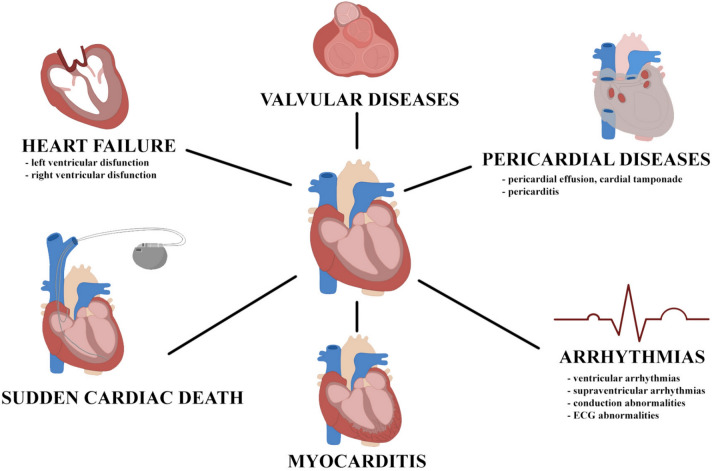
This review provides a detailed examination of original research and previously published reviews regarding cardiovascular involvement in systemic sclerosis (SSc). Our study aims to evaluate the current understanding of SSc-associated heart involvement (SHI), focusing on its most prevalent forms, diagnostic methods and treatment options. A comprehensive search of PUBMED, Medline, Web of science, Scopus and DOAJ databases was conducted, involving articles published between January 2019 and August 2024, available in English, both original research and reviews. Additionally, the authors examined the references cited in the selected articles, reviewed relevant literature, and included key publications dating back to 2010. Systemic Sclerosis (SSc) is an autoimmune connective tissue disease characterized by skin and internal organs fibrosis with accompanying vasculopathy. SHI encompasses both primary and secondary cardiac disease with a prevalence rate of up to 39%. It constitutes one of the leading causes of death among affected individuals. Systemic sclerosis- primary heart involvement comprises a wide range of conditions including arrhythmias, heart failure, pericardial disease, valvular abnormalities, and myocardial inflammation. However, its subclinical course, often misinterpreted as other forms of cardiomyopathy, poses true diagnostic challenges, requiring diagnostic tools like transthoracic echocardiography with tissue Doppler echocardiography and cardiac magnetic resonance imaging. The review underscores the importance of SHI and a holistic approach to managing patients with systemic sclerosis. Furthermore, it emphasizes the need for further investigation into potential pathogenetic mechanisms and biomarkers crucial for targeted treatment to fully optimize recommendations for this patient subgroup.
这篇综述详细考察了关于系统性硬化症(SSc)心血管受累的原始研究和已发表的综述。我们的研究旨在评估目前对 SSc 相关心脏受累(SHI)的理解,重点关注其最常见的形式、诊断方法和治疗选择。我们全面检索了 PUBMED、Medline、Web of science、Scopus 和 DOAJ 数据库,纳入了 2019 年 1 月至 2024 年 8 月发表的英文原始研究和综述文章。此外,作者还查阅了所选文章的参考文献,综述了相关文献,并纳入了 2010 年以来的关键出版物。系统性硬化症(SSc)是一种自身免疫性结缔组织疾病,其特征为皮肤和内脏器官纤维化,伴有血管病变。SHI 包括原发性和继发性心脏病,患病率高达 39%。它是影响个体死亡的主要原因之一。系统性硬化症-原发性心脏受累包括多种疾病,包括心律失常、心力衰竭、心包疾病、瓣膜异常和心肌炎症。然而,其亚临床过程常被误诊为其他形式的心肌病,这给诊断带来了真正的挑战,需要使用组织多普勒超声心动图和心脏磁共振成像等诊断工具。这篇综述强调了 SHI 的重要性以及对系统性硬化症患者进行全面管理的必要性。此外,它还强调了进一步研究潜在发病机制和生物标志物的重要性,这些机制和标志物对于针对治疗至关重要,以便为这一患者亚组提供全面优化的建议。