Graham Kirsty E, Rossano Federico, Moore Richard T
School of Psychology & Neuroscience, University of St Andrews, St Mary's St Mary's Quad, South St, St Andrews, KY16 9JP, UK.
Department of Psychology, Hunter College, 695 Park Avenue, New York, NY 10065, USA.
Biol Rev Camb Philos Soc. 2025 Feb;100(1):190-204. doi: 10.1111/brv.13136. Epub 2024 Aug 27.
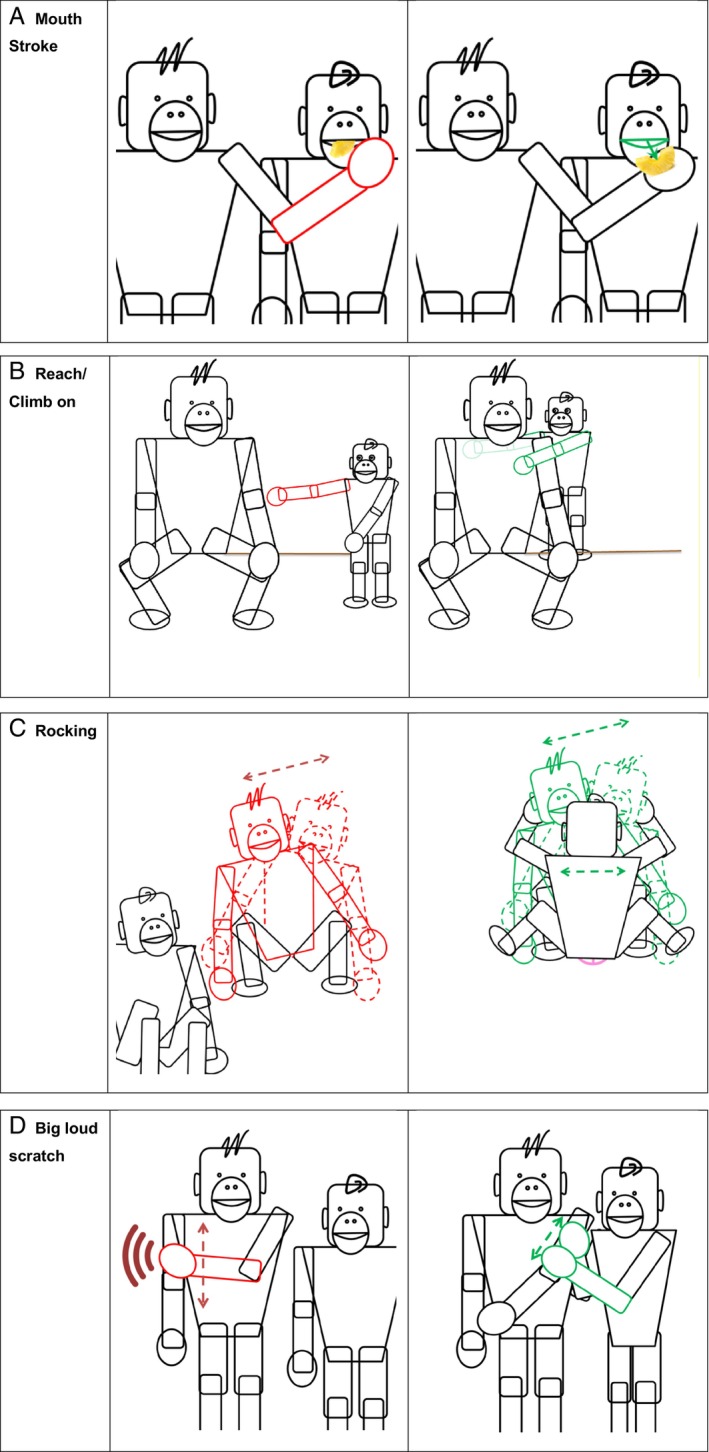
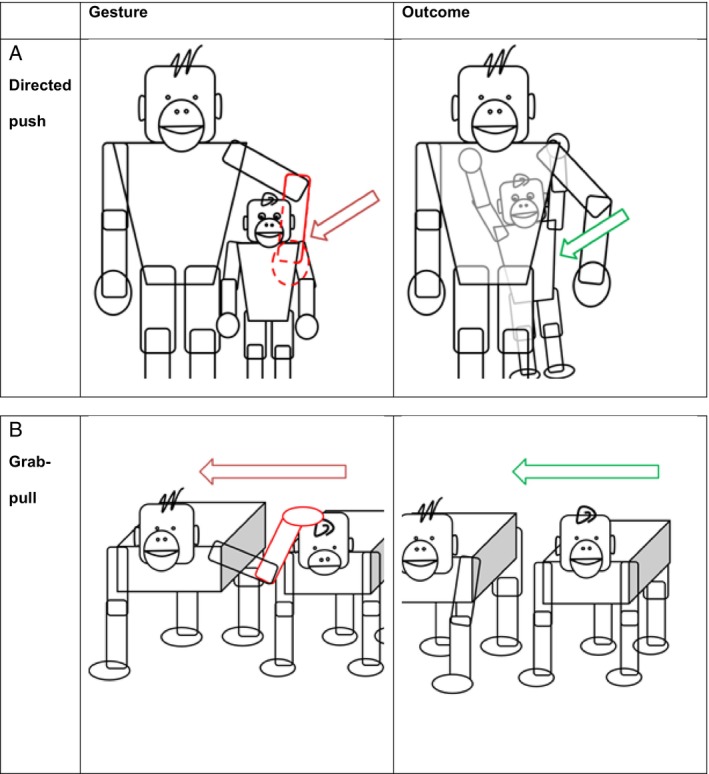
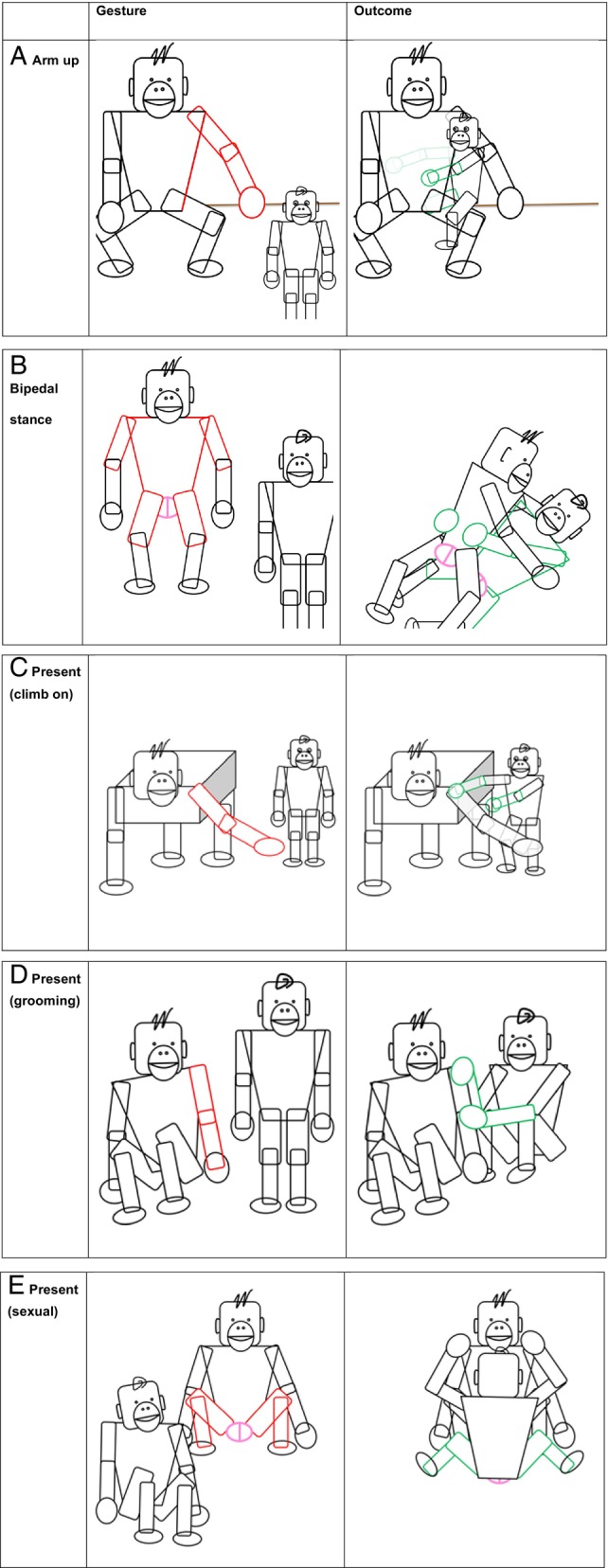
Two views claim to account for the origins of great ape gestural forms. On the Leipzig view, gestural forms are ontogenetically ritualised from action sequences between pairs of individuals. On the St Andrews view, gestures are the product of natural selection for shared gestural forms. The Leipzig view predicts within- and between-group differences between gestural forms that arise as a product of learning in ontogeny. The St Andrews view predicts universal gestural forms comprehensible within and between species that arise because gestural forms were a target of natural selection. We reject both accounts and propose an alternative "recruitment view" of the origins of great ape gestures. According to the recruitment view, great ape gestures recruit features of their existing behavioural repertoire for communicative purposes. Their gestures inherit their communicative functions from visual (and sometimes tactile) presentations of familiar and easily recognisable action schemas and states and parts of the body. To the extent that great ape species possess similar bodies, this predicts mutual comprehensibility within and between species - but without supposing that gestural forms were themselves targets of natural selection. Additionally, we locate great ape gestural communication within a pragmatic framework that is continuous with human communication, and make testable predications for adjudicating between the three alternative views. We propose that the recruitment view best explains existing data, and does so within a mechanistic framework that emphasises continuity between human and non-human great ape communication.
有两种观点声称可以解释类人猿手势形式的起源。按照莱比锡观点,手势形式是个体间动作序列在个体发育过程中仪式化的结果。按照圣安德鲁斯观点,手势是对共享手势形式进行自然选择的产物。莱比锡观点预测,作为个体发育中学习产物的手势形式在群体内部和群体之间存在差异。圣安德鲁斯观点预测,由于手势形式是自然选择的目标,所以在物种内部和物种之间存在可理解的通用手势形式。我们反对这两种观点,并提出一种关于类人猿手势起源的替代性“招募观点”。根据招募观点,类人猿手势为了交流目的而采用其现有行为库中的特征。它们的手势从熟悉且易于识别的动作模式以及身体状态和部位的视觉(有时是触觉)呈现中继承其交流功能。就类人猿物种拥有相似身体而言,这预测了物种内部和物种之间的相互可理解性——但并不假定手势形式本身就是自然选择的目标。此外,我们将类人猿手势交流置于一个与人类交流相连续的语用框架内,并做出可检验的预测以在这三种替代观点之间进行裁决。我们认为招募观点最能解释现有数据,并且是在一个强调人类与非人类类人猿交流之间连续性的机制框架内做到这一点的。