Callegari Francesca, Brofiga Martina, Tedesco Mariateresa, Massobrio Paolo
Department of Informatics, Bioengineering, Robotics, and Systems Engineering (DIBRIS), University of Genova, Genova, Italy.
APL Bioeng. 2024 Aug 22;8(3):036112. doi: 10.1063/5.0214745. eCollection 2024 Sep.
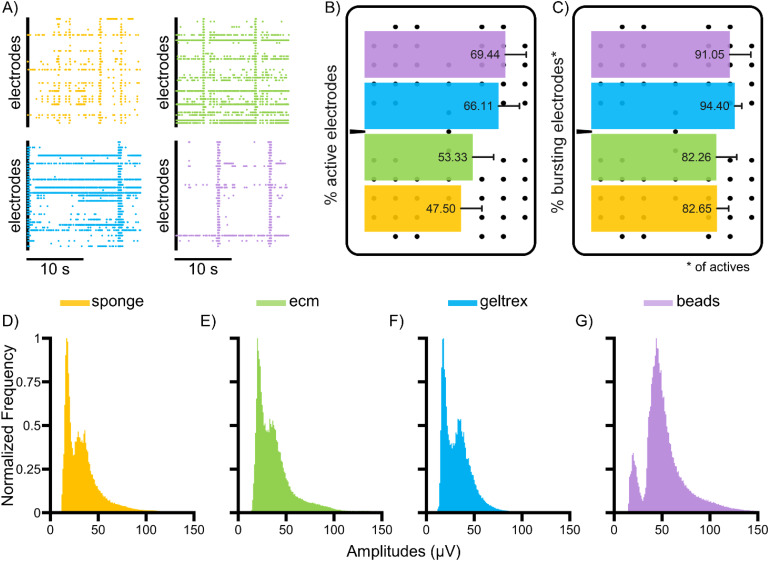
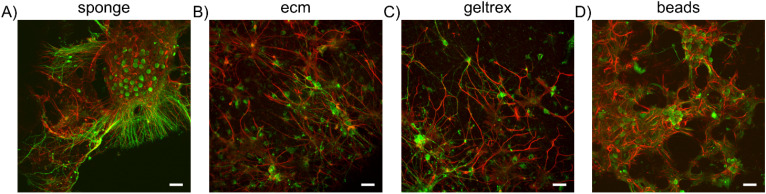
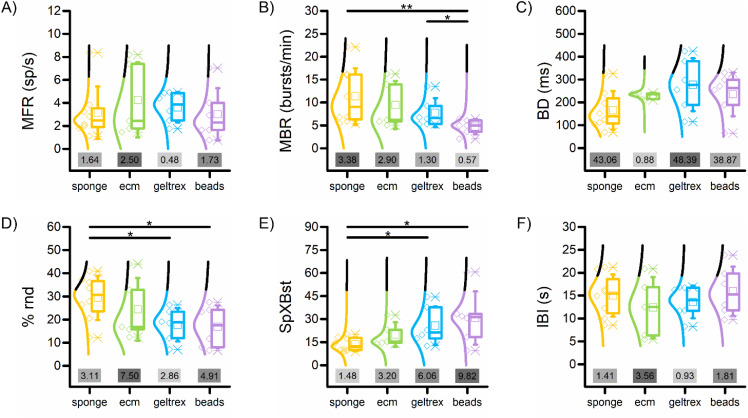
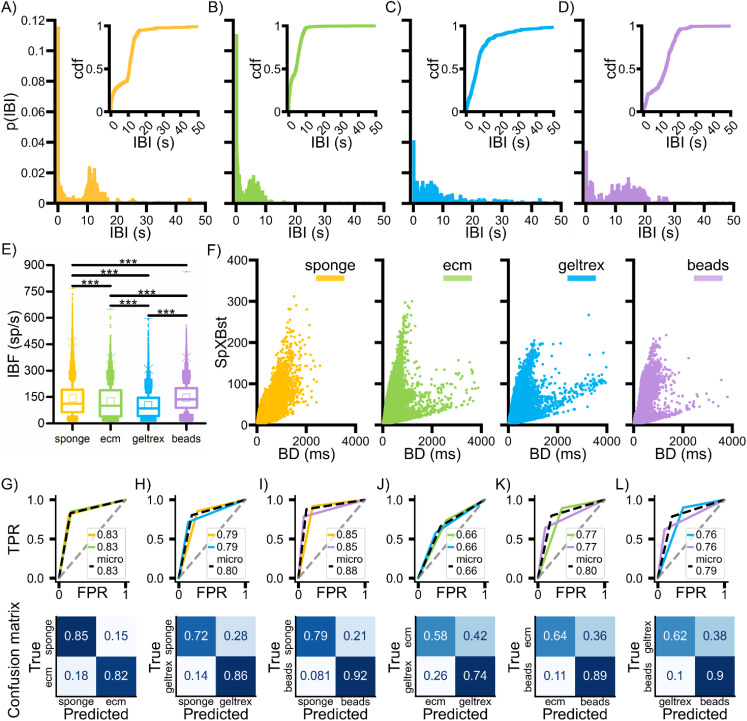
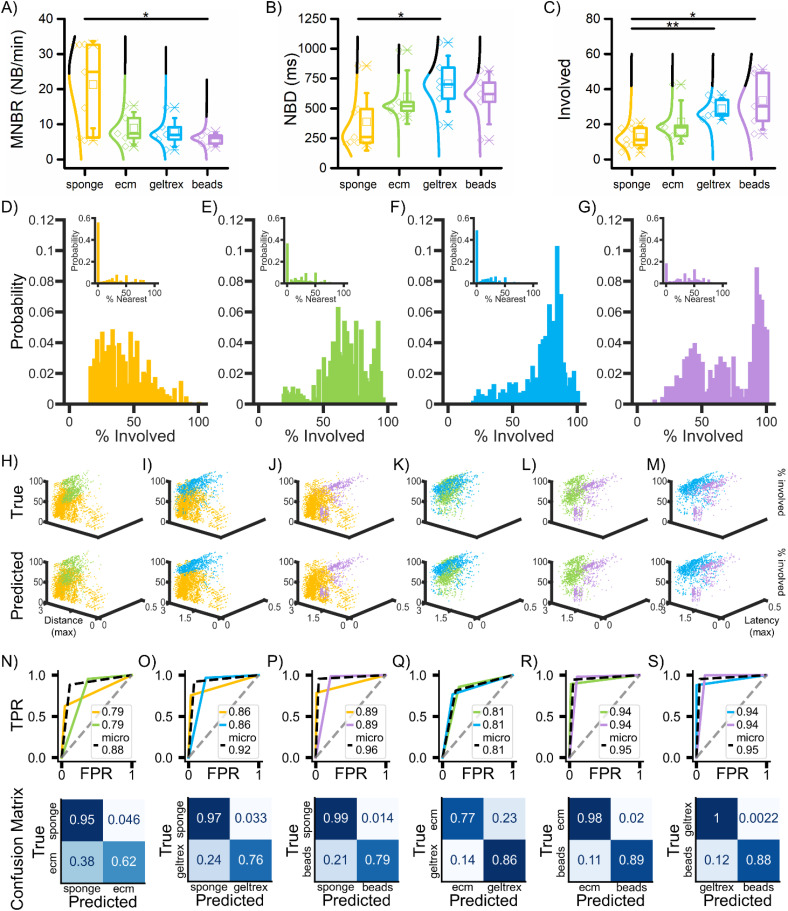
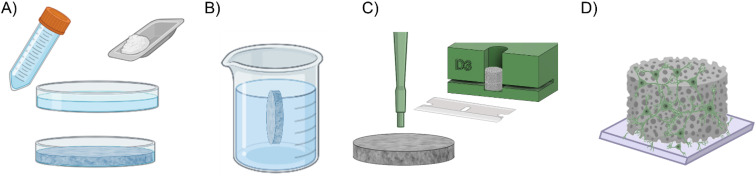
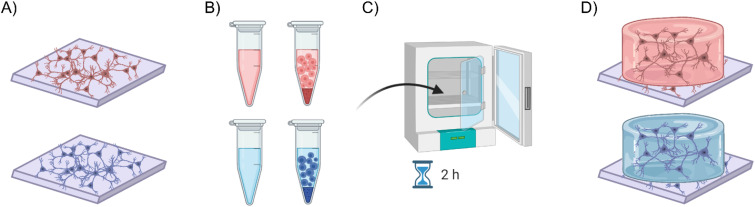
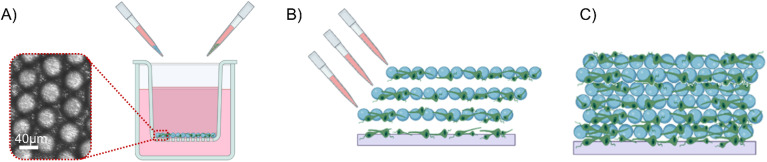
Three-dimensionality (3D) was proven essential for developing reliable models for different anatomical compartments and many diseases. However, the neuronal compartment still poses a great challenge as we still do not understand precisely how the brain computes information and how the complex chain of neuronal events can generate conscious behavior. Therefore, a comprehensive model of neuronal tissue has not yet been found. The present work was conceived in this framework: we aimed to contribute to what must be a collective effort by filling in some information on possible 3D strategies to pursue. We compared directly different kinds of scaffolds (i.e., PDMS sponges, thermally crosslinked hydrogels, and glass microbeads) in their effect on neuronal network activity recorded using micro-electrode arrays. While the overall rate of spiking activity remained consistent, the type of scaffold had a notable impact on bursting dynamics. The frequency, density of bursts, and occurrence of random spikes were all affected. The examination of inter-burst intervals revealed distinct burst generation patterns unique to different scaffold types. Network burst propagation unveiled divergent trends among configurations. Notably, it showed the most differences, underlying that functional variations may arise from a different 3D spatial organization. This evidence suggests that not all 3D neuronal constructs can sustain the same level of richness of activity. Furthermore, we commented on the reproducibility, efficacy, and scalability of the methods, where the beads still offer superior performances. By comparing different 3D scaffolds, our results move toward understanding the best strategies to develop functional 3D neuronal units for reliable pre-clinical studies.
三维性(3D)已被证明对于为不同解剖区域和多种疾病开发可靠模型至关重要。然而,神经元区域仍然构成巨大挑战,因为我们仍未确切了解大脑如何处理信息以及神经元事件的复杂链条如何产生有意识行为。因此,尚未找到神经元组织的全面模型。本研究正是在这一框架下构思的:我们旨在通过提供一些关于可能采用的3D策略的信息,为这一集体努力做出贡献。我们直接比较了不同类型的支架(即聚二甲基硅氧烷海绵、热交联水凝胶和玻璃微珠)对使用微电极阵列记录的神经网络活动的影响。虽然总体放电活动速率保持一致,但支架类型对爆发动力学有显著影响。爆发的频率、密度以及随机尖峰的出现均受到影响。对爆发间隔的检查揭示了不同支架类型特有的独特爆发产生模式。网络爆发传播揭示了不同配置之间的不同趋势。值得注意的是,它显示出最大的差异,这表明功能变化可能源于不同的3D空间组织。这一证据表明并非所有3D神经元构建体都能维持相同水平的丰富活动。此外,我们对方法的可重复性、有效性和可扩展性进行了评论,其中微珠仍然具有卓越的性能。通过比较不同的3D支架,我们的结果朝着理解开发用于可靠临床前研究的功能性3D神经元单元的最佳策略迈进。