Mezquida Eduardo T, Olano José Miguel
Department of Ecology, Faculty of Sciences, Autonomous University of Madrid, 28049 Madrid, Spain.
Biodiversity and Global Change Research Center (CIBC-UAM), Autonomous University of Madrid, 28049 Madrid, Spain.
Insects. 2024 Aug 18;15(8):620. doi: 10.3390/insects15080620.
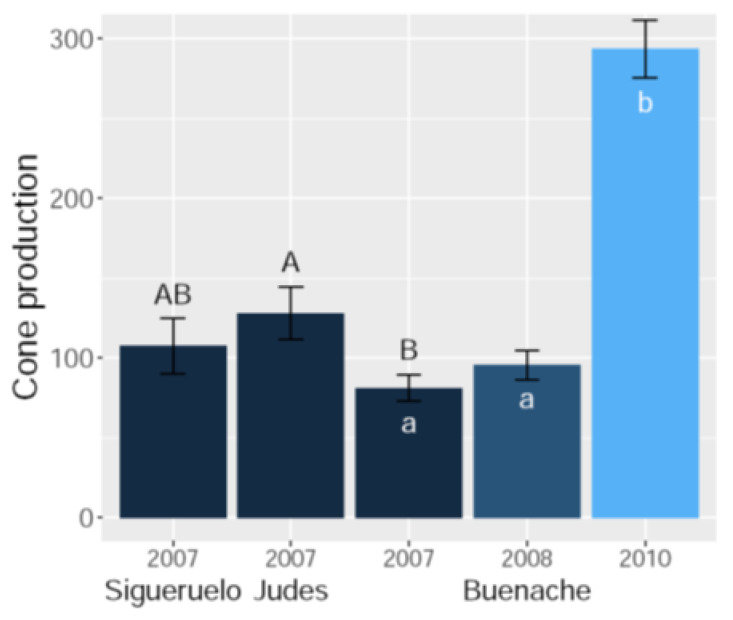
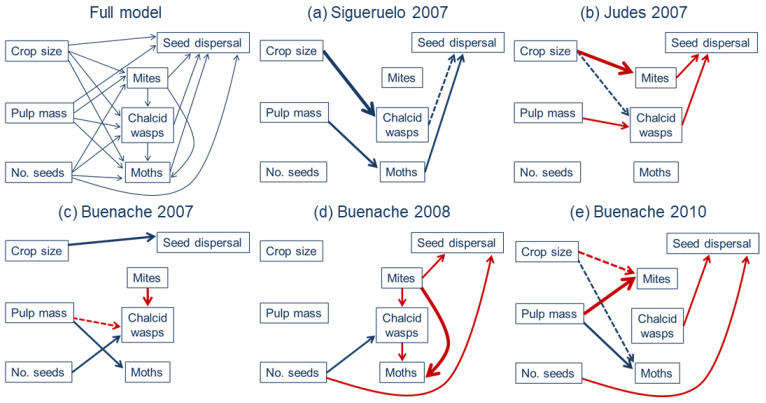
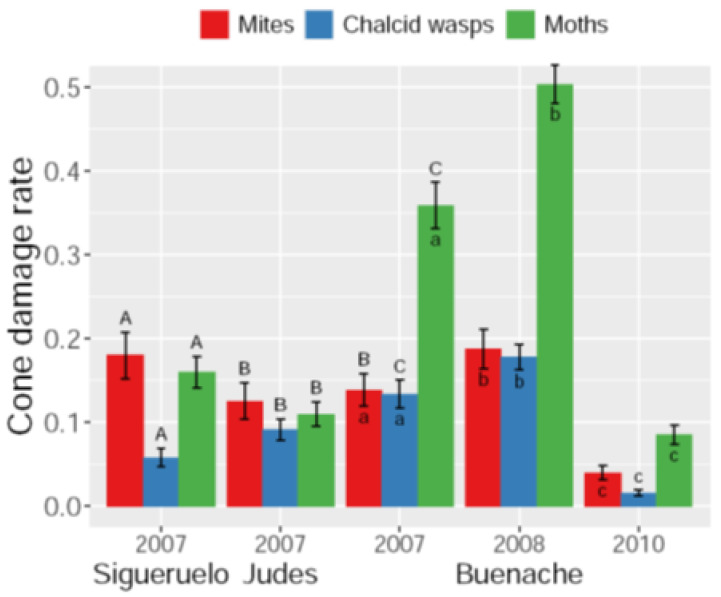
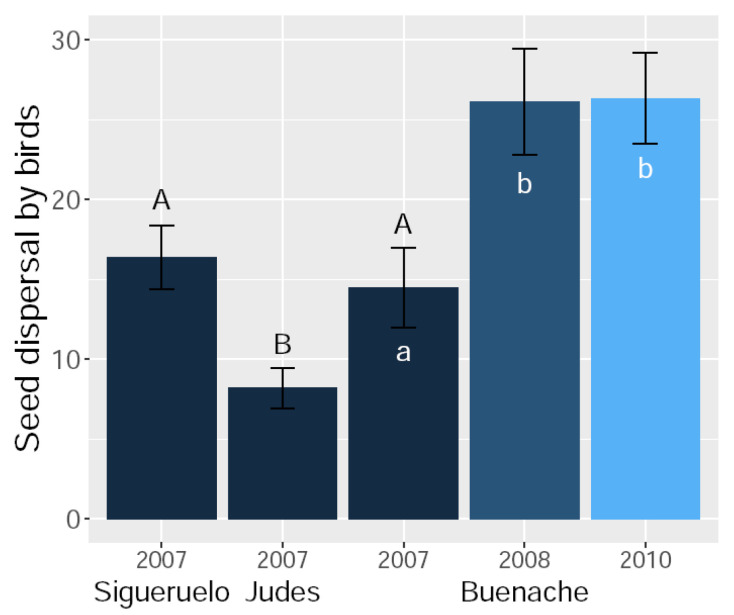
Plants interact with both antagonistic and mutualistic animals during reproduction, with the outcomes of these interactions significantly influencing plant reproductive success, population dynamics, and the evolution of plant traits. Here, we investigated the spatial and temporal variations in the interactions between , its seed-dispersing birds, and three specific arthropod species that attack the fleshy cones during the predispersal period. We assessed how plant traits affect levels of cone damage by arthropods and seed dispersal by birds, the occurrence of competition among arthropod species, and the impact of seed predators on the activity of frugivores. Plant traits, cone damage by arthropods, and seed dispersal by birds showed spatiotemporal variability. Fluctuation in cone abundance was the leading factor determining damage by arthropods and bird dispersal with a secondary role of cone traits. Large crops satiated predispersal seed predators, although the amount of frugivory did not increase significantly, suggesting a potential satiation of bird dispersers. Crop size and cone traits at individual trees determined preferences by seed predator species and the foraging activity of bird dispersers. Competition among arthropods increased during years of low cone production, and seed predators sometimes negatively affected bird frugivory. High supra-annual variations in cone production appear to be a key evolutionary mechanism enhancing reproductive success. This strategy reduces the impact of specialized seed predators during years of high seed production, despite the potential drawback of satiating seed dispersers.
植物在繁殖过程中与敌对和互利的动物相互作用,这些相互作用的结果显著影响植物的繁殖成功率、种群动态以及植物性状的进化。在这里,我们研究了[植物名称]与其种子传播鸟类以及三种在种子传播前攻击肉质球果的特定节肢动物物种之间相互作用的时空变化。我们评估了植物性状如何影响节肢动物对球果的损害程度和鸟类的种子传播、节肢动物物种之间竞争的发生情况以及种子捕食者对食果动物活动的影响。植物性状、节肢动物对球果的损害以及鸟类的种子传播表现出时空变异性。球果丰度的波动是决定节肢动物损害和鸟类传播的主要因素,球果性状起次要作用。大量的球果使种子传播前的种子捕食者饱足,尽管食果量没有显著增加,这表明鸟类传播者可能也有饱足现象。单株树木的球果大小和性状决定了种子捕食者物种的偏好以及鸟类传播者的觅食活动。在球果产量低的年份,节肢动物之间的竞争加剧,种子捕食者有时会对鸟类的食果行为产生负面影响。球果产量的高年际变化似乎是提高繁殖成功率的关键进化机制。这种策略在种子产量高的年份减少了专门种子捕食者的影响,尽管存在使种子传播者饱足的潜在缺点。