Bontić Ana, Kezić Aleksandra, Pavlović Jelena, Baralić Marko, Gajić Selena, Petrovic Kristina, Ristanović Vidna Karadžić, Petrović Olga, Stjepanović Vera, Stanković Sanja, Radović Milan
Clinic for Nephrology, University Clinical Center of Serbia, Pasterova 2, 11000 Belgrade, Serbia.
Faculty of Medicine, University of Belgrade, Doktora Subotica Starijeg 8, 11000 Belgrade, Serbia.
Metabolites. 2024 Aug 19;14(8):460. doi: 10.3390/metabo14080460.
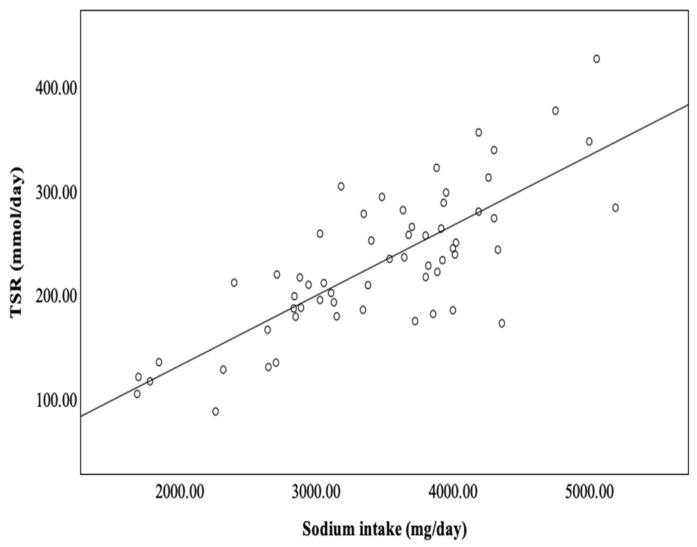
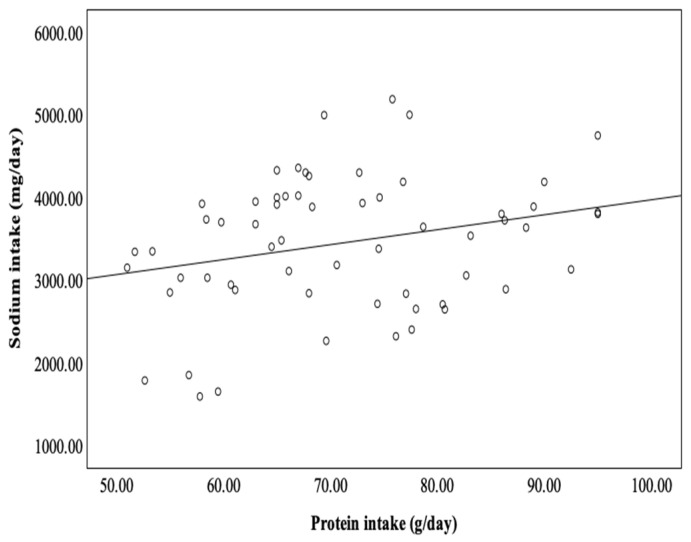
An increase in dietary protein intake (DPI) carries a risk with respect to increased sodium intake, which further leads to the development of cardiovascular morbidity in peritoneal dialysis (PD) patients. Dialytic (DSR) and urinary sodium removal (USR) are potential indicators of sodium intake. In this single-center cross-sectional study with 60 prevalent PD patients, we analyze the correlation of DPI with sodium intake and the association between residual renal function (RRF) and comorbidity grade, expressed as the Davies score with sodium removal and protein metabolism indices such as normalized protein catabolic rate (nPCR) and lean body mass (LBM). The value of RRF < 2 mL/min/1.73 m is significantly associated with lower USR ( = 0.000) and lower %LBM ( < 0.001). The greatest USR is detected in patients with low Davies comorbidity grade ( = 0.018). Compared to patients with DPI < 0.8 g/kg/day, patients with DPI > 0.8 g/kg/day have a greater sodium intake (3.69 ± 0.71 vs. 2.94 ± 0.86; < 0.018) and a greater nPCR ( < 0.001). Protein intake is significantly correlated with sodium intake ( = 0.041), but not with total sodium removal (TSR). A strong correlation is observed between sodium intake and TSR ( = 0.000), although single TSR values are not the same as the corresponding sodium intake values. An increasing protein intake implies the necessity to determine both sodium intake and sodium removal. Preservation of RRF has a beneficial role not just in sodium removal, but also in the increase of LBM.
饮食蛋白质摄入量(DPI)的增加会带来钠摄入量增加的风险,这进而会导致腹膜透析(PD)患者心血管疾病的发生。透析钠清除率(DSR)和尿钠清除率(USR)是钠摄入量的潜在指标。在这项针对60例PD患者的单中心横断面研究中,我们分析了DPI与钠摄入量的相关性,以及残余肾功能(RRF)与合并症分级之间的关联,合并症分级用戴维斯评分表示,同时分析了钠清除率以及蛋白质代谢指标如标准化蛋白分解代谢率(nPCR)和瘦体重(LBM)。RRF值<2 mL/min/1.73 m²与较低的USR(P = 0.000)和较低的LBM百分比(P<0.001)显著相关。在戴维斯合并症分级低的患者中检测到最高的USR(P = 0.018)。与DPI<0.8 g/kg/天的患者相比,DPI>0.8 g/kg/天的患者钠摄入量更高(3.69±0.71 vs. 2.94±0.86;P<0.018)且nPCR更高(P<0.001)。蛋白质摄入量与钠摄入量显著相关(P = 0.041),但与总钠清除率(TSR)无关。钠摄入量与TSR之间观察到强相关性(P = 0.000),尽管单个TSR值与相应的钠摄入量值不同。蛋白质摄入量的增加意味着需要同时测定钠摄入量和钠清除率。保留RRF不仅对钠清除有有益作用,而且对增加LBM也有有益作用。