Department of Genetics and Development and Herbert Irving Comprehensive Cancer Center, Columbia University Irving Medical Center, New York, NY 10032, USA.
Department of Biochemistry and Molecular Pharmacology, New York University Grossman School of Medicine, New York, NY 10016, USA.
Sci Adv. 2024 Aug 30;10(35):eadp0975. doi: 10.1126/sciadv.adp0975. Epub 2024 Aug 28.
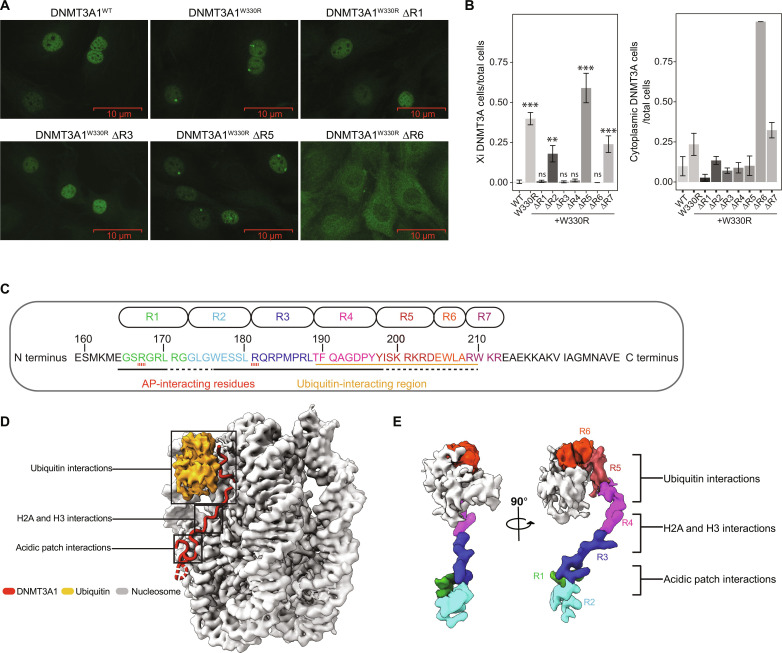
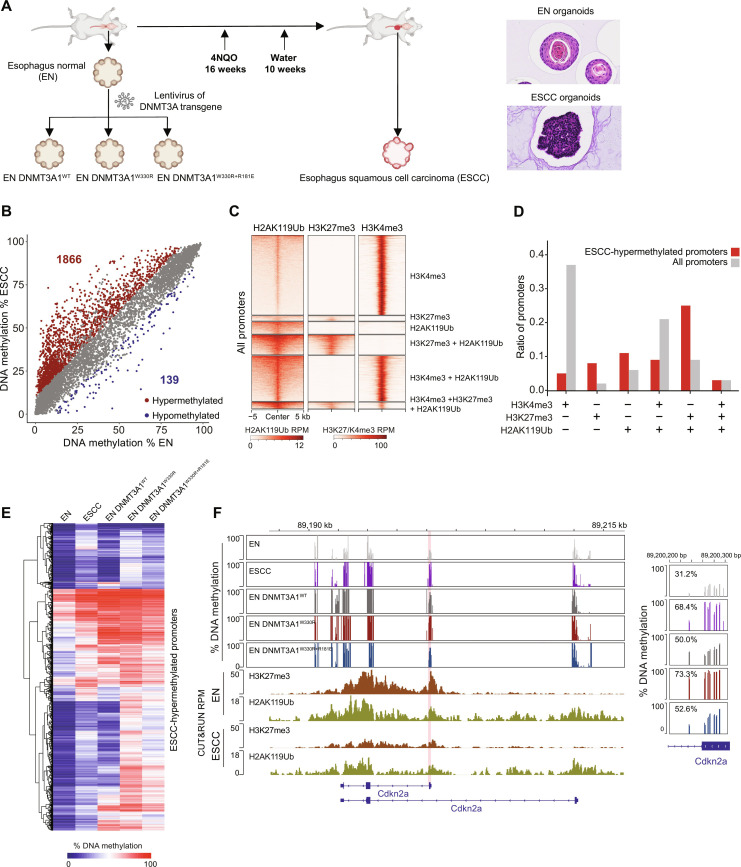
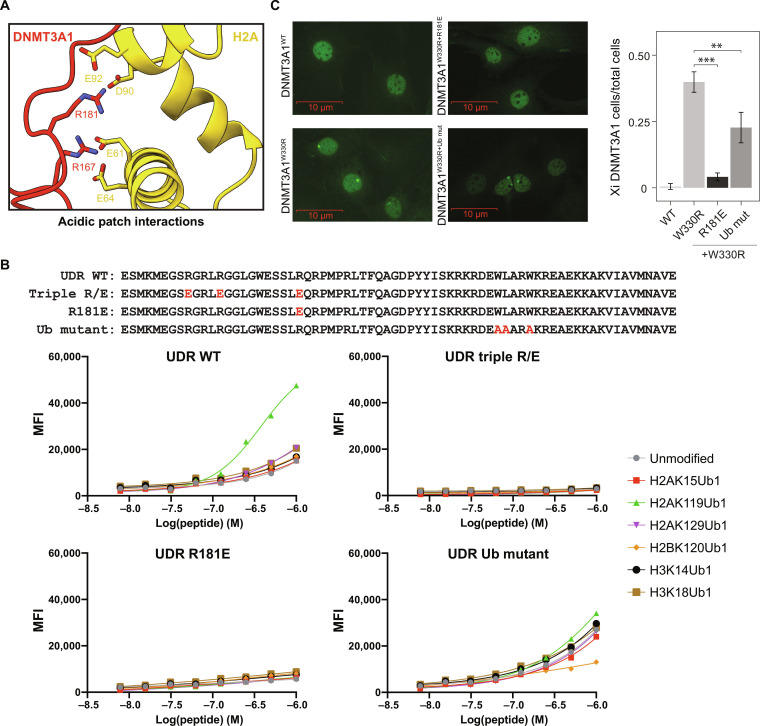
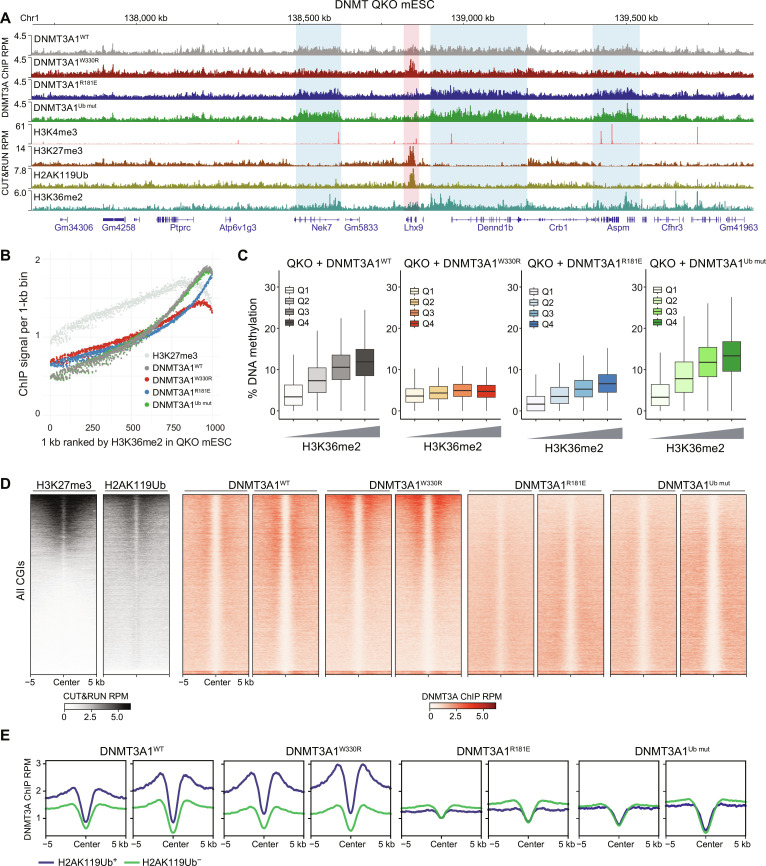
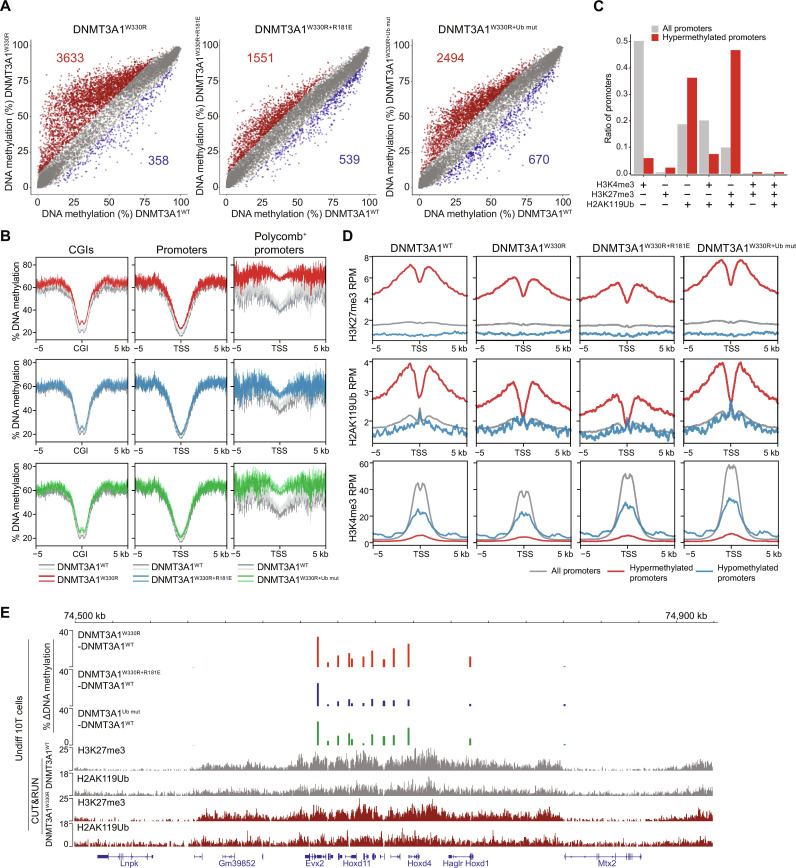
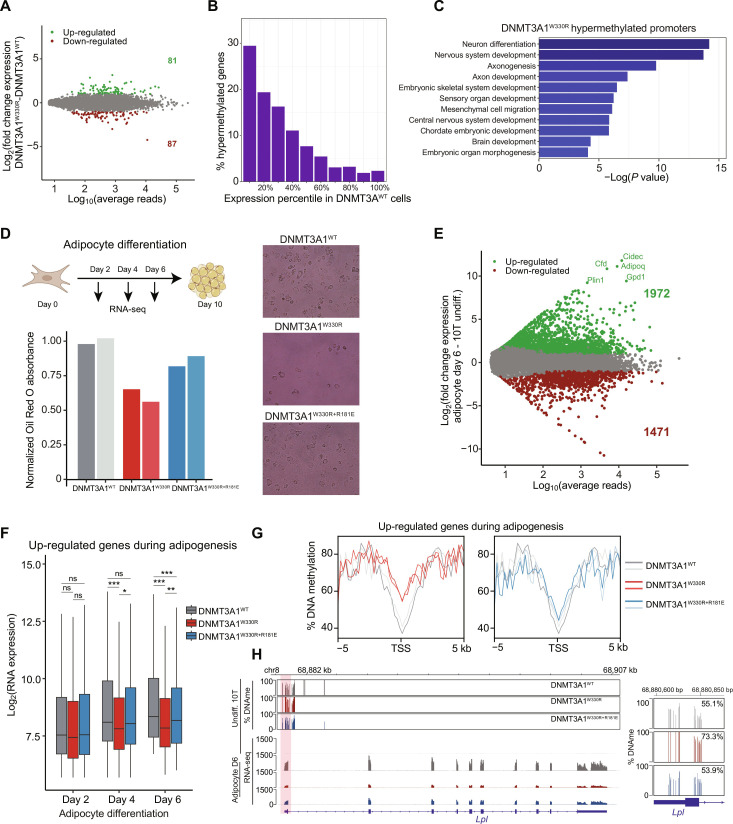
During tumor development, promoter CpG islands that are normally silenced by Polycomb repressive complexes (PRCs) become DNA-hypermethylated. The molecular mechanism by which de novo DNA methyltransferase(s) [DNMT(s)] catalyze CpG methylation at PRC-regulated regions remains unclear. Here, we report a cryo-electron microscopy structure of the DNMT3A long isoform (DNMT3A1) amino-terminal region in complex with a nucleosome carrying PRC1-mediated histone H2A lysine-119 monoubiquitination (H2AK119Ub). We identify regions within the DNMT3A1 amino terminus that bind H2AK119Ub and the nucleosome acidic patch. This bidentate interaction is required for effective DNMT3A1 engagement with H2AK119Ub-modified chromatin in cells. Further, aberrant redistribution of DNMT3A1 to Polycomb target genes recapitulates the cancer-associated DNA hypermethylation signature and inhibits their transcriptional activation during cell differentiation. This effect is rescued by disruption of the DNMT3A1-acidic patch interaction. Together, our analyses reveal a binding interface critical for mediating promoter CpG island DNA hypermethylation, a major molecular hallmark of cancer.
在肿瘤发生过程中,通常被 Polycomb 抑制复合物 (PRC) 沉默的启动子 CpG 岛会发生 DNA 超甲基化。新的 DNA 甲基转移酶 (DNMT) 催化 PRC 调控区域 CpG 甲基化的分子机制尚不清楚。在这里,我们报道了一个含有从头合成的 DNA 甲基转移酶 3A 长异构体 (DNMT3A1) 氨基末端区域与携带 PRC1 介导的组蛋白 H2A 赖氨酸-119 单泛素化 (H2AK119Ub) 的核小体复合物的低温电子显微镜结构。我们确定了 DNMT3A1 氨基末端与 H2AK119Ub 和核小体酸性斑结合的区域。这种双齿相互作用对于有效结合 H2AK119Ub 修饰的染色质是必需的。此外,DNMT3A1 异常重新分配到 Polycomb 靶基因上,再现了癌症相关的 DNA 超甲基化特征,并在细胞分化过程中抑制其转录激活。这种效应可以通过破坏 DNMT3A1-酸性斑相互作用来挽救。总之,我们的分析揭示了一个关键的结合界面,对于介导启动子 CpG 岛 DNA 超甲基化至关重要,这是癌症的主要分子特征之一。