Junco-Muñoz Mariana Lizeth, Mejía-Rodríguez Oliva, Cervantes-Alfaro José Miguel, Téllez-Anguiano Adriana Del Carmen, López-Vázquez Miguel Ángel, Olvera-Cortés María Esther
Laboratorio de Neurofisiología Clínica y Experimental, Centro de Investigación Biomédica de Michoacán, Instituto Mexicano del Seguro Social, Morelia 58060, Michoacán, Mexico.
Facultad de Psicología, Universidad Michoacana de San Nicolás de Hidalgo, Morelia 58194, Michoacán, Mexico.
Brain Sci. 2024 Aug 2;14(8):786. doi: 10.3390/brainsci14080786.
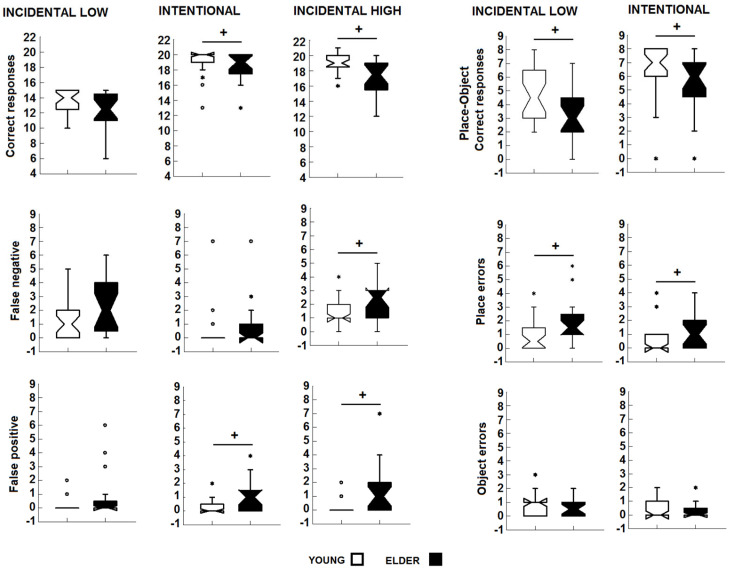
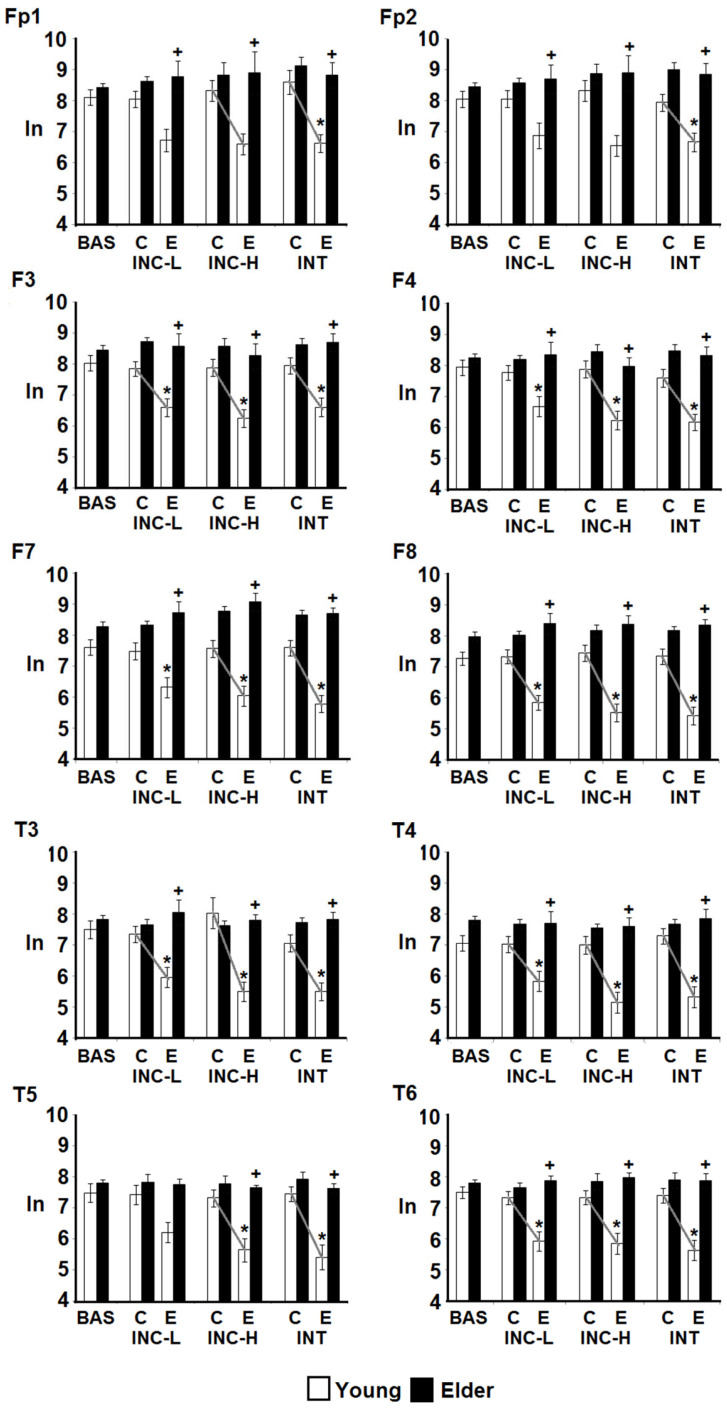
Incidental visuospatial learning acquired under incidental conditions is more vulnerable to aging than in the intentional case. The theta and gamma correlates of the coding and retrieval of episodic memory change during aging. Based on the vulnerability of incidental coding to aging, different theta and gamma correlates could occur under the incidental versus intentional coding and retrieval of visuospatial information. Theta and gamma EEG was recorded from the frontotemporal regions, and incidental/intentional visuospatial learning was evaluated in young (25-60 years old) and elderly (60-85 years old) participants. The EEG recorded during encoding and retrieval was compared between incidental low-demand, incidental high-demand, and intentional conditions through an ANCOVA considering the patient's gender, IQ, and years of schooling as covariates. Older adults exhibited worse performances, especially in place-object associations. After the intentional study, older participants showed a further increase in false-positive errors. Higher power at the theta and gamma bands was observed for frontotemporal derivations in older participants for both encoding and retrieval. Under retrieval, only young participants had lower power in terms of errors compared with correct responses. In conclusion, the different patterns of power and coherence support incidental and intentional visuospatial encoding and retrieval in young and elderly individuals. The correlates of power with behavior are sensitive to age and performance.
在偶然条件下获得的偶然视觉空间学习比有意情况下更容易受到衰老的影响。情景记忆编码和提取过程中的θ波和γ波相关性在衰老过程中会发生变化。基于偶然编码对衰老的易损性,在偶然与有意编码及提取视觉空间信息时,可能会出现不同的θ波和γ波相关性。从前颞叶区域记录θ波和γ波脑电图,并在年轻(25 - 60岁)和老年(60 - 85岁)参与者中评估偶然/有意视觉空间学习。通过协方差分析(ANCOVA),将编码和提取过程中记录的脑电图在偶然低需求、偶然高需求和有意条件下进行比较,将参与者的性别、智商和受教育年限作为协变量。老年人表现较差,尤其是在地点 - 对象关联方面。在有意学习后,老年参与者的假阳性错误进一步增加。在编码和提取过程中,老年参与者前颞叶导联的θ波和γ波段功率更高。在提取过程中,只有年轻参与者在错误方面的功率低于正确反应。总之,功率和相干性的不同模式支持了年轻和老年个体的偶然和有意视觉空间编码及提取。功率与行为的相关性对年龄和表现敏感。