Francisco Luís, Francisco Manuel, Costa Rosana, Vasques Miguel Nunes, Relvas Marta, Rajão António, Monteiro Luís, Rompante Paulo, Guerra Fernando, Infante da Câmara Marco
Oral Pathology and Rehabilitation Research Unit (UNIPRO), University Institute of Health Sciences (IUCS-CESPU), 4585-116 Gandra, Portugal.
Clinical Assistant Professor Postgraduate Implant Program, Famalicão Unit, University Institute of Health Sciences (IUCS-CESPU), Av. Marechal Humberto Delgado, 14, 4760-012 Vila Nova de Famalicão, Portugal.
Biomedicines. 2024 Jul 25;12(8):1661. doi: 10.3390/biomedicines12081661.
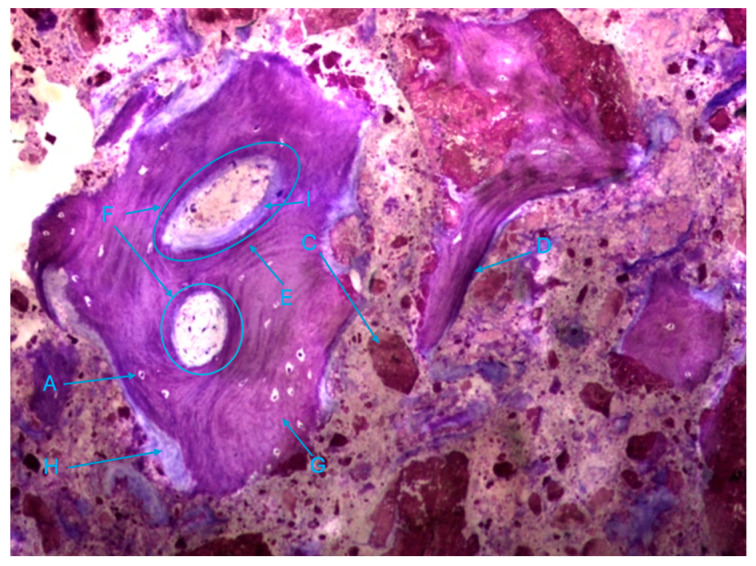
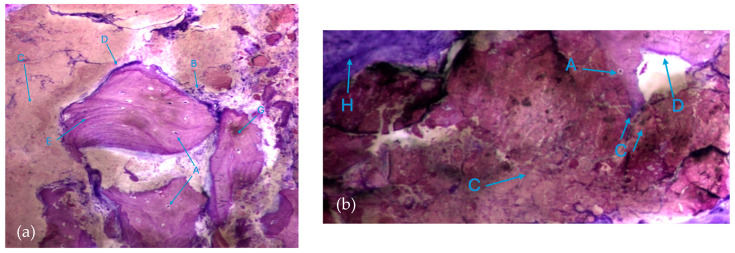
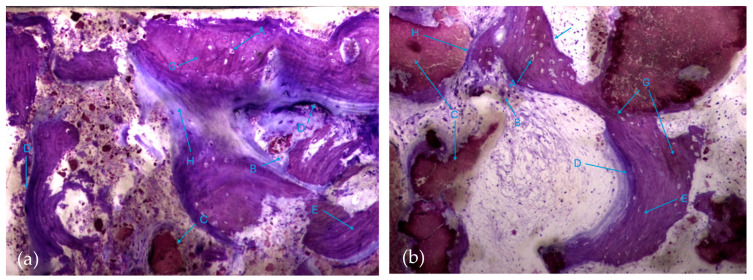
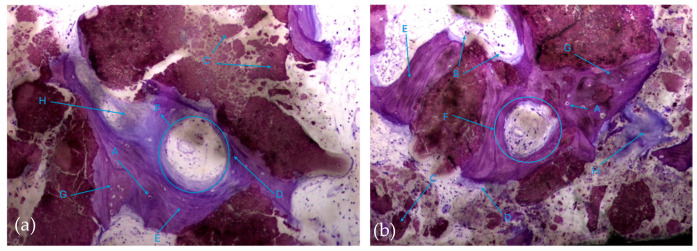
Several techniques have been described for maxillary sinus graft augmentation, including the lateral window technique and crestal approach with osteotomes or osseodensification. Platelet-rich fibrin has been used in maxillary sinus lift procedures due to its ability to accelerate soft and hard tissue healing. The aim of this study was to evaluate the potential of PRF in combination with the synthetic hydroxyapatite NanoBone to enhance bone regeneration in sinus floor elevation with the lateral window technique. Out of the 50 individuals screened in a preoperative assessment visit from the CESPU-Famalicão clinical unit and intervened upon between January 2023 and December 2023, only 6 patients who met the study's inclusion criteria consented to participate. In a split-mouth study, twelve sinus graft surgeries were carried out. Our observations reveal that for the test group (NanoBone/PRF), there is a 27.5 ± 4.9% increase new vital bone, 23.0 ± 3.7% increase in inert bone particles, and 49.4 ± 2.8% increase in connective tissue. Meanwhile, for the control group (NanoBone), there is a 19.5 ± 3.0% increase in new vital bone, 23.4 ± 5.7% increase in inert bone particles, and 57.0 ± 3.5% increase in connective tissue. The results strongly indicate that mixing liquid PRF with NanoBone does not have a negative influence on the amount of viable bone formation, and it seems to slightly increase the amount of new bone formation and revascularization in sinus bone graft procedures with the lateral window technique compared to the single use of NanoBone.
已经描述了几种用于上颌窦植骨增量的技术,包括侧窗技术以及使用骨凿或骨致密化的嵴顶入路。富血小板纤维蛋白因其能够加速软硬组织愈合,已被用于上颌窦提升手术。本研究的目的是评估富血小板纤维蛋白(PRF)与合成羟基磷灰石NanoBone联合使用,在侧窗技术的窦底提升术中增强骨再生的潜力。在CESPU - 法马利康临床单元术前评估访视中筛选的50名个体中,2023年1月至2023年12月期间接受干预的患者中,只有6名符合研究纳入标准的患者同意参与。在一项双侧对照研究中,进行了12例窦移植手术。我们的观察结果显示,对于试验组(NanoBone/PRF),新生活性骨增加27.5±4.9%,惰性骨颗粒增加23.0±3.7%,结缔组织增加49.4±2.8%。同时,对于对照组(NanoBone),新生活性骨增加19.5±3.0%,惰性骨颗粒增加23.4±5.7%,结缔组织增加57.0±3.5%。结果强烈表明,将液体PRF与NanoBone混合对活性骨形成量没有负面影响,并且与单独使用NanoBone相比,在侧窗技术的窦骨移植手术中,它似乎会略微增加新骨形成量和血管再生。