Purmessur Rushmi, Ahmed Zeba, Ali Jason
Department of Cardiac Surgery, Royal Papworth Hospital NHS Foundation Trust, Cambridge CB2 0AY, UK.
Department of Histopathology, University Hospitals Birmingham NHS Foundation Trust, Birmingham B15 2GW, UK.
J Clin Med. 2024 Aug 8;13(16):4655. doi: 10.3390/jcm13164655.
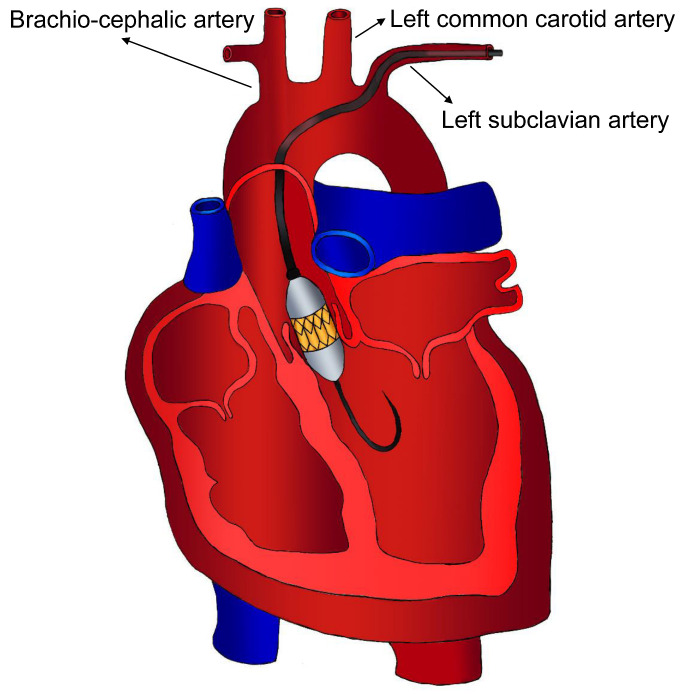
Transcatheter aortic valve implantation (TAVI) has revolutionised the management of severe aortic stenosis, particularly for patients deemed high risk or inoperable for traditional surgical aortic valve replacement. The transfemoral approach is the preferred route whenever feasible, attributed to its minimally invasive nature, reduced procedural morbidity, and shorter recovery times. In total, 80-90% of TAVI procedures are performed via the transfemoral route. However, anatomical constraints such as severe peripheral arterial disease, small vessel diameter, or significant vessel tortuosity can preclude the use of this access site. In such cases, alternative access strategies must be considered to ensure the successful implantation of the valve. This review aims to provide a comprehensive summary of the various surgical techniques available for TAVI access, exploring the rationale, technical aspects, and challenges associated with each method. We will explore alternative routes, including the transapical, transaortic, transaxillary, and transcarotid approaches, highlighting their respective benefits and limitations.
经导管主动脉瓣植入术(TAVI)彻底改变了严重主动脉瓣狭窄的治疗方式,特别是对于那些被认为传统外科主动脉瓣置换术风险高或无法进行手术的患者。只要可行,经股动脉途径就是首选路径,这归因于其微创性质、较低的手术发病率和较短的恢复时间。总体而言,80%至90%的TAVI手术是通过经股动脉途径进行的。然而,诸如严重外周动脉疾病、血管直径小或显著血管迂曲等解剖学限制可能会妨碍使用该入路部位。在这种情况下,必须考虑替代入路策略以确保瓣膜成功植入。本综述旨在全面总结可用于TAVI入路的各种手术技术,探讨每种方法的原理、技术方面以及相关挑战。我们将探讨替代途径,包括经心尖、经主动脉、经腋动脉和经颈动脉途径,突出它们各自的优点和局限性。