Department of Biomedical and Dental Sciences, Morphological and Functional Imaging, Section of Occupational Medicine, University of Messina, 78712 Messina, Italy.
Department of Clinical and Experimental Medicine, University of Messina, 78712 Messina, Italy.
Int J Mol Sci. 2024 Aug 8;25(16):8659. doi: 10.3390/ijms25168659.
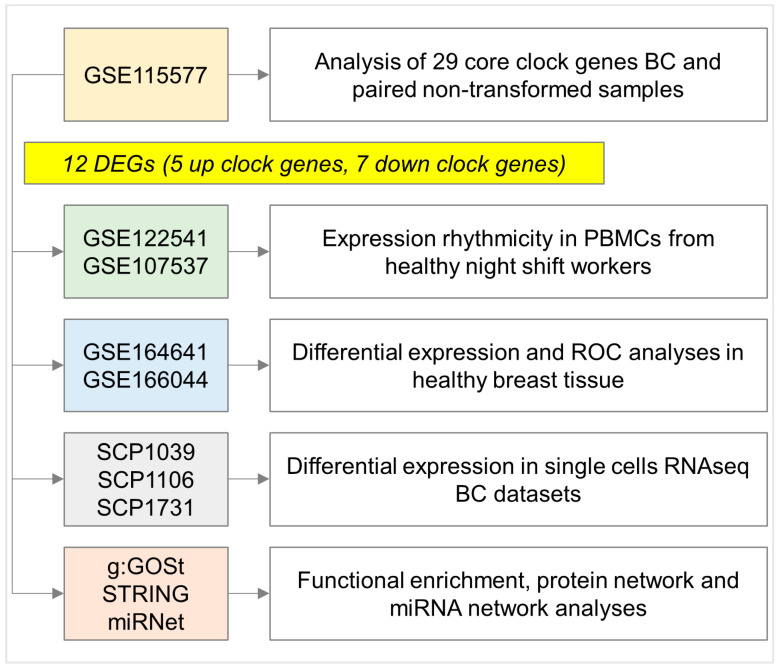
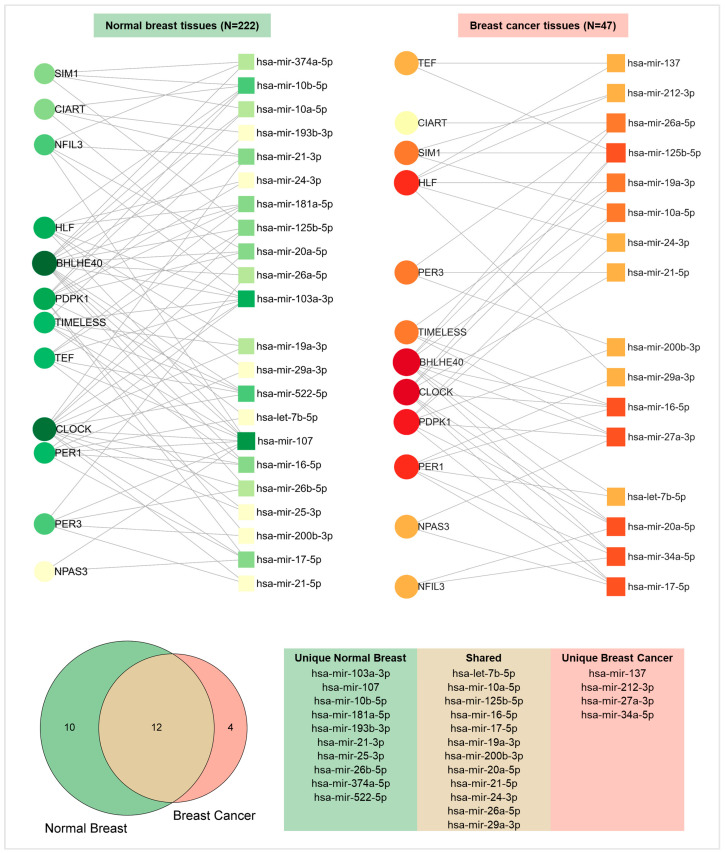
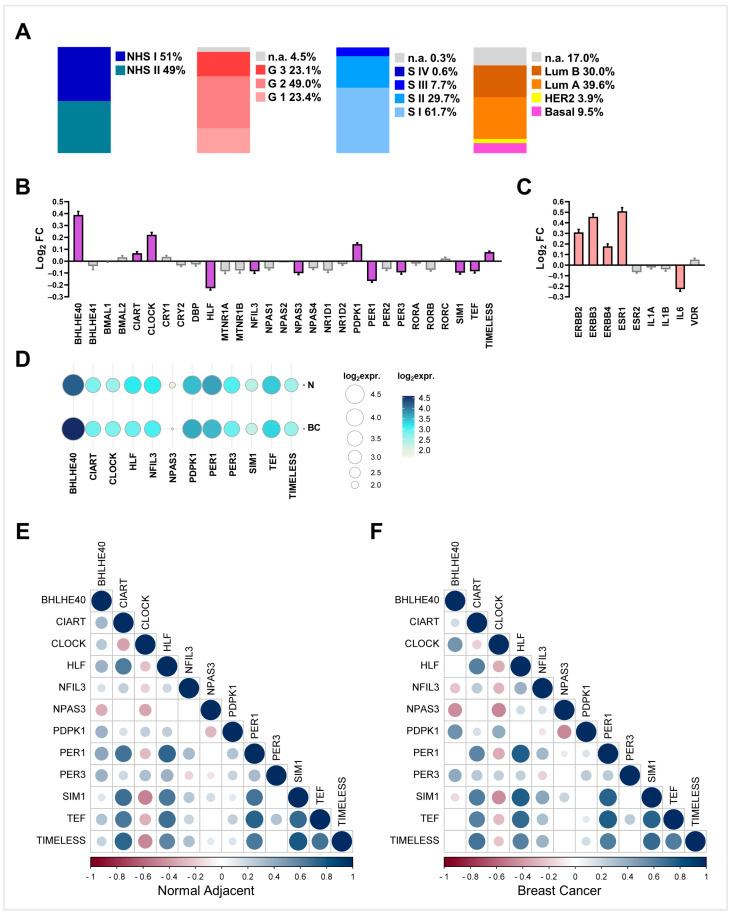
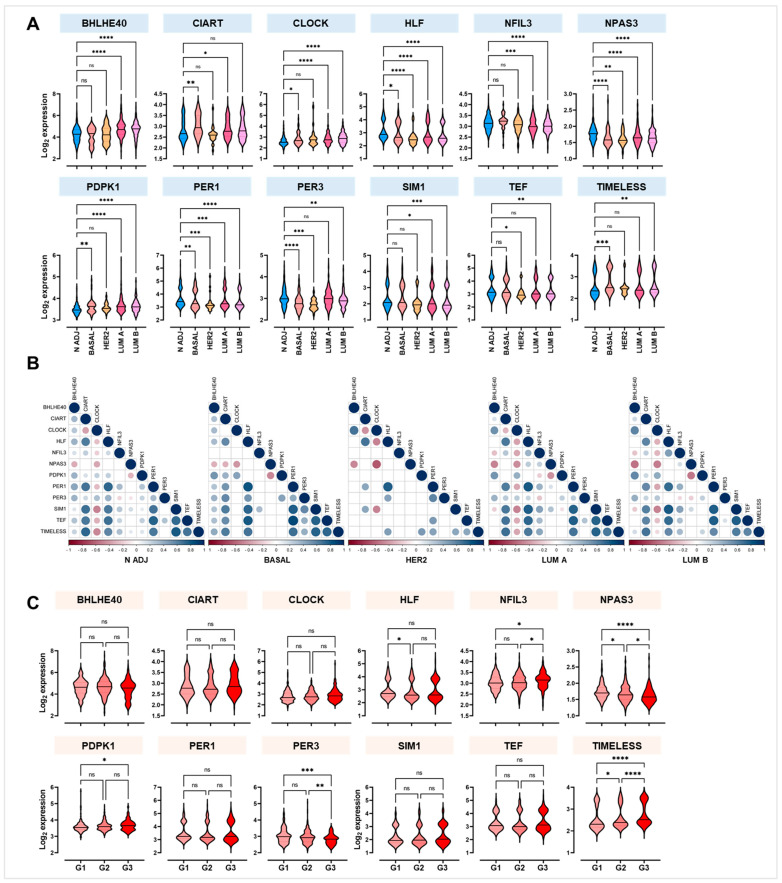
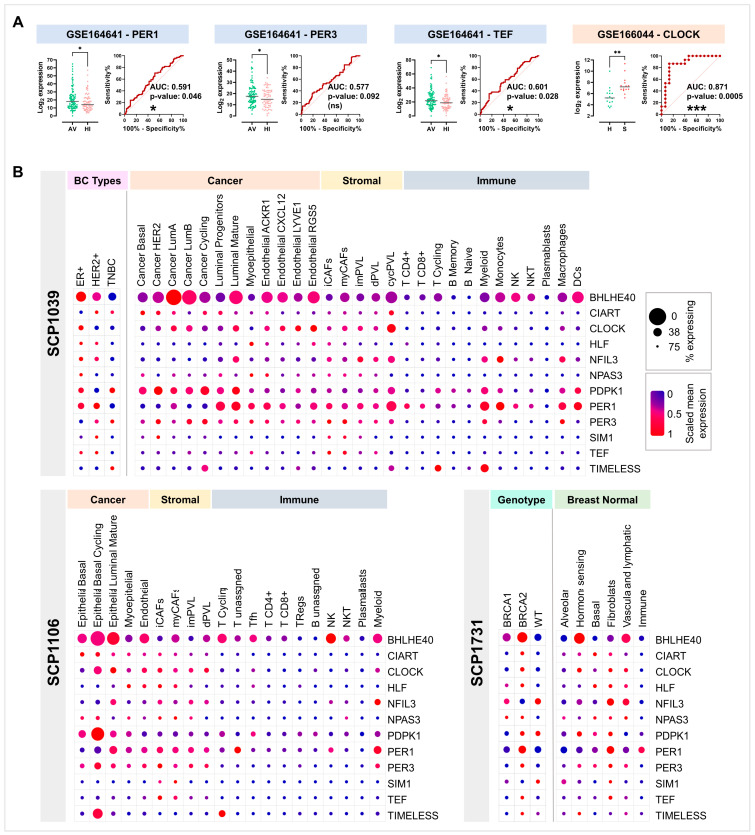
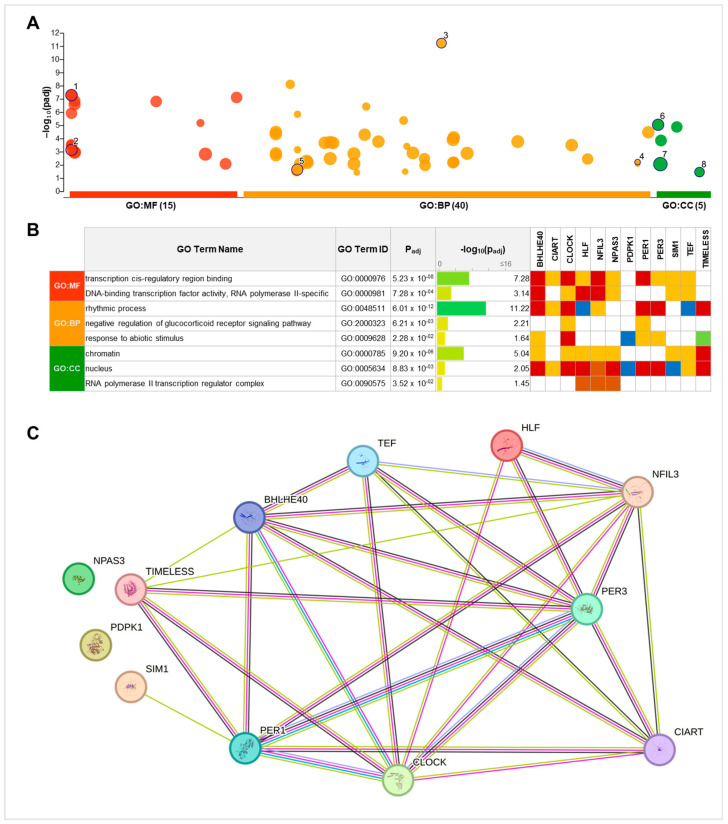
Breast cancer (BC) is the leading cause of cancer death among women worldwide. Women employed in shift jobs face heightened BC risk due to prolonged exposure to night shift work (NSW), classified as potentially carcinogenic by the International Agency for Research on Cancer (IARC). This risk is linked to disruptions in circadian rhythms governed by clock genes at the cellular level. However, the molecular mechanisms are unclear. This study aimed to assess clock genes as potential BC biomarkers among women exposed to long-term NSW. Clock gene expression was analysed in paired BC and normal breast tissues within Nurses' Health Studies I and II GEO datasets. Validation was performed on additional gene expression datasets from healthy night shift workers and women with varying BC susceptibility, as well as single-cell sequencing datasets. Post-transcriptional regulators of clock genes were identified through miRNA analyses. Significant alterations in clock gene expression in BC compared to normal tissues were found. BHLHE40, CIART, CLOCK, PDPK1, and TIMELESS were over-expressed, while HLF, NFIL3, NPAS3, PER1, PER3, SIM1, and TEF were under-expressed. The downregulation of PER1 and TEF and upregulation of CLOCK correlated with increased BC risk in healthy women. Also, twenty-six miRNAs, including miR-10a, miR-21, miR-107, and miR-34, were identified as potential post-transcriptional regulators influenced by NSW. In conclusion, a panel of clock genes and circadian miRNAs are suggested as BC susceptibility biomarkers among night shift workers, supporting implications for risk stratification and early detection strategies.
乳腺癌(BC)是全球女性癌症死亡的主要原因。从事轮班工作的女性由于长期暴露于夜班工作(NSW),面临更高的 BC 风险,国际癌症研究机构(IARC)将其归类为潜在致癌物质。这种风险与细胞水平时钟基因控制的昼夜节律紊乱有关。然而,分子机制尚不清楚。本研究旨在评估时钟基因作为长期暴露于 NSW 的女性潜在的 BC 生物标志物。在护士健康研究 I 和 II GEO 数据集内,分析了配对的 BC 和正常乳腺组织中的时钟基因表达。在来自健康夜班工人和不同 BC 易感性的女性的额外基因表达数据集以及单细胞测序数据集中进行了验证。通过 miRNA 分析鉴定了时钟基因的转录后调节因子。与正常组织相比,在 BC 中发现时钟基因表达存在显著改变。BHLHE40、CIART、CLOCK、PDPK1 和 TIMLESS 表达上调,而 HLF、NFIL3、NPAS3、PER1、PER3、SIM1 和 TEF 表达下调。PER1 和 TEF 的下调以及 CLOCK 的上调与健康女性中 BC 风险的增加相关。此外,还鉴定出 26 个 miRNA,包括 miR-10a、miR-21、miR-107 和 miR-34,它们被认为是受 NSW 影响的潜在转录后调节因子。总之,一组时钟基因和昼夜节律 miRNA 被建议作为夜班工人中 BC 易感性的生物标志物,支持风险分层和早期检测策略的应用。