Laboratoire Maladies Rares, Génétique et Métabolisme, Bordeaux University, INSERM U1211, 33076 Bordeaux, France.
Service de Génétique Médicale, Centre Hospitalier Universitaire de Bordeaux, 33076 Bordeaux, France.
Int J Mol Sci. 2024 Aug 8;25(16):8657. doi: 10.3390/ijms25168657.
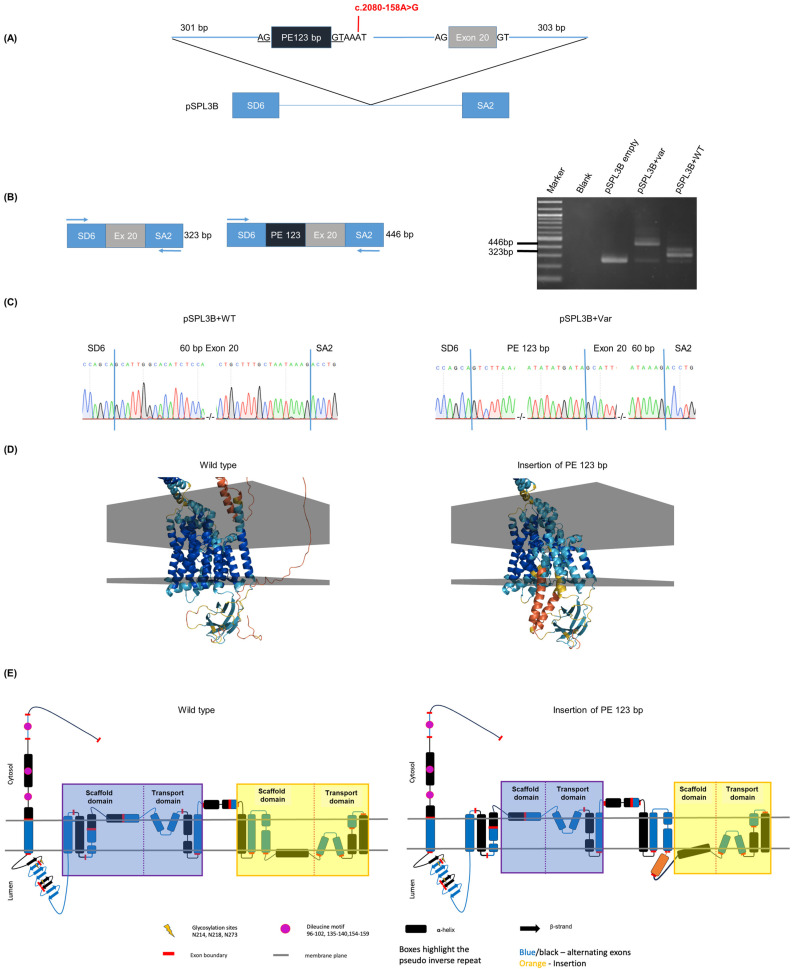
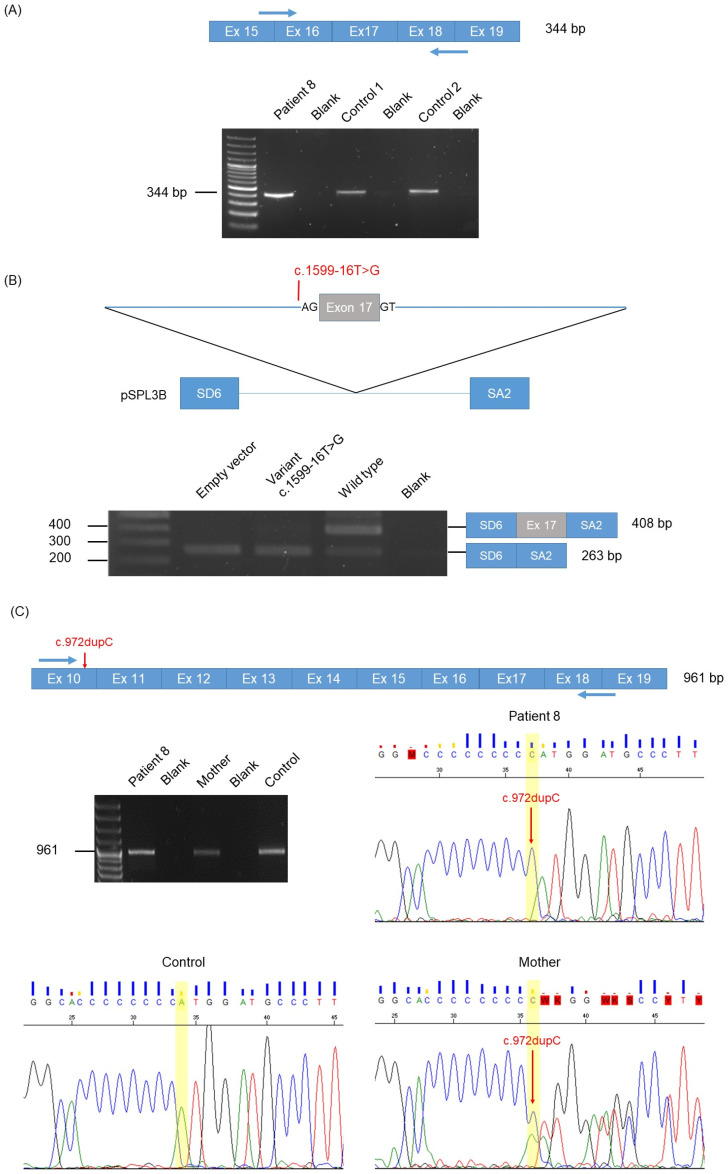
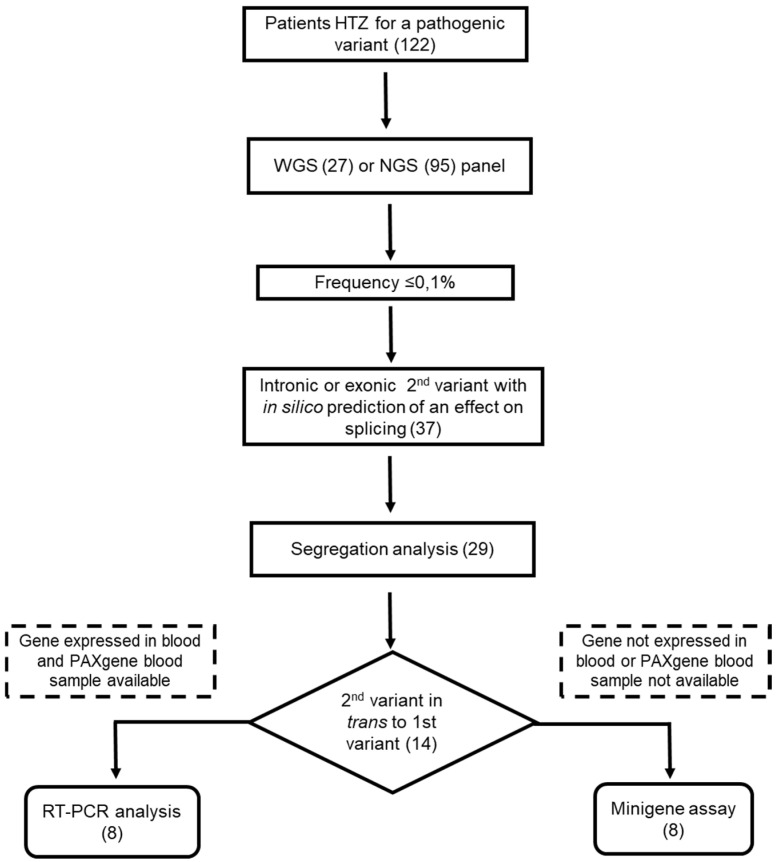
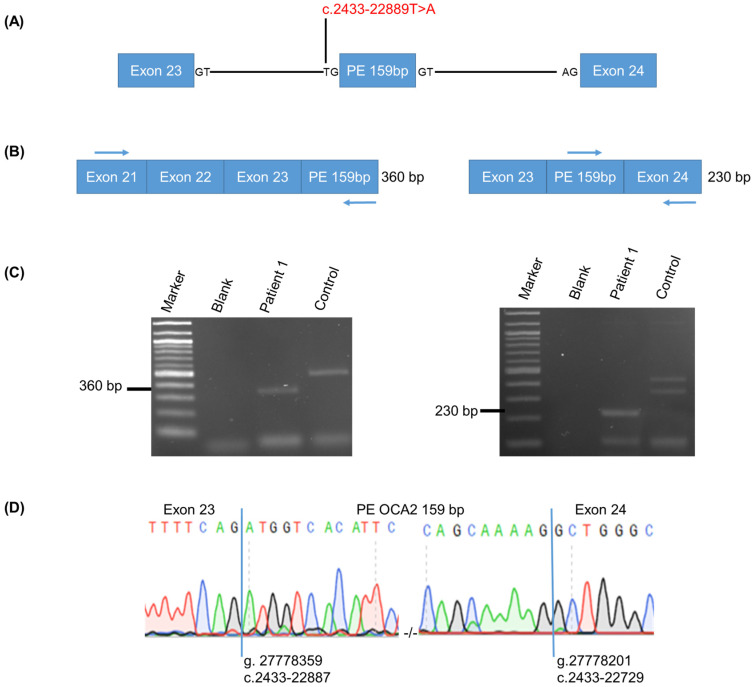
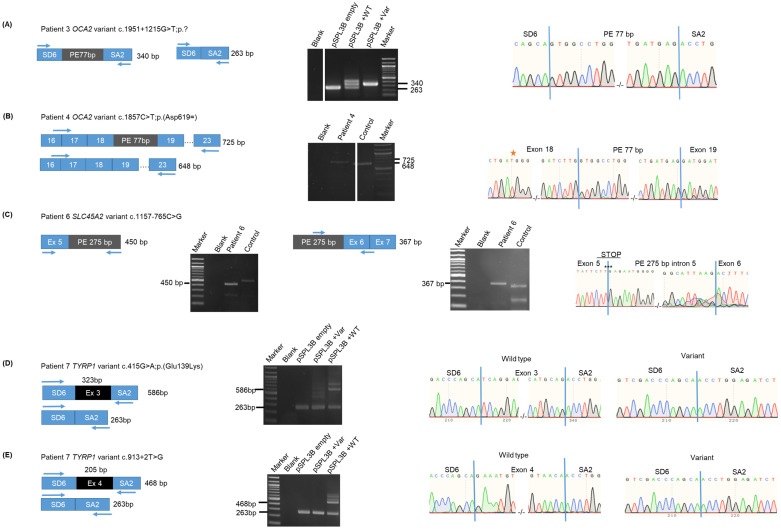
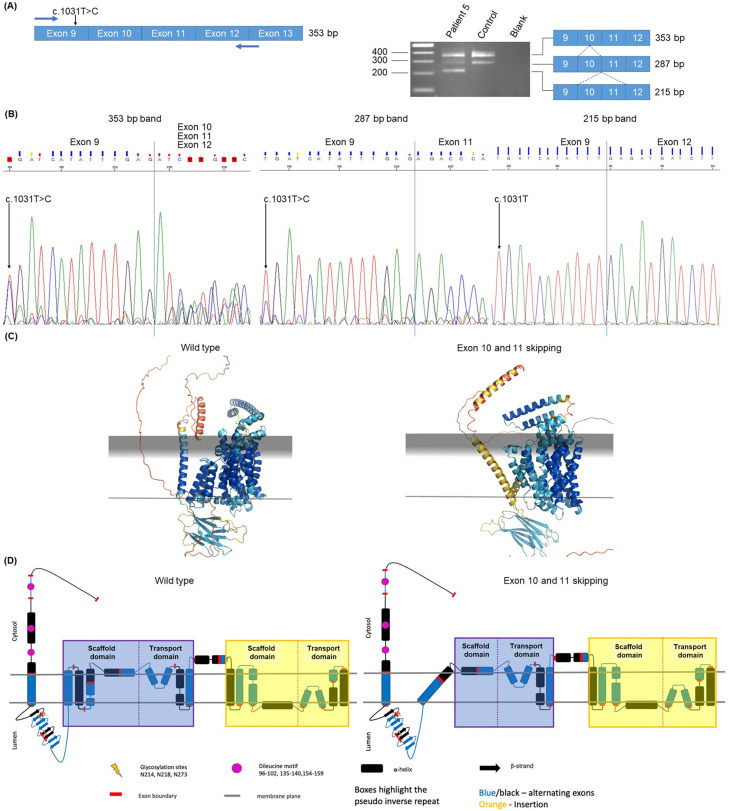
Albinism is a genetically heterogeneous disease in which 21 genes are known so far. Its inheritance mode is autosomal recessive except for one X-linked form. The molecular analysis of exonic sequences of these genes allows for about a 70% diagnostic rate. About half (15%) of the unsolved cases are heterozygous for one pathogenic or probably pathogenic variant. Assuming that the missing variant may be located in non-coding regions, we performed sequencing for 122 such heterozygous patients of either the whole genome (27 patients) or our NGS panel (95 patients) that includes, in addition to all exons of the 21 genes, the introns and flanking sequences of five genes, , , , and . Rare variants (MAF < 0.01) in to the first variant were tested by RT-PCR and/or minigene assay. Of the 14 variants tested, nine caused either exon skipping or the inclusion of a pseudoexon, allowing for the diagnosis of 11 patients. This represents 9.8% (12/122) supplementary diagnosis for formerly unsolved patients and 75% (12/16) of those in whom the candidate variant was in to the first variant. Of note, one missense variant was demonstrated to cause skipping of the exon in which it is located, thus shedding new light on its pathogenic mechanism. Searching for non-coding variants and testing them for an effect on RNA splicing is warranted in order to increase the diagnostic rate.
白化病是一种遗传异质性疾病,目前已知有 21 个基因。其遗传模式除了一种 X 连锁形式外,均为常染色体隐性遗传。对这些基因外显子序列的分子分析可达到约 70%的诊断率。大约一半(15%)未解决的病例为一种致病性或可能致病性变异的杂合子。假设缺失的变异可能位于非编码区域,我们对 122 名杂合子患者(27 名患者进行了全基因组测序,或对 95 名患者进行了我们的 NGS 面板测序),除了 21 个基因的所有外显子外,该面板还包括五个基因的内含子和侧翼序列, 、 、 、 和 。通过 RT-PCR 和/或小基因检测对 14 个变体进行了罕见变体(MAF<0.01)的测试。在 14 个测试的变体中,有 9 个导致外显子跳跃或包含假外显子,从而可以诊断 11 名患者。这代表了对以前未解决患者的 9.8%(12/122)的补充诊断,以及候选变体位于 1 至 14 号变体的患者的 75%(12/16)。值得注意的是,一个错义变体被证明导致其所在外显子的跳跃,从而为其致病机制提供了新的线索。为了提高诊断率,有必要搜索非编码变体并测试它们对 RNA 剪接的影响。