Churches Health Association of Zambia, Lusaka 10101, Zambia.
Department of Biomedical Sciences, School of Veterinary Medicine, University of Zambia, Lusaka 10101, Zambia.
Int J Mol Sci. 2024 Aug 14;25(16):8839. doi: 10.3390/ijms25168839.
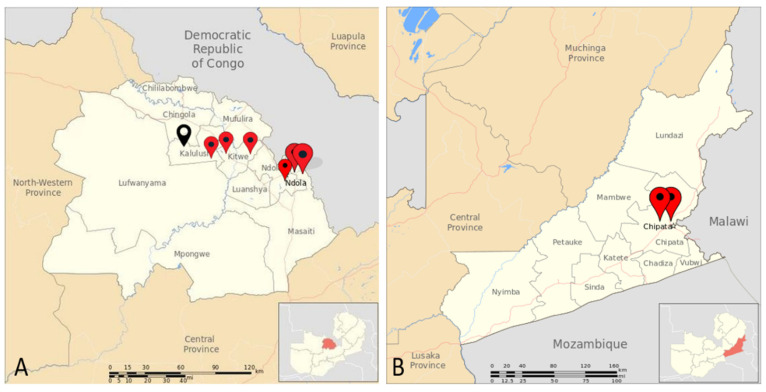
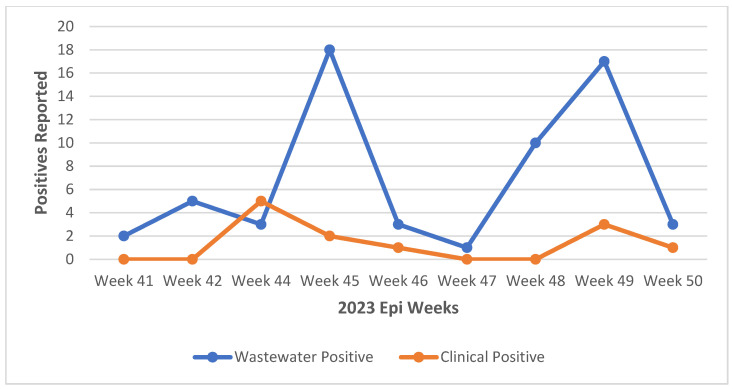
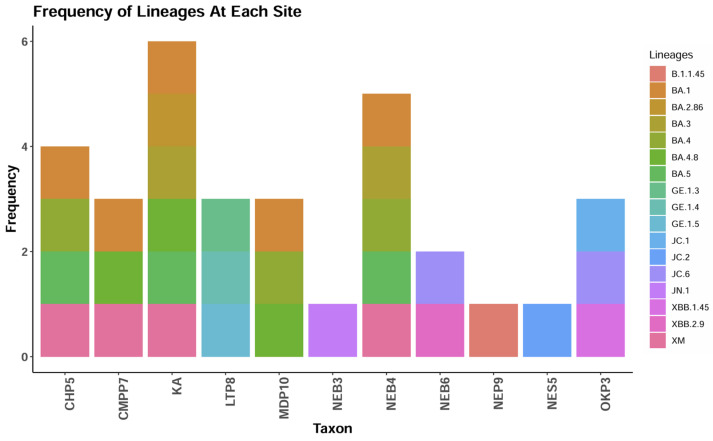
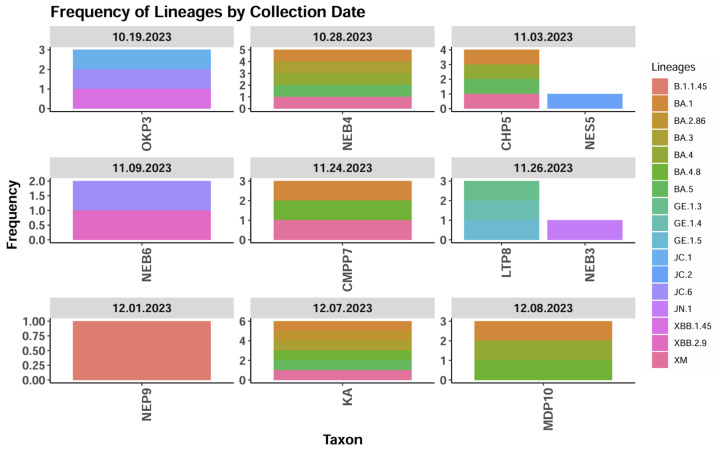
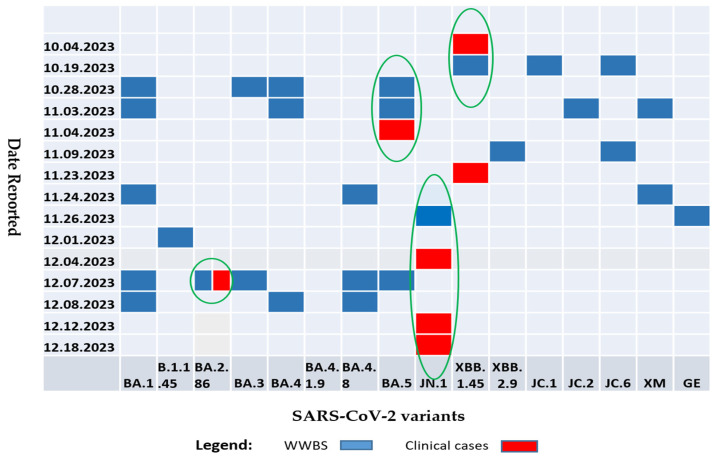
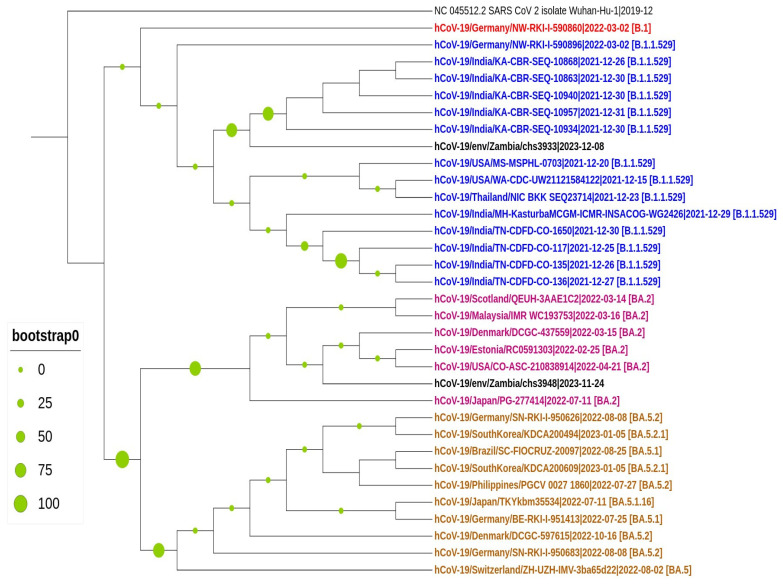
Wastewater-based surveillance has emerged as an important method for monitoring the Severe Acute Respiratory Syndrome Coronavirus 2 (SARS-CoV-2). This study investigated the presence of SARS-CoV-2 in wastewater in Zambia. We conducted a longitudinal study in the Copperbelt and Eastern provinces of Zambia from October 2023 to December 2023 during which 155 wastewater samples were collected. The samples were subjected to three different concentration methods, namely bag-mediated filtration, skimmed milk flocculation, and polythene glycol-based concentration assays. Molecular detection of SARS-CoV-2 nucleic acid was conducted using real-time Polymerase Chain Reaction (PCR). Whole genome sequencing was conducted using Illumina COVIDSEQ assay. Of the 155 wastewater samples, 62 (40%) tested positive for SARS-CoV-2. Of these, 13 sequences of sufficient length to determine SARS-CoV-2 lineages were obtained and 2 sequences were phylogenetically analyzed. Various Omicron subvariants were detected in wastewater including BA.5, XBB.1.45, BA.2.86, and JN.1. Some of these subvariants have been detected in clinical cases in Zambia. Interestingly, phylogenetic analysis positioned a sequence from the Copperbelt Province in the B.1.1.529 clade, suggesting that earlier Omicron variants detected in late 2021 could still be circulating and may not have been wholly replaced by newer subvariants. This study stresses the need for integrating wastewater surveillance of SARS-CoV-2 into mainstream strategies for monitoring SARS-CoV-2 circulation in Zambia.
污水监测已成为监测严重急性呼吸综合征冠状病毒 2 型 (SARS-CoV-2) 的重要方法。本研究调查了赞比亚污水中 SARS-CoV-2 的存在情况。我们在 2023 年 10 月至 2023 年 12 月期间在赞比亚的铜带省和东部省进行了一项纵向研究,在此期间收集了 155 个污水样本。这些样本经过三种不同的浓缩方法处理,分别是袋介导过滤、脱脂奶絮凝和聚乙二醇浓缩测定法。使用实时聚合酶链反应 (PCR) 对 SARS-CoV-2 核酸进行分子检测。使用 Illumina COVIDSEQ 分析对全基因组进行测序。在 155 个污水样本中,有 62 个(40%)检测出 SARS-CoV-2 呈阳性。其中,有 13 个序列长度足以确定 SARS-CoV-2 谱系,有 2 个序列进行了系统发育分析。在污水中检测到各种奥密克戎亚变种,包括 BA.5、XBB.1.45、BA.2.86 和 JN.1。其中一些亚变种已在赞比亚的临床病例中检测到。有趣的是,系统发育分析将铜带省的一个序列定位在 B.1.1.529 分支中,表明在 2021 年底检测到的早期奥密克戎变种仍可能在传播,并且可能尚未被新的亚变种完全取代。本研究强调需要将 SARS-CoV-2 的污水监测纳入赞比亚监测 SARS-CoV-2 传播的主流策略。