College of Veterinary Medicine, Jeonbuk National University, Iksan 54596, Republic of Korea.
College of Veterinary Medicine and Institute of Animal Transplantation, Jeonbuk National University, Iksan 54596, Republic of Korea.
Int J Mol Sci. 2024 Aug 21;25(16):9056. doi: 10.3390/ijms25169056.
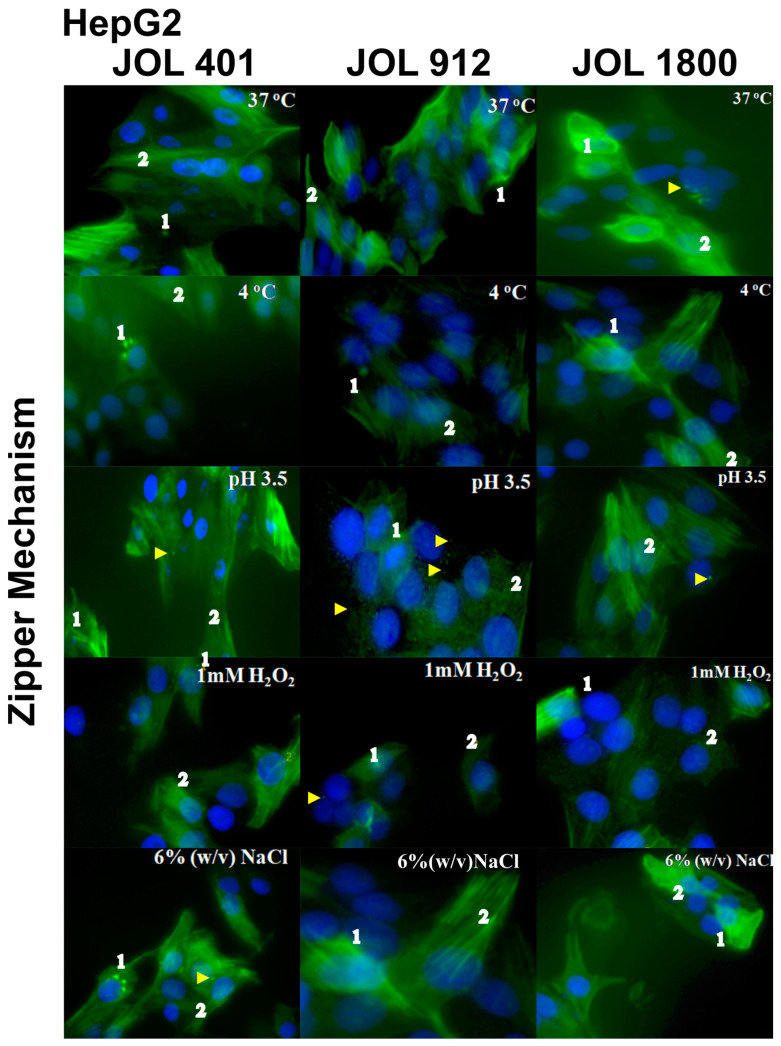
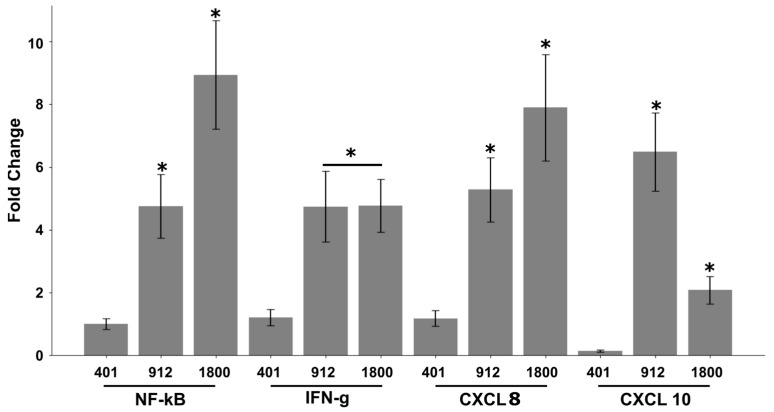
In the current study, two Typhimurium strains, JOL 912 and JOL 1800, were engineered from the wild-type JOL 401 strain through in-frame deletions of the and genes, with JOL 1800 also lacking . These deletions significantly attenuated the strains, impairing their intracellular survival and creating unique immunological profiles. This study investigates the response of these strains to various abiotic stress conditions commonly experienced in vivo, including temperature, acidity, osmotic, and oxidative stress. Notably, cold stress induced a non-significant trend towards increased invasion by compared to other stressors. Despite the observed attenuation, no significant alterations in entry mechanisms (trigger vs. zipper) were noted between these strains, although variations were evident depending on the host cell type. Both strains effectively localized within the cytoplasm, demonstrating their ability to invade and interact with the intracellular environment. Immunologically, JOL 912 elicited a robust response, marked by substantial activation of nuclear factor kappa B (NF-kB), and chemokines, interleukin 8 (CXCL 8) and interleukin 10 (CXCL 10), comparable to the wild-type JOL 401 (over a fourfold increase compared to JOL 1800). In contrast, JOL 1800 exhibited a minimal immune response. Additionally, these attenuations influenced the expression of cyclins D1 and B1 and caspases 3 and 7, indicating cell cycle arrest at the G2/M phase and promotion of the G0/G1 to S phase transition, alongside apoptosis in infected cells. These findings provide valuable insights into the mechanisms governing the association, internalization, and survival of mutants, enhancing our understanding of their regulatory effects on host cell physiology.
在当前的研究中,通过对野生型 JOL401 菌株中 和 基因的框内缺失,构建了两个沙门氏菌菌株 JOL912 和 JOL1800。这些缺失显著削弱了这些菌株,损害了它们的细胞内生存能力,并产生了独特的免疫学特征。本研究调查了这些菌株对体内常见的各种非生物应激条件的反应,包括温度、酸度、渗透压和氧化应激。值得注意的是,与其他应激源相比,冷应激导致 入侵的非显著趋势增加。尽管观察到衰减,但这些菌株之间的进入机制(触发与拉链)没有明显变化,尽管根据宿主细胞类型存在差异。两种菌株都有效地定位于细胞质内,证明了它们入侵和与细胞内环境相互作用的能力。免疫学上,JOL912 引起了强烈的反应,标志为核因子 kappa B(NF-kB)和趋化因子白细胞介素 8(CXCL8)和白细胞介素 10(CXCL10)的大量激活,与野生型 JOL401 相当(与 JOL1800 相比增加了四倍)。相比之下,JOL1800 表现出最小的免疫反应。此外,这些衰减影响了细胞周期蛋白 D1 和 B1 以及半胱天冬酶 3 和 7 的表达,表明感染细胞的细胞周期停滞在 G2/M 期,并促进 G0/G1 向 S 期的转变,同时促进细胞凋亡。这些发现为理解控制 突变体的关联、内化和生存的机制提供了有价值的见解,增强了我们对它们对宿主细胞生理学的调节作用的理解。