Grigorescu Andrei Emanuel, Anghel Andrei, Koch Claudia, Horhat Florin George, Savescu Delia, Feier Horea
Department of Cardiology, "Victor Babes" University of Medicine and Pharmacy Timisoara, 300041 Timisoara, Romania.
Research Center of the Institute of Cardiovascular and Heart Disease of Timisoara, 300310 Timisoara, Romania.
Life (Basel). 2024 Jul 25;14(8):934. doi: 10.3390/life14080934.
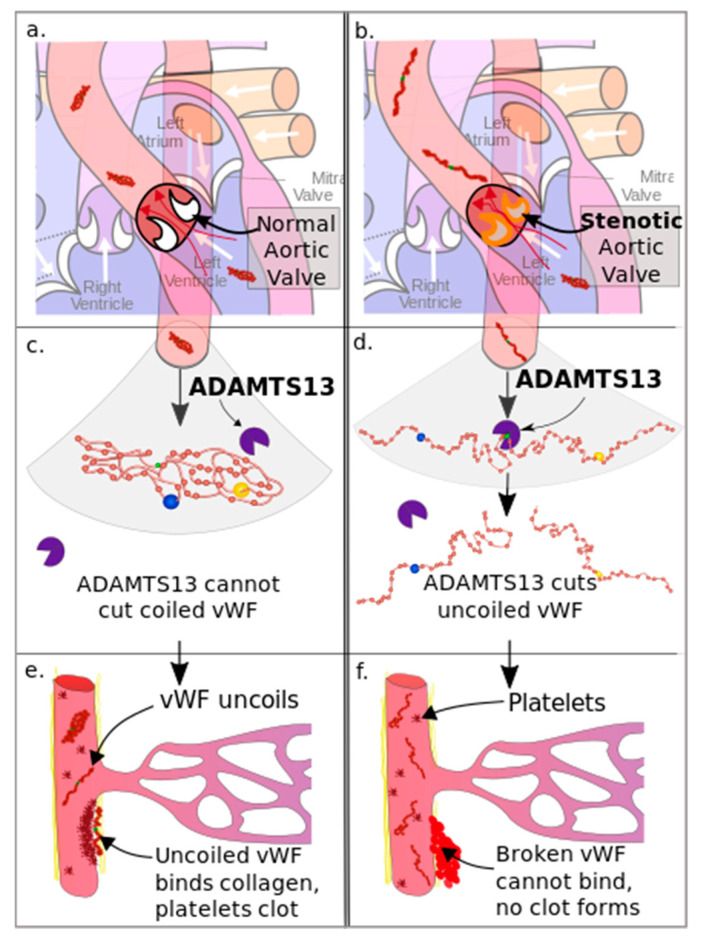
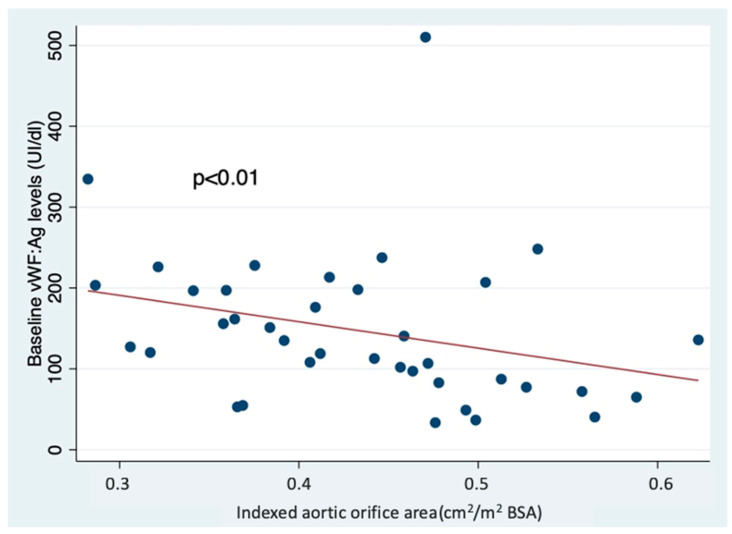
Aortic stenosis (AS) is a prevalent valvular disorder that poses a significant burden on healthcare systems due to its debilitating symptoms and high mortality rates if left untreated. Surgical aortic valve replacement (SAVR) and transcatheter aortic valve replacement (TAVR) are the primary interventions for severe AS, but perioperative complications such as bleeding remain a concern. Von Willebrand factor (VWF), a crucial player in hemostasis, is known to be altered in AS and may contribute to the hemostatic imbalance observed in these patients. This prospective study aimed to investigate the association between prosthetic valve type, size, and postprocedural VWF levels in patients undergoing aortic valve replacement (AVR) for severe AS. This study involved 39 consecutive patients diagnosed with severe AS who underwent SAVR or TAVR. By elucidating the VWF dynamics associated with different prosthetic valves, this study sought to provide valuable insights into personalized valve selection and perioperative management strategies.
主动脉瓣狭窄(AS)是一种常见的瓣膜疾病,由于其令人衰弱的症状以及若不治疗则死亡率高,给医疗系统带来了巨大负担。外科主动脉瓣置换术(SAVR)和经导管主动脉瓣置换术(TAVR)是重度AS的主要治疗手段,但围手术期并发症如出血仍是一个令人担忧的问题。血管性血友病因子(VWF)是止血过程中的关键因子,已知在AS患者中会发生改变,可能导致这些患者出现止血失衡。这项前瞻性研究旨在调查重度AS患者接受主动脉瓣置换术(AVR)时,人工瓣膜类型、大小与术后VWF水平之间的关联。该研究纳入了39例连续诊断为重度AS并接受SAVR或TAVR的患者。通过阐明与不同人工瓣膜相关的VWF动态变化,本研究旨在为个性化瓣膜选择和围手术期管理策略提供有价值的见解。