Toumasis Panagiotis, Vrioni Georgia, Tsinopoulos Ioannis T, Exindari Maria, Samonis George
MSc in Ocular Surgery, School of Medicine, Aristotle University of Thessaloniki, 541 24 Thessaloniki, Greece.
Department of Microbiology, School of Medicine, National and Kapodistrian University of Athens, 115 25 Athens, Greece.
Microorganisms. 2024 Jul 28;12(8):1544. doi: 10.3390/microorganisms12081544.
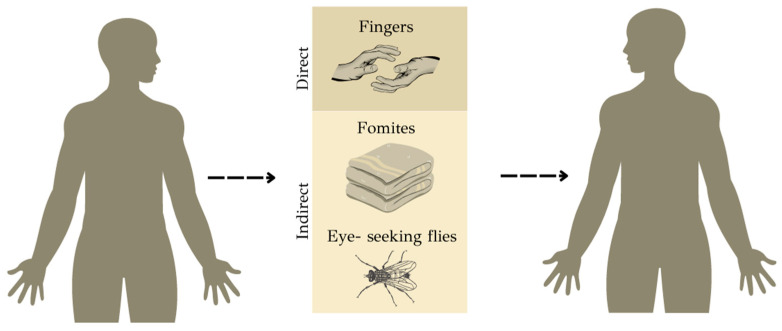
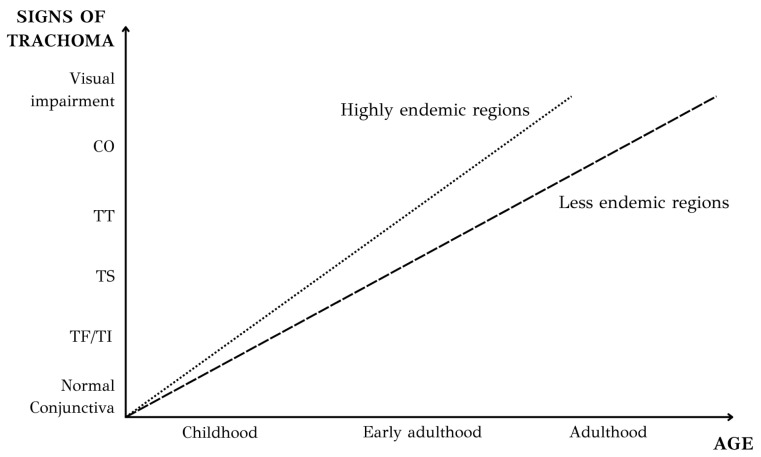
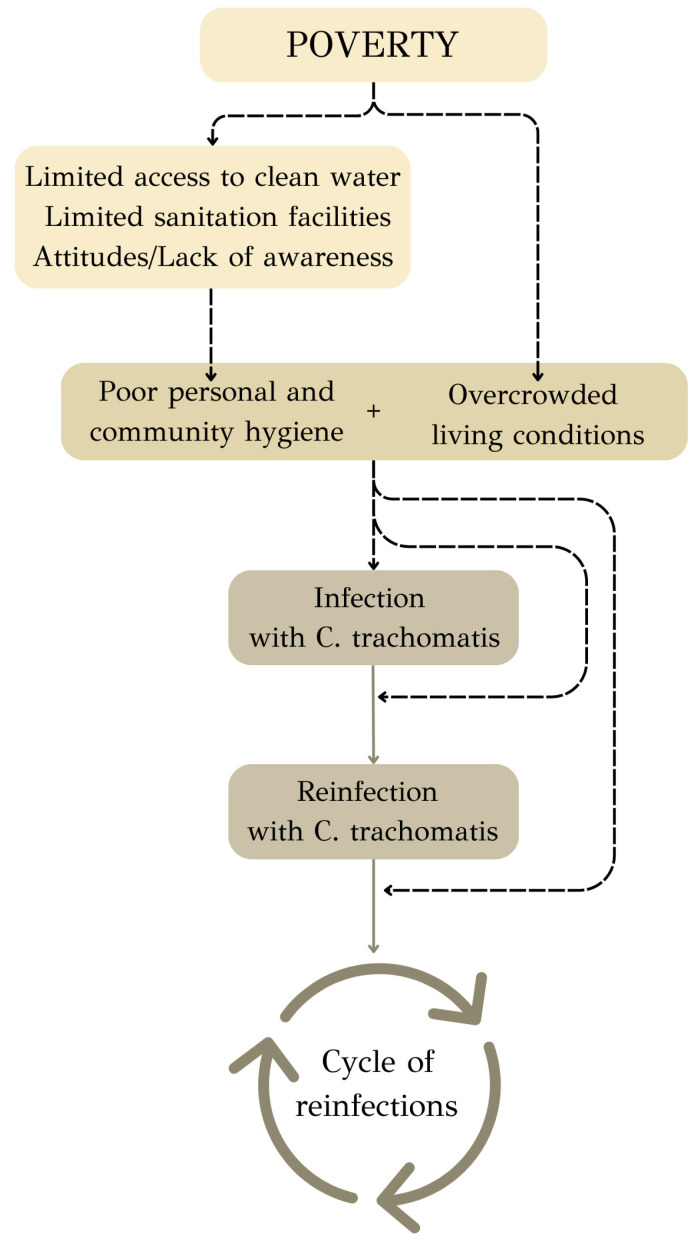
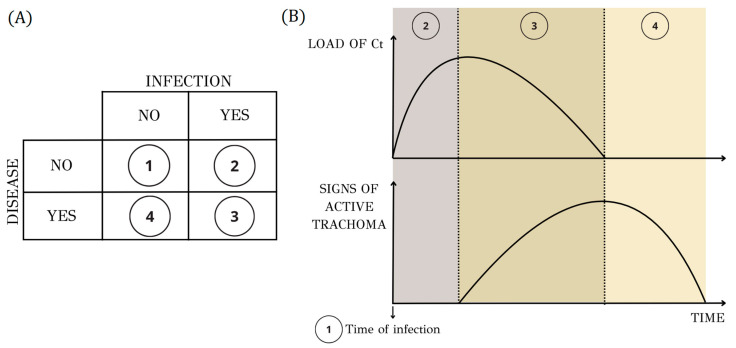
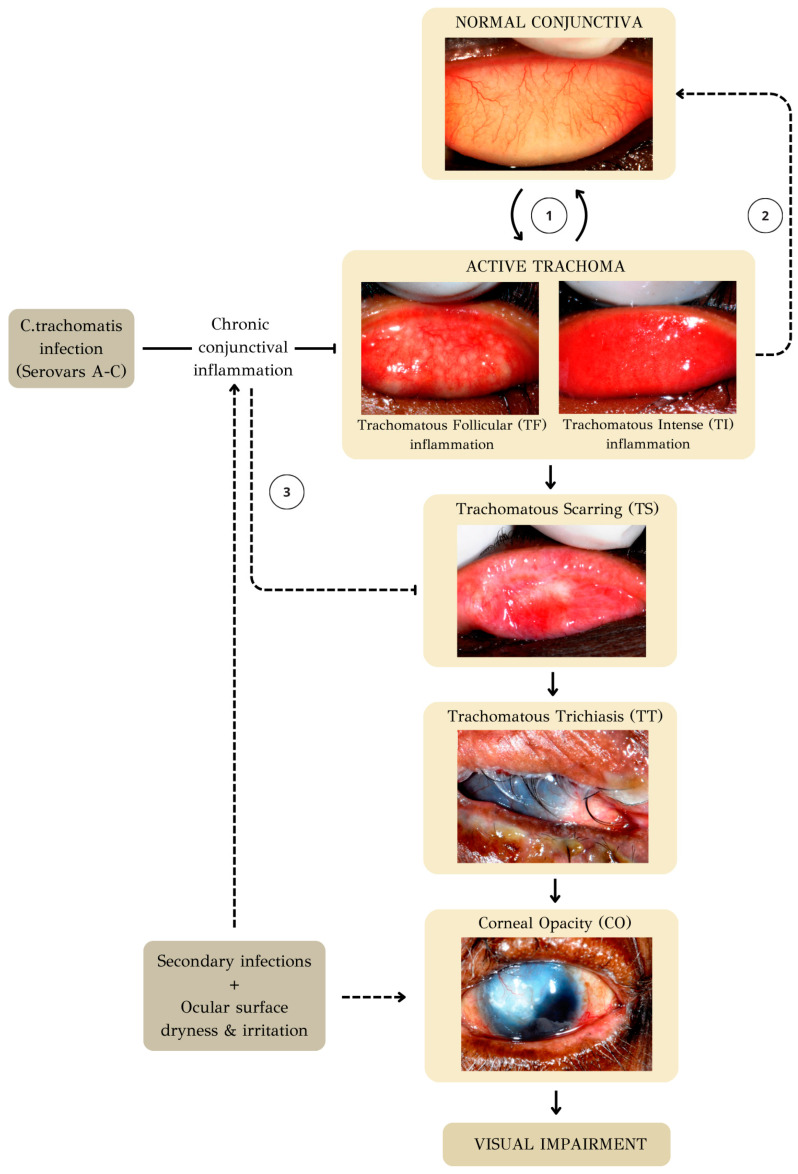
Trachoma is the most common infectious cause of blindness worldwide. This review investigates the pathogenesis of trachoma, focusing on its causative agent, transmission pathways, disease progression, and immune responses. Trachoma is caused by serovars A-C of the bacterium Chlamydia trachomatis (Ct). Transmission occurs through direct or indirect exchanges of ocular and nasal secretions, especially in regions with poor hygiene and overcrowded living conditions. The disease is initiated in early childhood by repeated infection of the ocular surface by Ct. This triggers recurrent chronic inflammatory episodes, leading to the development of conjunctival scarring and potentially to trichiasis, corneal opacity, and visual impairment. Exploring the pathogenesis of trachoma not only unveils the intricate pathways and mechanisms underlying this devastating eye disease but also underscores the multifaceted dimensions that must be considered in its management.
沙眼是全球最常见的感染性致盲原因。本综述研究了沙眼的发病机制,重点关注其病原体、传播途径、疾病进展和免疫反应。沙眼由沙眼衣原体(Ct)的A - C血清型引起。传播通过眼部分泌物和鼻分泌物的直接或间接接触发生,尤其是在卫生条件差和居住环境拥挤的地区。该疾病在儿童早期由Ct反复感染眼表引发。这会引发反复的慢性炎症发作,导致结膜瘢痕形成,并可能导致倒睫、角膜混浊和视力损害。探索沙眼的发病机制不仅揭示了这种毁灭性眼病背后错综复杂的途径和机制,也强调了在其管理中必须考虑的多方面因素。