Bedoya Katherine, Mas Albert, Rozès Nicolas, Jara Carla, Portillo María Del Carmen
Biotecnología Enológica, Department Bioquímica i Biotecnologia, Facultat d'Enologia, Universitat Rovira i Virgili, C/Marcel·lí Domingo 1, 43007 Tarragona, Spain.
Biotecnologia Microbiana dels Aliments, Department Bioquímica i Biotecnologia, Facultat d'Enologia, Universitat Rovira i Virgili, C/Marcel·lí Domingo 1, 43007 Tarragona, Spain.
Microorganisms. 2024 Aug 13;12(8):1655. doi: 10.3390/microorganisms12081655.
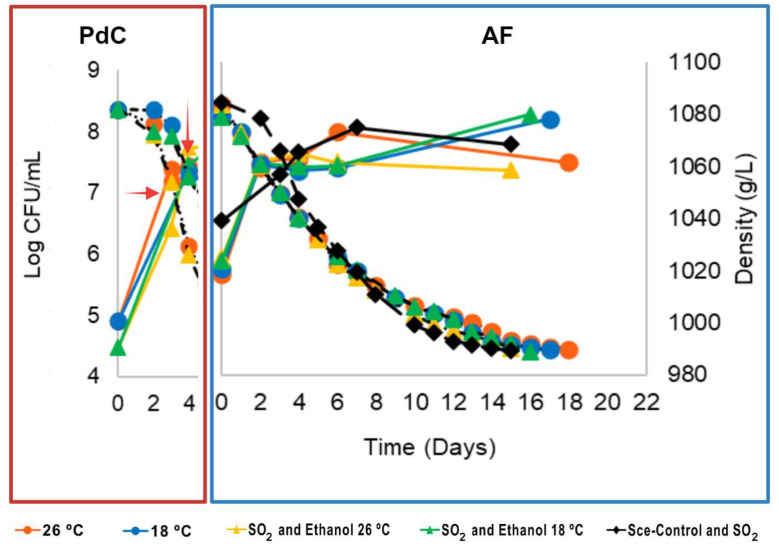
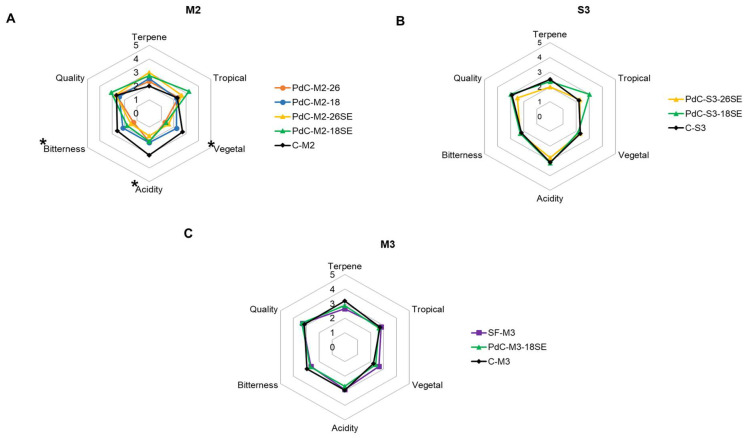
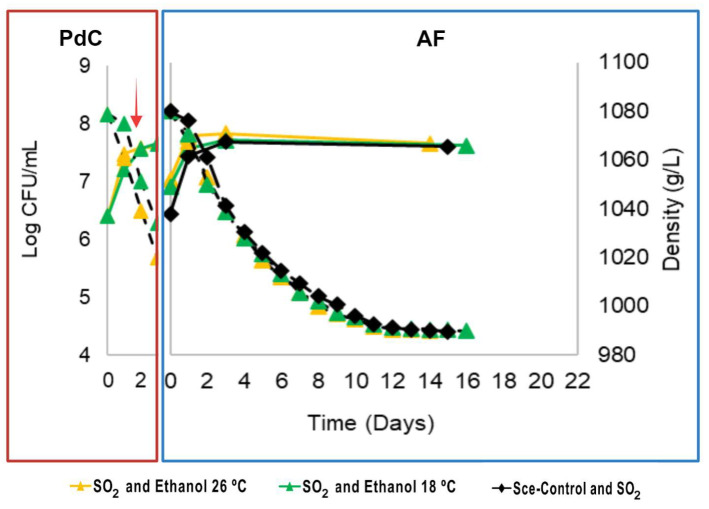
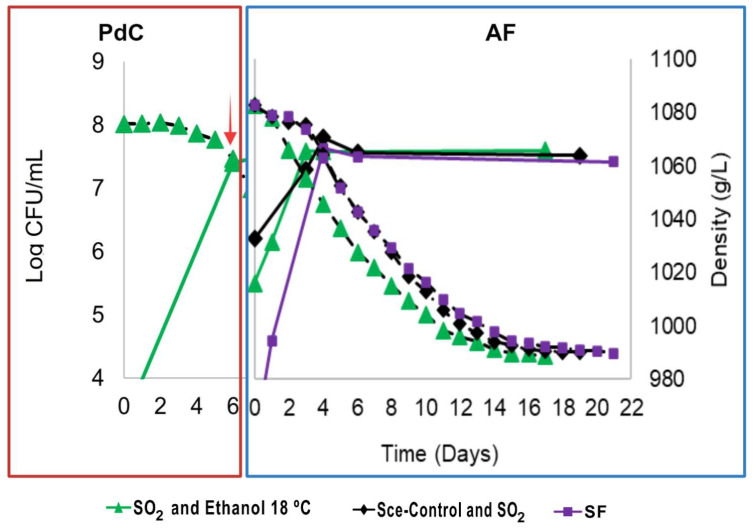
Controlling the microorganisms involved in alcoholic fermentation during wine production can be achieved by adding a small quantity of spontaneously fermenting must to freshly crushed grapes, a technique known as (PdC). This method not only serves as an inoculation starter but also enhances the microbial footprint unique to each wine region. Recent studies have confirmed that wines inoculated with PdC exhibit efficient fermentation kinetics comparable to those inoculated with commercial strains of . However, further research is required to draw robust conclusions about the chemical and sensory impacts of PdC-inoculated wines. In this study, we examined the chemical and sensory effects of the PdC technique across three different harvests: Muscat of Alexandria (Spain, harvests 2022 and 2023) and Sauvignon Blanc (Chile, harvest 2023). Each PdC was prepared using various stressors (sulfur dioxide, ethanol, and temperature). Our findings revealed that wines produced with PdC exhibited similar fermentation kinetics and sensory profiles to those inoculated with commercial strains. Notably, PdC fermentations resulted in lower concentrations of acetic acid compared to both the commercial strain and spontaneous fermentations. The sensory analysis indicated that PdC wines significantly differed from those made with commercial strains, with PdC wines displaying more pronounced tropical notes. These results suggest that the PdC technique, particularly when using specific stressors, can maintain desirable fermentation characteristics while enhancing certain sensory attributes, offering a viable alternative to traditional inoculation methods.
在葡萄酒生产过程中,通过向新压榨的葡萄中添加少量自然发酵的葡萄汁(一种称为PdC的技术),可以控制参与酒精发酵的微生物。这种方法不仅可作为接种起始物,还能增强每个葡萄酒产区独特的微生物特征。最近的研究证实,用PdC接种的葡萄酒表现出与用商业酵母菌株接种的葡萄酒相当的高效发酵动力学。然而,需要进一步研究才能就用PdC接种的葡萄酒的化学和感官影响得出有力结论。在本研究中,我们考察了PdC技术在三个不同收获季的化学和感官效果:亚历山大麝香葡萄(西班牙,2022年和2023年收获季)和长相思葡萄(智利,2023年收获季)。每种PdC都使用了各种应激源(二氧化硫、乙醇和温度)制备。我们的研究结果表明,用PdC生产的葡萄酒与用商业酵母菌株接种的葡萄酒表现出相似的发酵动力学和感官特征。值得注意的是,与商业酵母菌株和自然发酵相比,PdC发酵产生的乙酸浓度更低。感官分析表明,PdC葡萄酒与用商业酵母菌株酿造的葡萄酒有显著差异,PdC葡萄酒表现出更明显的热带风味。这些结果表明,PdC技术,特别是在使用特定应激源时,可以保持理想的发酵特性,同时增强某些感官属性,为传统接种方法提供了一种可行的替代方案。