Duke-NUS Medical School, Singapore 169857, Singapore.
Department of Radiology, Sengkang General Hospital, Singapore 544886, Singapore.
Nutrients. 2024 Aug 20;16(16):2768. doi: 10.3390/nu16162768.
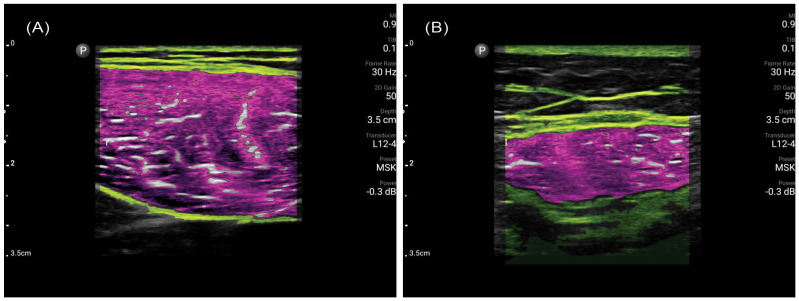
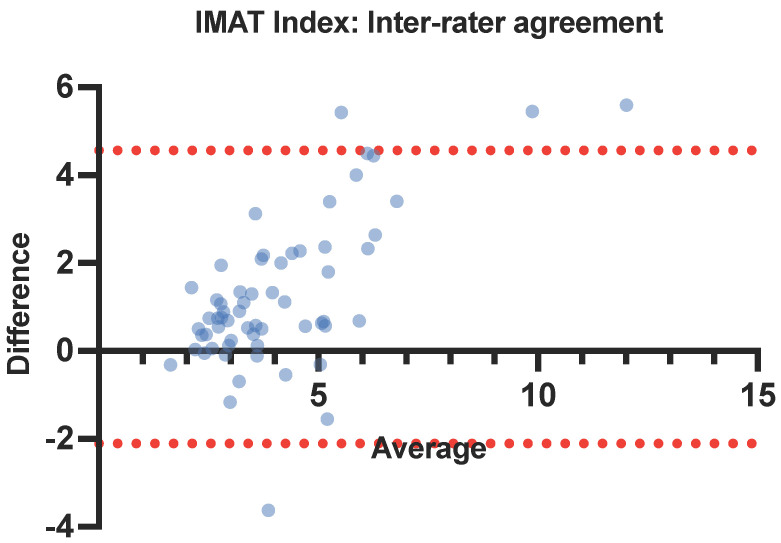
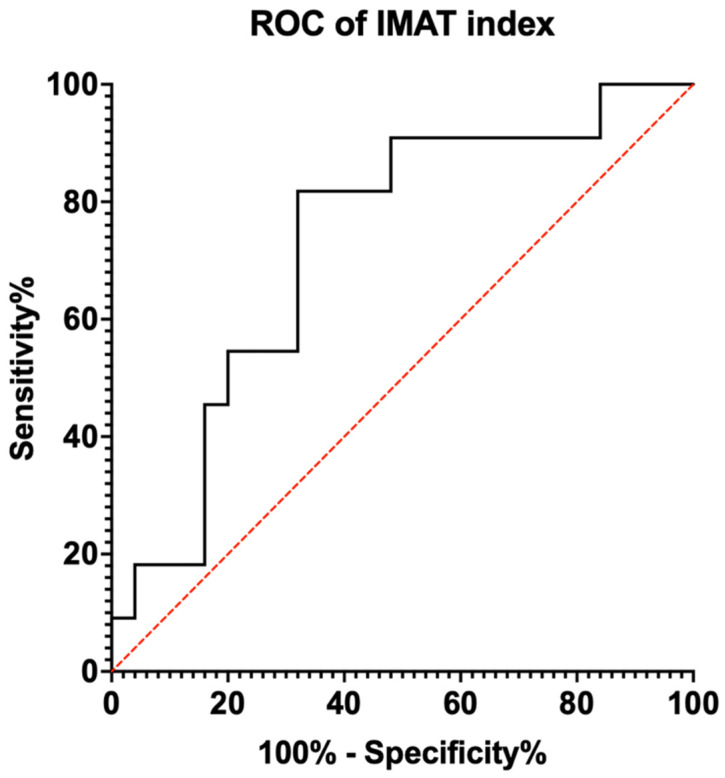
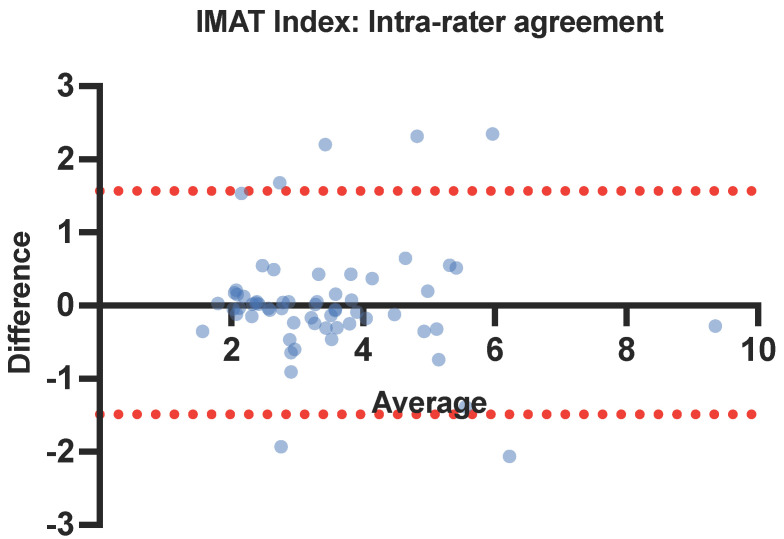
Sarcopenia has been recognized as a determining factor in surgical outcomes and is associated with an increased risk of postoperative complications and readmission. Diagnosis is currently based on clinical guidelines, which includes assessment of skeletal muscle mass but not quality. Ultrasound has been proposed as a useful point-of-care diagnostic tool to assess muscle quality, but no validated cut-offs for sarcopenia have been reported. Using novel automated artificial intelligence (AI) software to interpret ultrasound images may assist in mitigating the operator-dependent nature of the modality. Our study aims to evaluate the fidelity of AI-aided ultrasound as a reliable and reproducible modality to assess muscle quality and diagnose sarcopenia in surgical patients. Thirty-six adult participants from an outpatient clinic were recruited for this prospective cohort study. Sarcopenia was diagnosed according to Asian Working Group for Sarcopenia (AWGS) 2019 guidelines. Ultrasonography of the rectus femoris muscle was performed, and images were analyzed by an AI software (MuscleSound® (Version 5.69.0)) to derive muscle parameters including intramuscular adipose tissue (IMAT) as a proxy of muscle quality. A receiver operative characteristic (ROC) curve was used to assess the predictive capability of IMAT and its derivatives, with area under the curve (AUC) as a measure of overall diagnostic accuracy. To evaluate consistency between ultrasound users of different experience, intra- and inter-rater reliability of muscle ultrasound parameters was analyzed in a separate cohort using intraclass correlation coefficients (ICC) and Bland-Altman plots. The median age was 69.5 years (range: 26-87), and the prevalence of sarcopenia in the cohort was 30.6%. The ROC curve plotted with IMAT index (IMAT% divided by muscle area) yielded an AUC of 0.727 (95% CI: 0.551-0.904). An optimal cut-off point of 4.827%/cm for IMAT index was determined with a Youden's Index of 0.498. We also demonstrated that IMAT index has excellent intra-rater reliability (ICC = 0.938, CI: 0.905-0.961) and good inter-rater reliability (ICC = 0.776, CI: 0.627-0.866). In Bland-Altman plots, the limits of agreement were from -1.489 to 1.566 and -2.107 to 4.562, respectively. IMAT index obtained via ultrasound has the potential to act as a point-of-care evaluation for sarcopenia screening and diagnosis, with good intra- and inter-rater reliability. The proposed IMAT index cut-off maximizes sensitivity for case finding, supporting its use as an easily implementable point-of-care test in the community for sarcopenia screening. Further research incorporating other ultrasound parameters of muscle quality may provide the basis for a more robust diagnostic tool to help predict surgical risk and outcomes.
肌肉减少症已被认为是手术结果的决定因素,与术后并发症和再入院风险增加有关。目前的诊断基于临床指南,包括评估骨骼肌量,但不包括质量。超声已被提议作为一种有用的即时诊断工具来评估肌肉质量,但尚未报道用于肌肉减少症的验证截止值。使用新型自动化人工智能 (AI) 软件来解释超声图像可能有助于减轻该模式对操作人员的依赖性。我们的研究旨在评估人工智能辅助超声作为一种可靠且可重复的评估手术患者肌肉质量和诊断肌肉减少症的方法的准确性。
这项前瞻性队列研究招募了来自门诊的 36 名成年参与者。根据亚洲肌肉减少症工作组 (AWGS) 2019 指南诊断肌肉减少症。对股直肌进行超声检查,并使用 AI 软件 (MuscleSound®(版本 5.69.0)) 分析图像,得出包括肌内脂肪组织 (IMAT) 在内的肌肉参数,IMAT 作为肌肉质量的替代指标。使用受试者工作特征 (ROC) 曲线评估 IMAT 及其衍生物的预测能力,曲线下面积 (AUC) 作为整体诊断准确性的衡量标准。为了评估不同经验的超声使用者之间的一致性,在另一个队列中使用组内相关系数 (ICC) 和 Bland-Altman 图分析肌肉超声参数的内部和内部观察者可靠性。
中位年龄为 69.5 岁(范围:26-87),队列中肌肉减少症的患病率为 30.6%。IMAT 指数(IMAT%除以肌肉面积)绘制的 ROC 曲线的 AUC 为 0.727(95%CI:0.551-0.904)。IMAT 指数的最佳截断点为 4.827%/cm,Youden 指数为 0.498。我们还表明,IMAT 指数具有极好的内部观察者可靠性(ICC=0.938,CI:0.905-0.961)和良好的内部观察者可靠性(ICC=0.776,CI:0.627-0.866)。在 Bland-Altman 图中,一致性界限分别为-1.489 至 1.566 和-2.107 至 4.562。
通过超声获得的 IMAT 指数有可能作为肌肉减少症筛查和诊断的即时评估工具,具有良好的内部和内部观察者可靠性。所提出的 IMAT 指数截断值最大限度地提高了病例发现的敏感性,支持其作为社区中用于肌肉减少症筛查的易于实施的即时护理测试。进一步结合肌肉质量的其他超声参数的研究可能为更强大的诊断工具提供基础,以帮助预测手术风险和结果。