Jaing Tang-Her, Wang Yi-Lun, Chiu Chia-Chi
Division of Hematology and Oncology, Department of Pediatrics, Chang Gung Memorial Hospital, 5 Fu-Shin Street, Kwei-Shan, Taoyuan 33315, Taiwan, China.
Division of Nursing, Chang Gung Memorial Hospital, 5 Fu-Shin Street, Kwei-Shan, Taoyuan 33315, Taiwan, China.
Pharmaceuticals (Basel). 2024 Jul 26;17(8):991. doi: 10.3390/ph17080991.
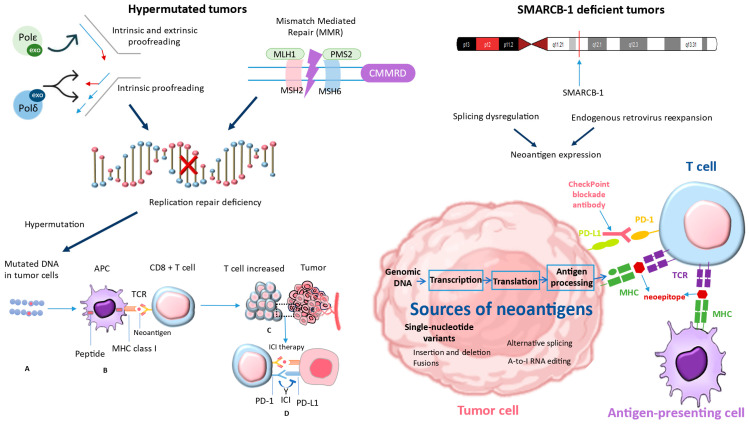
The knowledge surrounding the application of immune checkpoint inhibitors (ICIs) in the treatment of pediatric cancers is continuously expanding and evolving. These therapies work by enhancing the body's natural immune response against tumors, which may have been suppressed by certain pathways. The effectiveness of ICIs in treating adult cancers has been widely acknowledged. However, the results of early phase I/II clinical trials that exclusively targeted the use of ICIs for treating different pediatric cancers have been underwhelming. The response rates to ICIs have generally been modest, except for cases of pediatric classic Hodgkin lymphoma. There seems to be a notable disparity in the immunogenicity of childhood cancers compared to adult cancers, potentially accounting for this phenomenon. On average, childhood cancers tend to have significantly fewer neoantigens. In recent times, there has been a renewed sense of optimism regarding the potential benefits of ICI therapies for specific groups of children with cancer. In initial research, individuals diagnosed with pediatric hypermutated and SMARCB1-deficient cancers have shown remarkable positive outcomes when treated with ICI therapies. This is likely due to the underlying biological factors that promote the expression of neoantigens and inflammation within the tumor. Ongoing trials are diligently assessing the effectiveness of ICIs for pediatric cancer patients in these specific subsets. This review aimed to analyze the safety and effectiveness of ICIs in pediatric patients with different types of highly advanced malignancies.
围绕免疫检查点抑制剂(ICI)在儿童癌症治疗中的应用的知识正在不断扩展和演变。这些疗法通过增强人体对肿瘤的天然免疫反应来发挥作用,而肿瘤的这种免疫反应可能已被某些途径抑制。ICI在治疗成人癌症方面的有效性已得到广泛认可。然而,专门针对ICI治疗不同儿童癌症的早期I/II期临床试验结果并不理想。除了儿童经典霍奇金淋巴瘤病例外,对ICI的反应率普遍不高。与成人癌症相比,儿童癌症的免疫原性似乎存在显著差异,这可能是造成这一现象的原因。平均而言,儿童癌症往往具有明显较少的新抗原。近年来,人们对ICI疗法对特定儿童癌症群体的潜在益处重新产生了乐观情绪。在初步研究中,被诊断患有儿童高突变和SMARCB1缺陷癌症的个体在接受ICI疗法治疗时显示出显著的积极结果。这可能是由于促进肿瘤内新抗原表达和炎症的潜在生物学因素。正在进行的试验正在认真评估ICI对这些特定亚组中儿童癌症患者的有效性。本综述旨在分析ICI在患有不同类型高度晚期恶性肿瘤的儿科患者中的安全性和有效性。