Forsell Pontus, Parrado Fernández Cristina, Nilsson Boel, Sandin Johan, Nordvall Gunnar, Segerdahl Märta
AlzeCure Pharma AB, Hälsovägen 7, 141 57 Huddinge, Sweden.
Department of Neurobiology, Care Sciences and Society, Karolinska Institutet, Alfred Nobels allé 23, 141 52 Huddinge, Sweden.
Pharmaceuticals (Basel). 2024 Jul 28;17(8):997. doi: 10.3390/ph17080997.
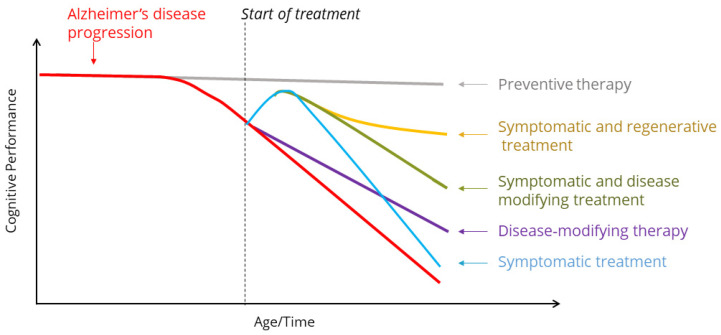
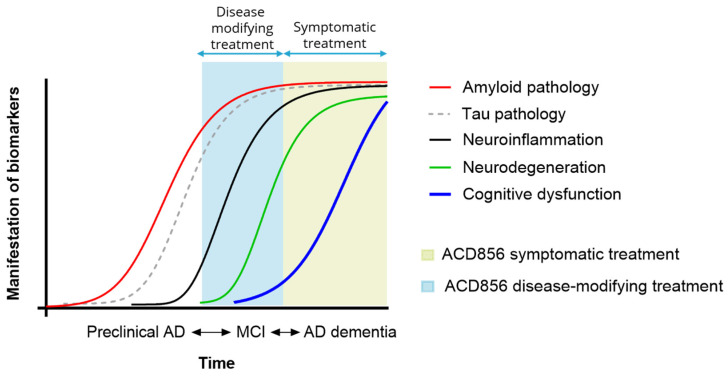
Neurotrophins are important regulators of neuronal and non-neuronal functions. As such, the neurotrophins and their receptors, the tropomyosin receptor kinase (Trk) family of receptor tyrosine kinases, has attracted intense research interest and their role in multiple diseases including Alzheimer's disease has been described. Attempts to administer neurotrophins to patients have been reported, but the clinical trials have so far have been hampered by side effects or a lack of clear efficacy. Thus, much of the focus during recent years has been on identifying small molecules acting as agonists or positive allosteric modulators (PAMs) of Trk receptors. Two examples of successful discovery and development of PAMs are the TrkA-PAM E2511 and the pan-Trk PAM ACD856. E2511 has been reported to have disease-modifying effects in preclinical models, whereas ACD856 demonstrates both a symptomatic and a disease-modifying effect in preclinical models. Both molecules have reached the stage of clinical development and were reported to be safe and well tolerated in clinical phase 1 studies, albeit with different pharmacokinetic profiles. These two emerging small molecules are interesting examples of possible novel symptomatic and disease-modifying treatments that could complement the existing anti-amyloid monoclonal antibodies for the treatment of Alzheimer's disease. This review aims to present the concept of positive allosteric modulators of the Trk receptors as a novel future treatment option for Alzheimer's disease and other neurodegenerative and cognitive disorders, and the current preclinical and clinical data supporting this new concept. Preclinical data indicate dual mechanisms, not only as cognitive enhancers, but also a tentative neurorestorative function.
神经营养因子是神经元和非神经元功能的重要调节因子。因此,神经营养因子及其受体——受体酪氨酸激酶的原肌球蛋白受体激酶(Trk)家族,已引起了广泛的研究兴趣,并且它们在包括阿尔茨海默病在内的多种疾病中的作用也已有描述。已有报道尝试给患者施用神经营养因子,但迄今为止,临床试验受到副作用或缺乏明确疗效的阻碍。因此,近年来的大部分研究重点都集中在鉴定作为Trk受体激动剂或正变构调节剂(PAM)的小分子上。成功发现和开发PAM的两个例子是TrkA-PAM E2511和泛Trk PAM ACD856。据报道,E2511在临床前模型中具有疾病修饰作用,而ACD856在临床前模型中显示出症状性和疾病修饰作用。这两种分子都已进入临床开发阶段,并且在1期临床研究中据报道是安全且耐受性良好的,尽管它们具有不同的药代动力学特征。这两种新兴的小分子是可能的新型对症和疾病修饰治疗方法的有趣例子,它们可以补充现有的抗淀粉样蛋白单克隆抗体用于治疗阿尔茨海默病。这篇综述旨在介绍Trk受体正变构调节剂作为阿尔茨海默病以及其他神经退行性和认知障碍的新型未来治疗选择的概念,以及支持这一新概念的当前临床前和临床数据。临床前数据表明其具有双重机制,不仅作为认知增强剂,还具有初步的神经修复功能。