Griffin David T, Gourlay Terence, Maclean Michelle
Department of Biomedical Engineering, University of Strathclyde, Wolfson Building, 106 Rottenrow, Glasgow G4 0NW, UK.
The Robertson Trust Laboratory for Electronic Sterilisation Technologies (ROLEST), Department of Electronic & Electrical Engineering, University of Strathclyde, Royal College Building, 204 George St, Glasgow G1 1XW, UK.
Pathogens. 2024 Aug 19;13(8):698. doi: 10.3390/pathogens13080698.
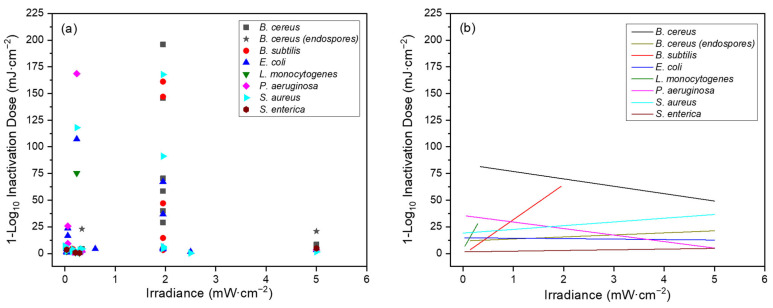
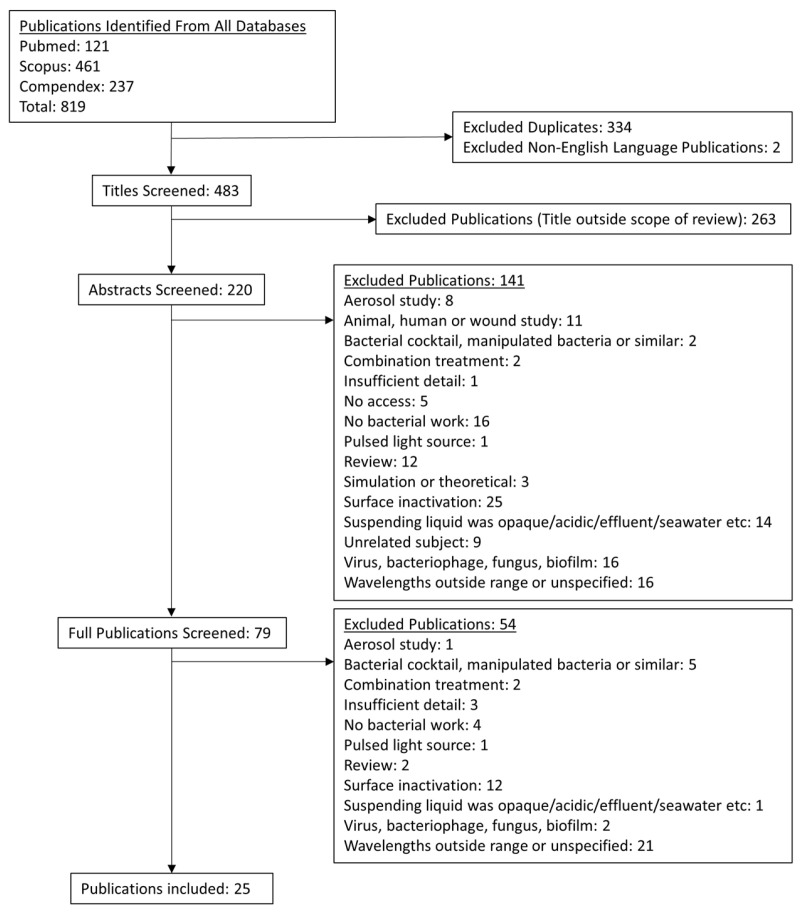
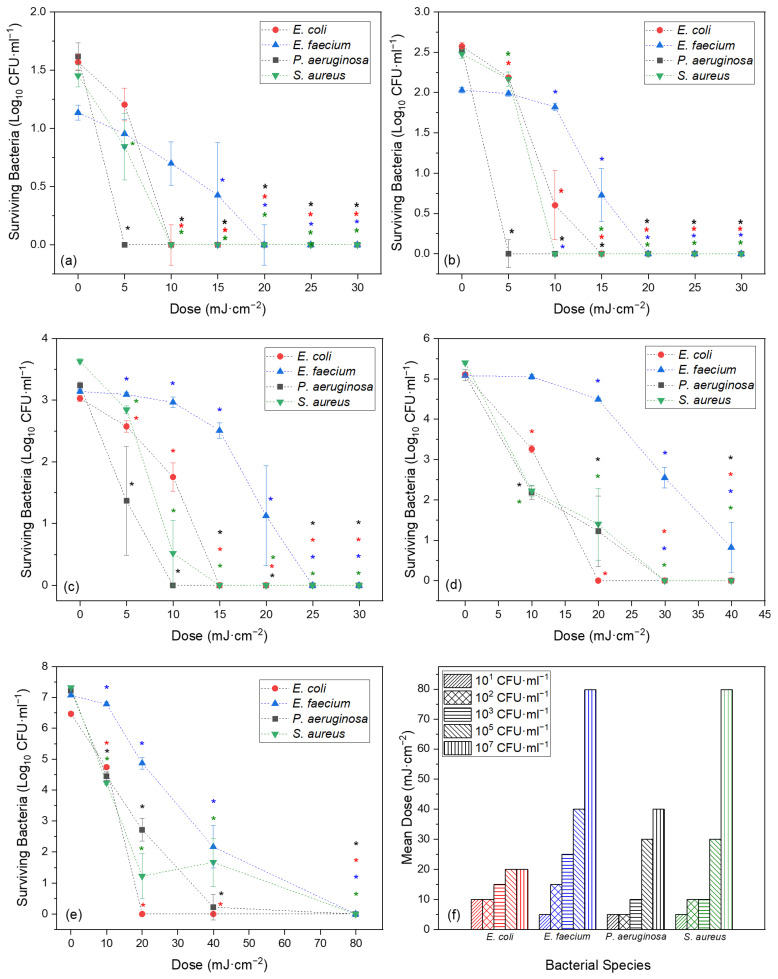
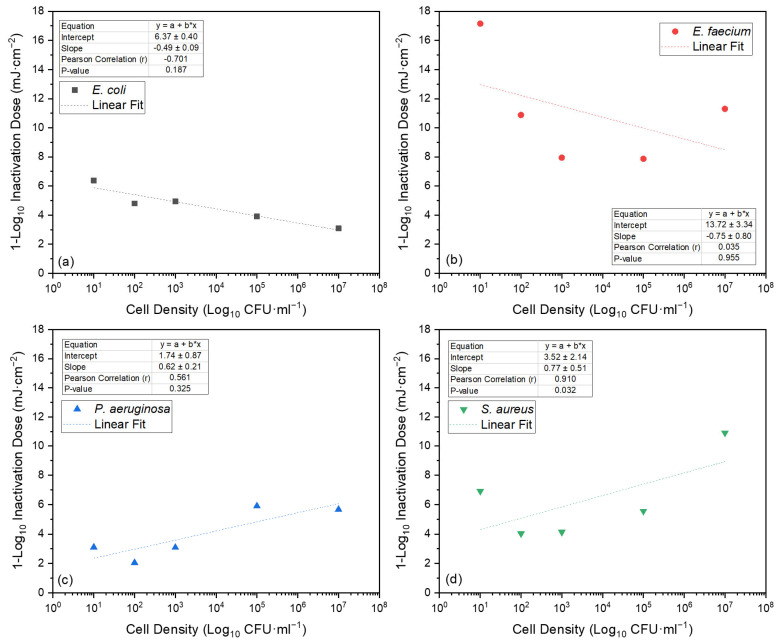
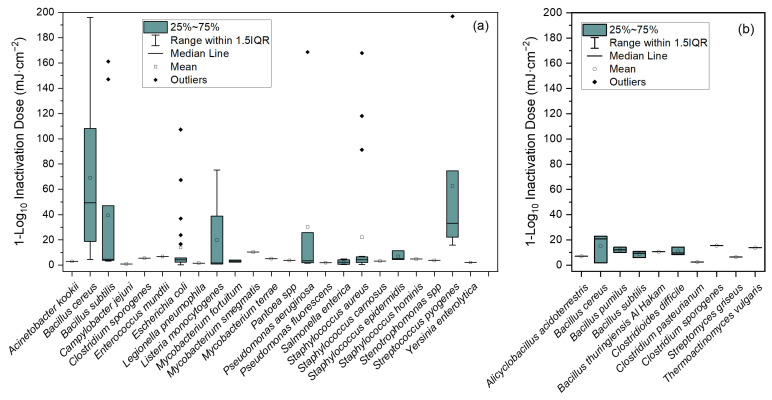
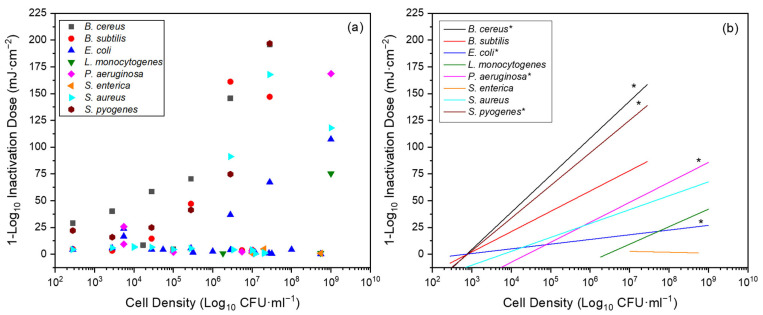
Far-ultraviolet C light, with a wavelength of 200-230 nm, has demonstrated broad-spectrum germicidal efficacy. However, due to increased interest in its use as an alternative antimicrobial, further knowledge about its fundamental bactericidal efficacy is required. This study had two objectives. Firstly, it investigated experimentally the Far-UVC dose-response of common bacteria suspended at various cell densities in transparent buffer, ensuring no influence from photosensitive suspending media. Increasing doses of Far-UVC were delivered to , , and in PBS at 10, 10, 10, 10 and 10 CFU·mL, with surviving colony-forming units enumerated ( ≥ 3). Secondly, through a systematised literature review, this work sought to explore the impact of genus/species, Gram type, cell form, cell density and irradiance on dose-response. The screening of 483 publications was performed with 25 included in the study. Data for 30 species were collated, analysed and compared with the experimental results. Overall, Gram-positive species showed greater resilience to Far-UVC than Gram-negative; some inter-species and inter-genera differences in resilience were identified; endospores were more resilient than vegetative cells; the results suggested that inactivation efficiency may decrease as cell density increases; and no significant correlation was identified between irradiance and bactericidal dose effect. In conclusion, this study has shown Far-UVC light to be an effective decontamination tool against a vast range of bacterial vegetative cells and endospores.
远紫外线C光,波长为200 - 230纳米,已显示出广谱杀菌效果。然而,由于人们对其作为替代抗菌剂的使用兴趣增加,需要进一步了解其基本杀菌效果。本研究有两个目标。首先,通过实验研究了悬浮在透明缓冲液中不同细胞密度的常见细菌的远紫外线C剂量反应,确保不受光敏悬浮介质的影响。将递增剂量的远紫外线C分别以10⁶、10⁷、10⁸、10⁹和10¹⁰CFU·mL的浓度施加于磷酸盐缓冲盐溶液(PBS)中的大肠杆菌、金黄色葡萄球菌、枯草芽孢杆菌和嗜热脂肪芽孢杆菌,对存活的菌落形成单位进行计数(n≥3)。其次,通过系统的文献综述,本研究试图探讨细菌属/种、革兰氏类型、细胞形态、细胞密度和辐照度对剂量反应的影响。对483篇出版物进行了筛选,其中25篇纳入研究。整理、分析了30个物种的数据,并与实验结果进行比较。总体而言,革兰氏阳性菌比革兰氏阴性菌对远紫外线C具有更强的耐受性;确定了一些种间和属间在耐受性上的差异;芽孢比营养细胞更具耐受性;结果表明,随着细胞密度增加,灭活效率可能会降低;并且未发现辐照度与杀菌剂量效应之间存在显著相关性。总之,本研究表明远紫外线C光是一种针对多种细菌营养细胞和芽孢的有效去污工具。