The Robertson Trust Laboratory for Electronic Sterilisation Technologies (ROLEST), Department of Electronic & Electrical Engineering, University of Strathclyde, Glasgow, UK.
Department of Biomedical Engineering, University of Strathclyde, Glasgow, UK.
Arch Microbiol. 2024 May 23;206(6):276. doi: 10.1007/s00203-024-03999-1.
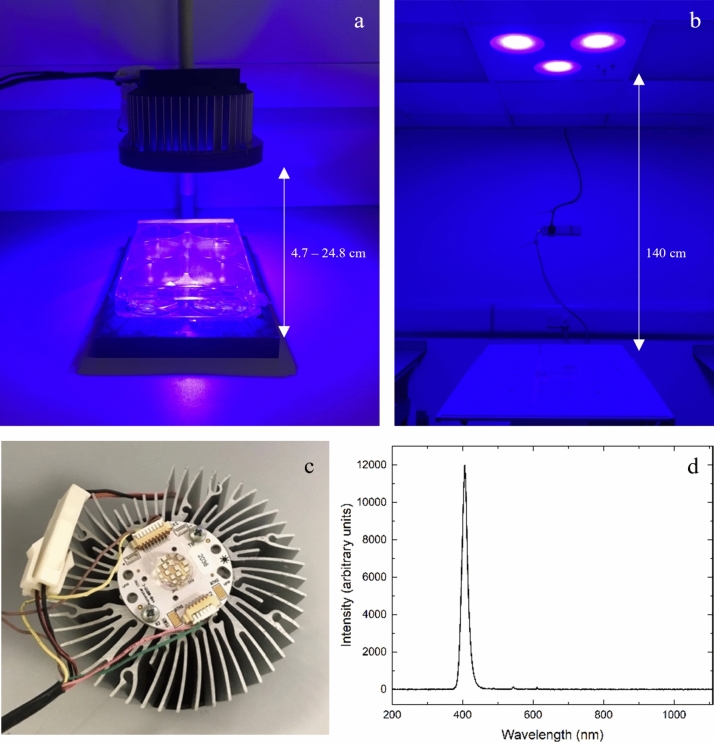
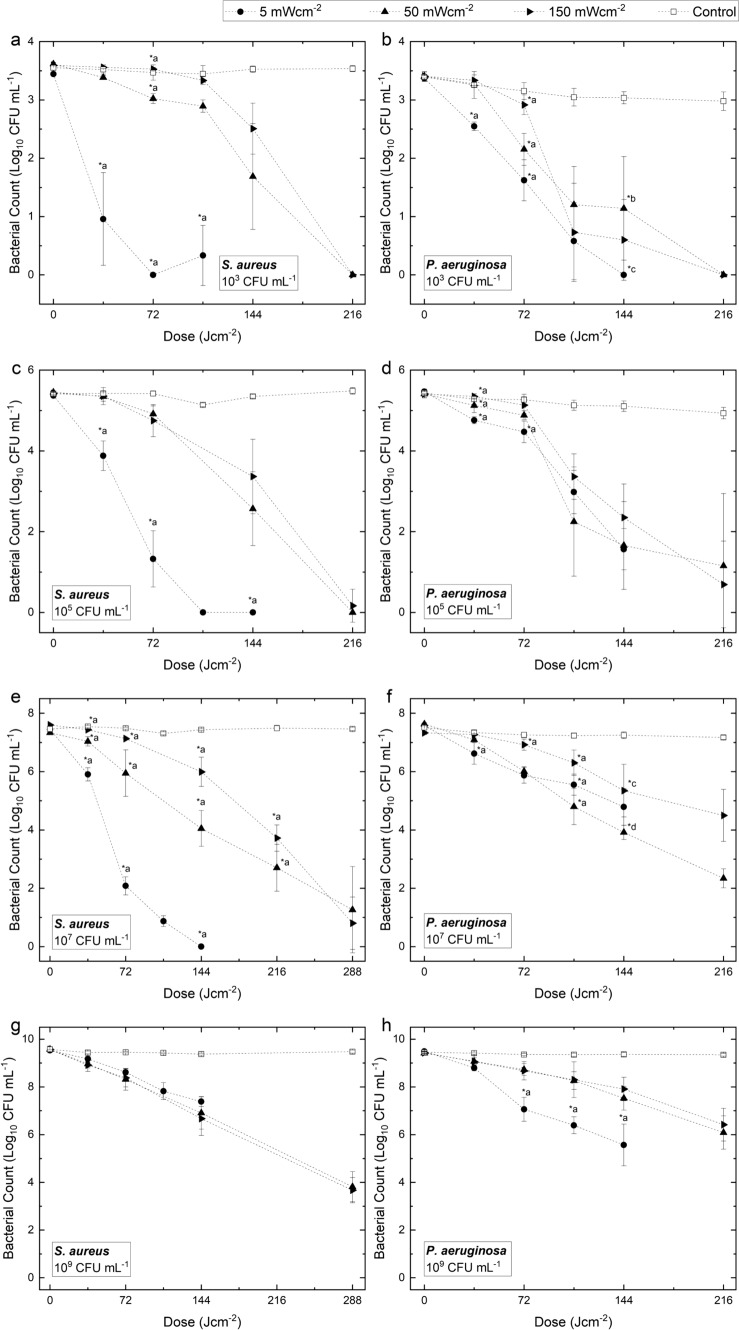
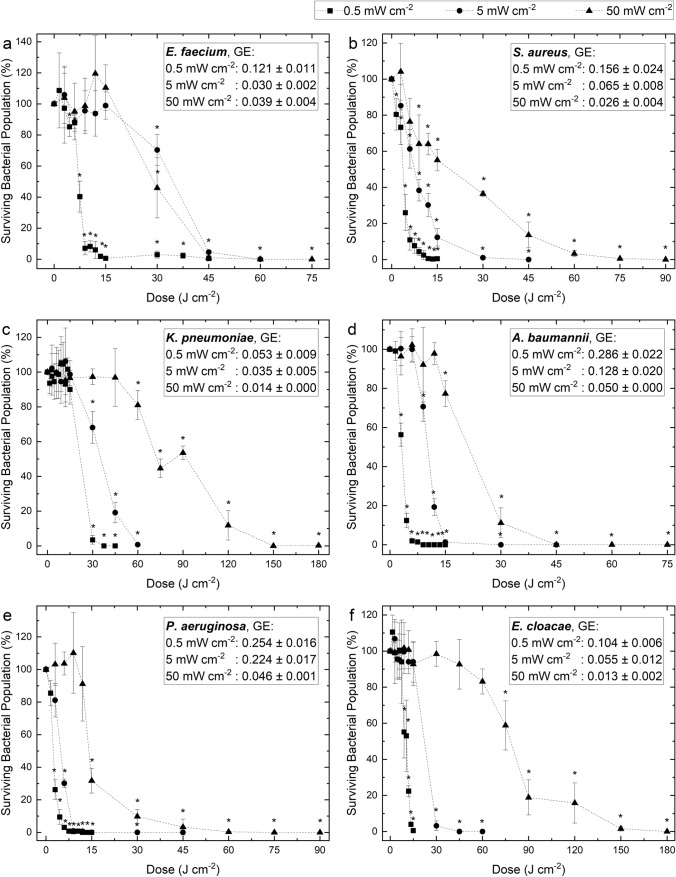
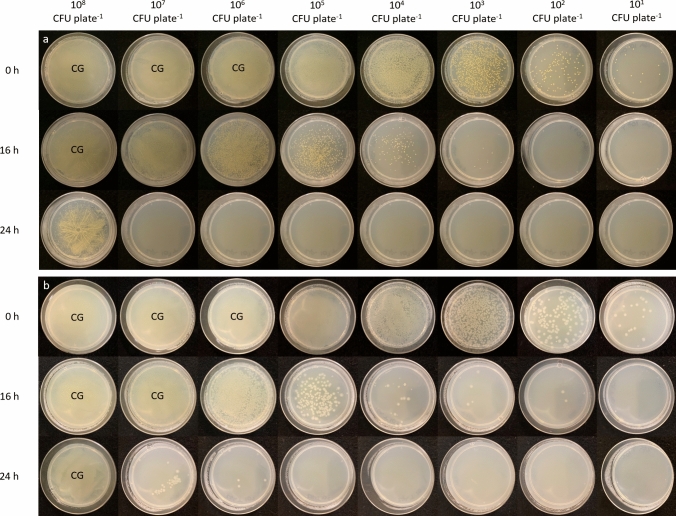
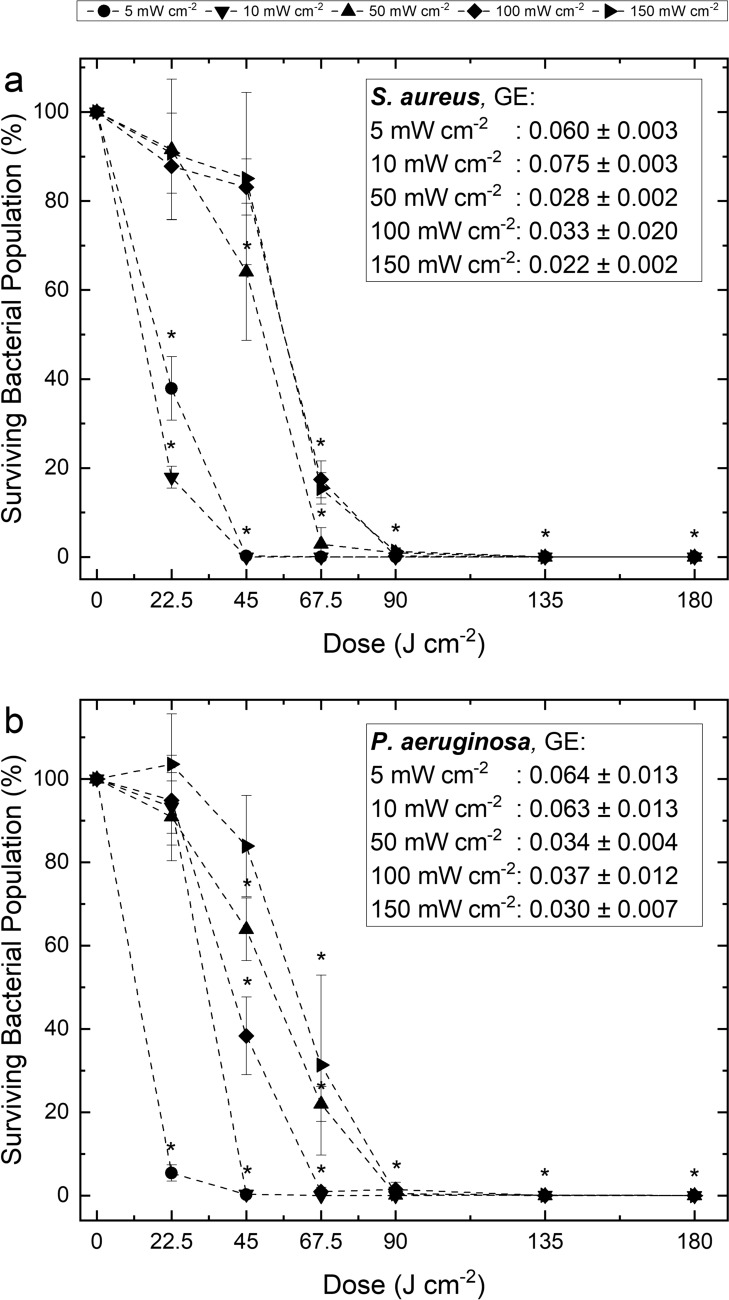
Due to its increased safety over ultraviolet light, there is interest in the development of antimicrobial violet-blue light technologies for infection control applications. To ensure compatibility with exposed materials and tissue, the light irradiances and dose regimes used must be suitable for the target application. This study investigates the antimicrobial dose responses and germicidal efficiency of 405 nm violet-blue light when applied at a range of irradiance levels, for inactivation of surface-seeded and suspended bacteria. Bacteria were seeded onto agar surfaces (10-10 CFUplate) or suspended in PBS (10-10 CFUmL) and exposed to increasing doses of 405-nm light (≤ 288 Jcm) using various irradiances (0.5-150 mWcm), with susceptibility at equivalent light doses compared. Bacterial reductions ≥ 96% were demonstrated in all cases for lower irradiance (≤ 5 mWcm) exposures. Comparisons indicated, on a per unit dose basis, that significantly lower doses were required for significant reductions of all species when exposed at lower irradiances: 3-30 Jcm/0.5 mWcm compared to 9-75 Jcm/50 mWcm for low cell density (10 CFUplate) surface exposures and 22.5 Jcm/5 mWcm compared to 67.5 Jcm/150 mWcm for low density (10 CFUmL) liquid exposures (P ≤ 0.05). Similar patterns were observed at higher densities, excluding S. aureus exposed at 10 CFUmL, suggesting bacterial density at predictable levels has minimal influence on decontamination efficacy. This study provides fundamental evidence of the greater energy efficacy of 405-nm light for inactivation of clinically-significant pathogens when lower irradiances are employed, further supporting its relevance for practical decontamination applications.
由于其安全性高于紫外线,因此人们对开发用于感染控制应用的抗菌紫-蓝光技术产生了兴趣。为了确保与暴露材料和组织的兼容性,必须使用适合目标应用的光辐照度和剂量方案。本研究调查了在不同辐照度水平下,405nm 紫-蓝光的抗菌剂量反应和杀菌效率,用于灭活表面接种和悬浮的细菌。将细菌接种到琼脂表面(10-10 CFUplate)或悬浮在 PBS(10-10 CFUmL)中,并使用各种辐照度(0.5-150 mWcm)暴露于增加的 405nm 光剂量(≤288 Jcm),并比较等效光剂量下的敏感性。在所有情况下,当辐照度较低(≤5 mWcm)时,所有细菌的减少率均≥96%。比较表明,在较低辐照度下,所有物种的显著减少都需要以单位剂量为基础,显著降低剂量:低细胞密度(10 CFUplate)表面暴露时,3-30 Jcm/0.5 mWcm 与 9-75 Jcm/50 mWcm 相比,而低细胞密度(10 CFUmL)液体暴露时,22.5 Jcm/5 mWcm 与 67.5 Jcm/150 mWcm 相比(P≤0.05)。在较高密度下观察到类似的模式,除了以 10 CFUmL 暴露的金黄色葡萄球菌外,这表明在可预测水平下的细菌密度对消毒效果的影响最小。本研究提供了基本证据,证明当使用较低的辐照度时,405nm 光对临床相关病原体的灭活具有更高的能量效率,进一步支持了其在实际消毒应用中的相关性。