Liu Qi, Ahmed Waqar, Li Guoli, He Yilin, Mohany Mohamed, Li Zhaoyu, Shen Tong
Research Institute, Lanzhou Jiaotong University, Lanzhou 730070, China.
Guangdong Province Key Laboratory of Microbial Signals and Disease Control, College of Plant Protection, South China Agricultural University, Guangzhou 510642, China.
Plants (Basel). 2024 Aug 6;13(16):2180. doi: 10.3390/plants13162180.
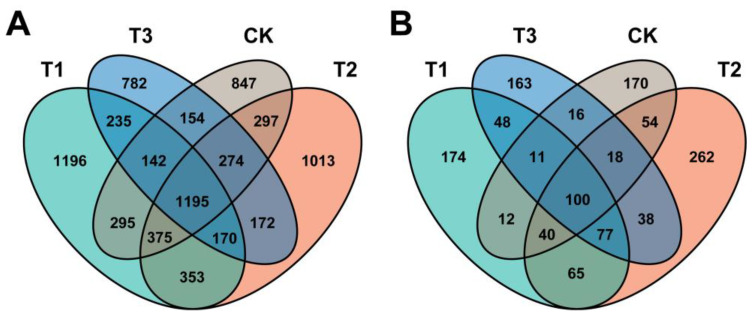
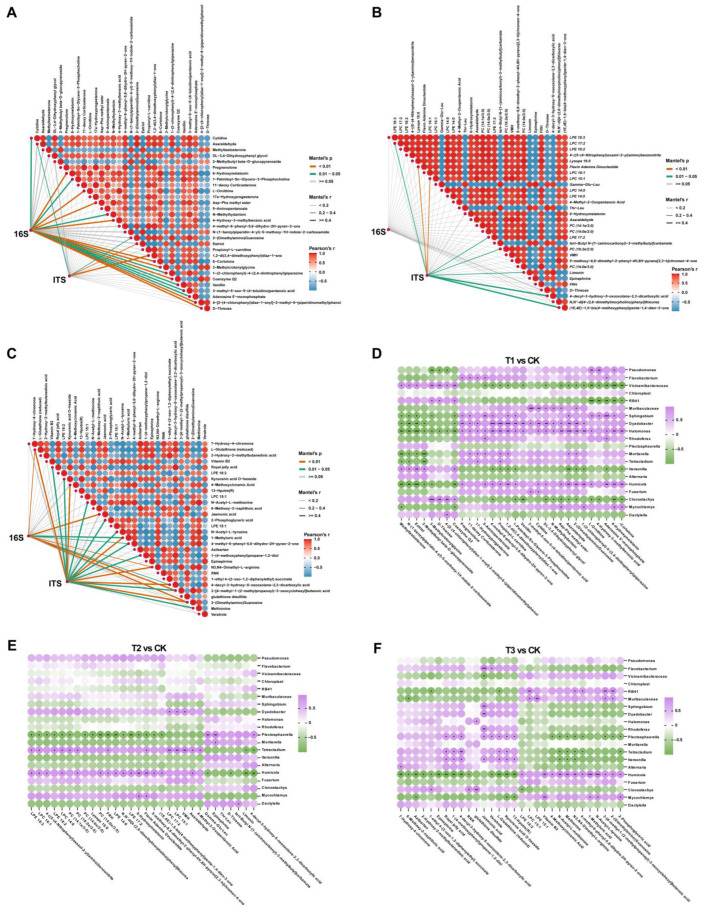
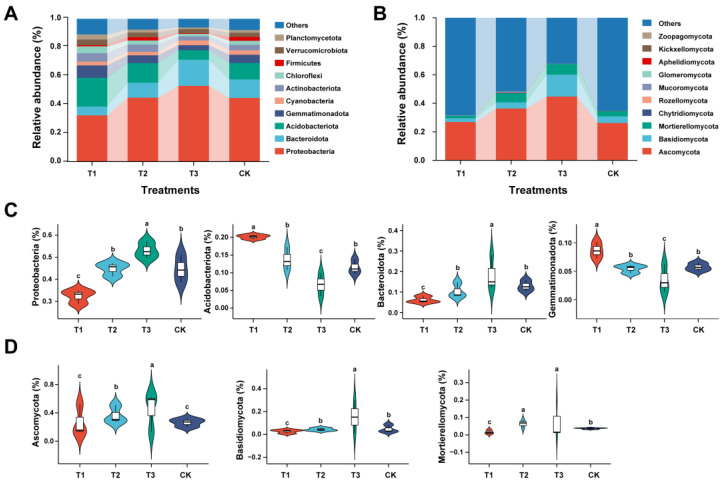
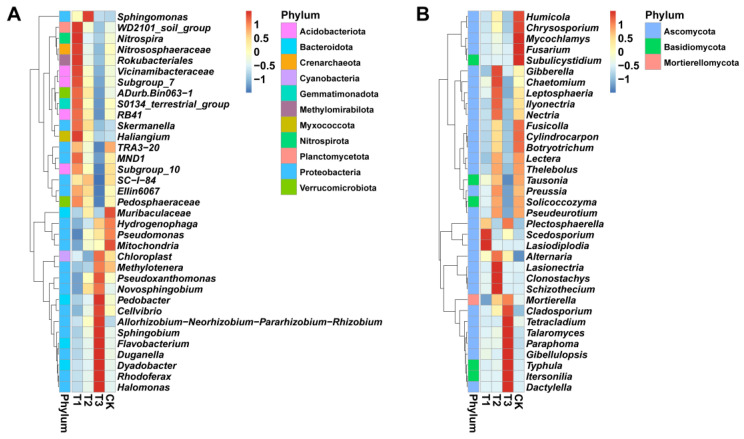
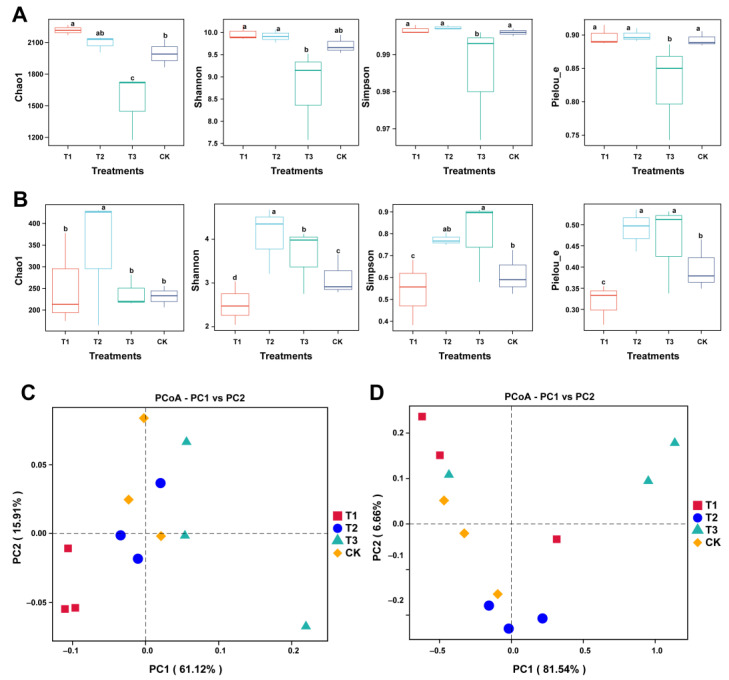
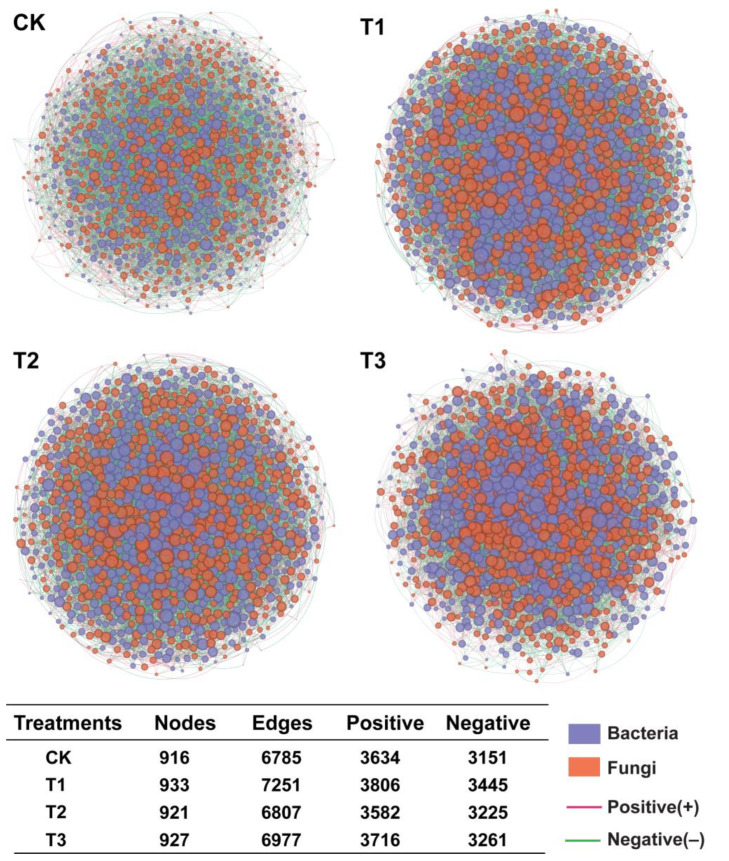
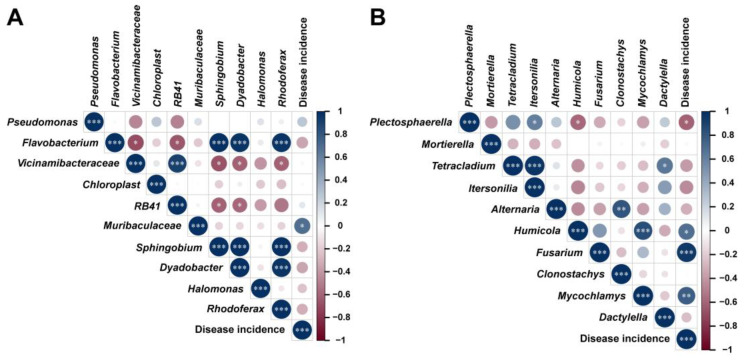
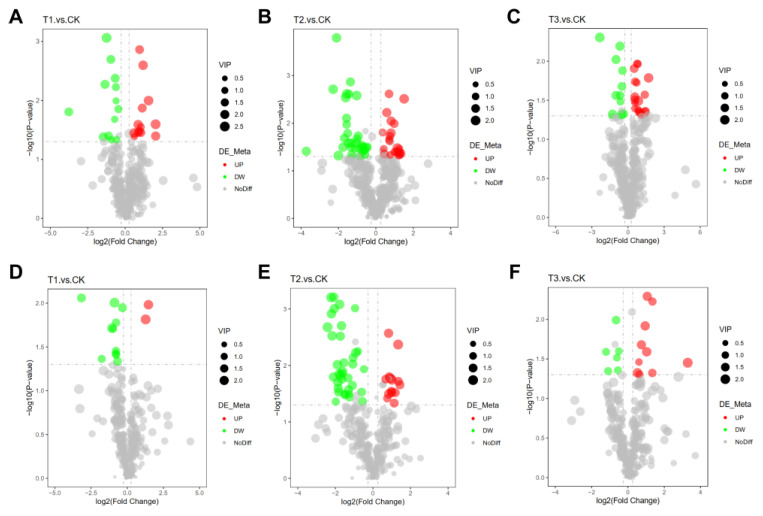
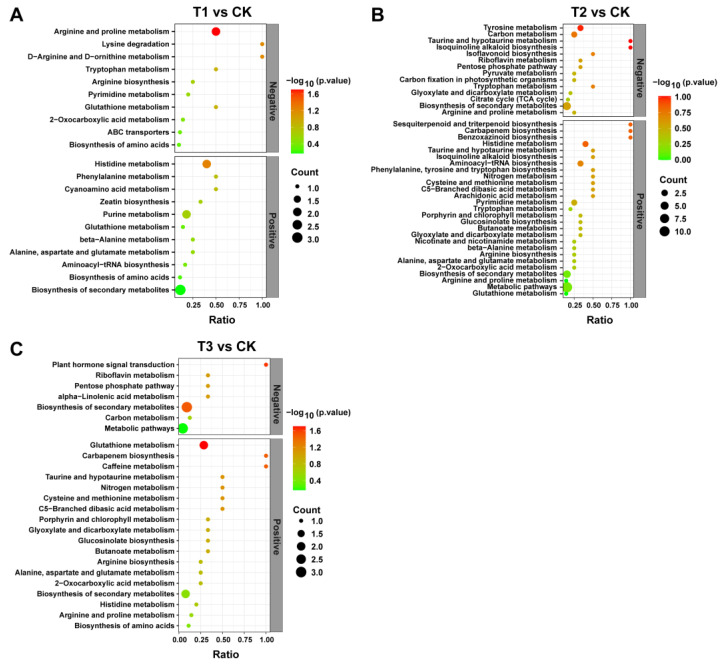
root rot caused by the species complex significantly affects the yield and quality of , a valuable medicinal herb. Traditional management primarily relies on chemical fungicides, which have led to pathogen resistance, environmental hazards, and concerns regarding public health and the active components in . This study explores the efficacy of a novel plant-derived biopesticide Shi Chuang Zhi Feng Ning (T1; SCZFN), alongside wettable powder (T2) and a chemical fungicide (T3), in controlling root rot and understanding their impacts on the rhizosphere microbial community and root metabolome. Results of the field experiment demonstrated that treatments T1 and T3 achieved control efficiencies of 73.17% and 75.45%, respectively, significantly outperforming T2 (39.99%) and the control. High-throughput sequencing revealed that all treatments altered the diversity and structure of microbial communities, with T1 and T2 reducing the abundance of taxa linked to root rot, such as spp., spp., spp., and spp. Treatment T1 notably enhanced beneficial bacterial taxa, including spp., spp., and spp., involved in carbon cycling and plant growth promotion. Metabolomic analysis identified 39, 105, and 45 differentially expressed metabolites (DEMs) across the treatments, demonstrating T1's potential to modulate the root metabolome effectively. Further, a correlation analysis demonstrated a stronger correlation between distinct microorganisms with significant influence and DEMs of T1 treatment compared to other treatments. These findings underscore biopesticide SCZFN's role in enhancing plant health and disease suppression in , providing insights into its biocontrol mechanisms and supporting the development of sustainable disease management strategies in its cultivation.
由该物种复合体引起的根腐病严重影响了一种珍贵药用植物[植物名称未给出]的产量和品质。传统管理主要依赖化学杀菌剂,这导致了病原体抗性、环境危害以及对公众健康和[植物名称未给出]中活性成分的担忧。本研究探讨了一种新型植物源生物农药石创植保宁(T1;SCZFN)与[可湿性粉剂名称未给出]可湿性粉剂(T2)和一种化学杀菌剂(T3)在防治根腐病方面的功效,并了解它们对根际微生物群落和根代谢组的影响。田间试验结果表明,处理T1和T3的防治效率分别达到73.17%和75.45%,显著优于T2(39.99%)和对照。高通量测序显示,所有处理均改变了微生物群落的多样性和结构,T1和T2降低了与根腐病相关的分类群丰度,如[相关真菌属名称未给出]属、[相关真菌属名称未给出]属、[相关真菌属名称未给出]属和[相关真菌属名称未给出]属。处理T1显著增加了有益细菌分类群,包括参与碳循环和促进植物生长的[相关细菌属名称未给出]属、[相关细菌属名称未给出]属和[相关细菌属名称未给出]属。代谢组学分析在各处理中鉴定出39、105和45种差异表达代谢物(DEM),表明T1具有有效调节根代谢组的潜力。此外,相关性分析表明,与其他处理相比,T1处理中具有显著影响的不同微生物与DEM之间的相关性更强。这些发现强调了生物农药SCZFN在增强[植物名称未给出]的植物健康和病害抑制方面的作用,为其生物防治机制提供了见解,并支持了其栽培中可持续病害管理策略的发展。