Morais Everton Geraldo de, Silva Maila Adriely, Quispe Anyela Pierina Vega, Machado Gilson Gustavo Lucinda, Prado Debora Teixeira, Benevenute Pedro Antônio Namorato, Lima Jucelino de Sousa, de Sousa Gustavo Ferreira, de Barros Vilas Boas Eduardo Valério, Guilherme Luiz Roberto Guimarães
Department of Soil Science, Federal University of Lavras, University Campus, P.O. Box 3037, Lavras 37203-202, Minas Gerais, Brazil.
Department of Food Science, Federal University of Lavras, University Campus, P.O. Box 3037, Lavras 37203-202, Minas Gerais, Brazil.
Plants (Basel). 2024 Aug 17;13(16):2288. doi: 10.3390/plants13162288.
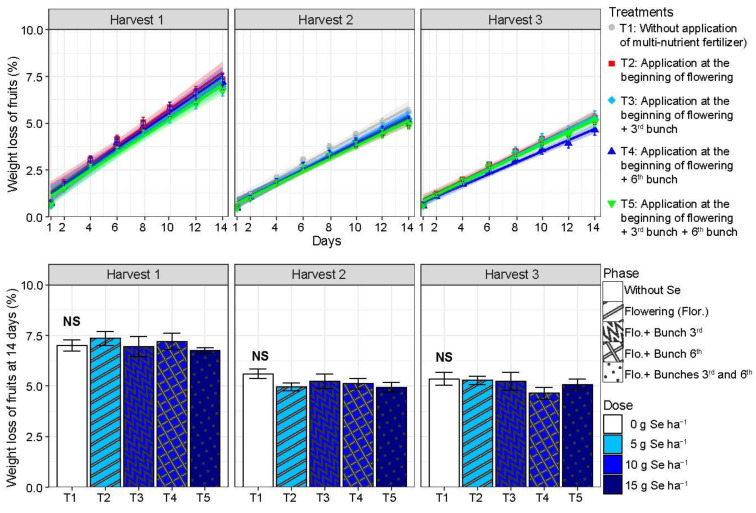
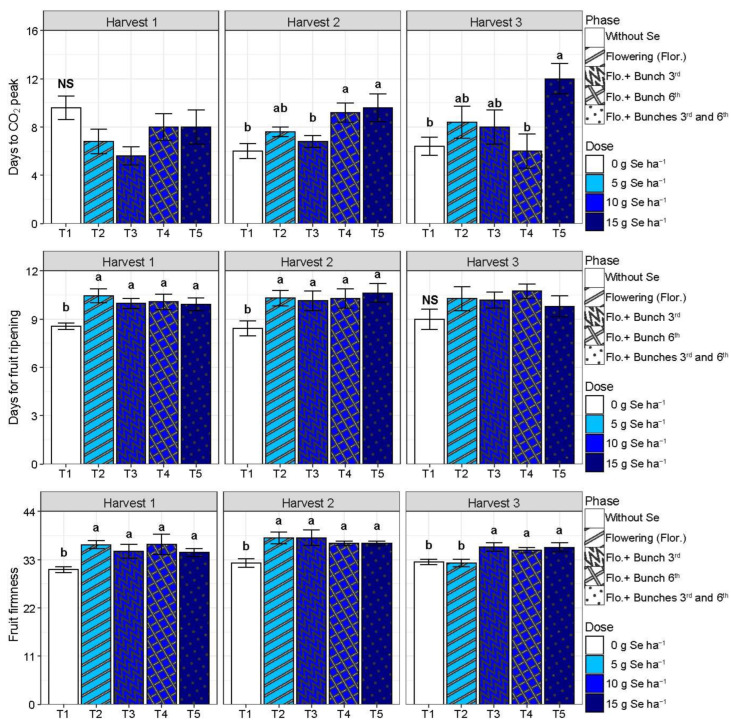
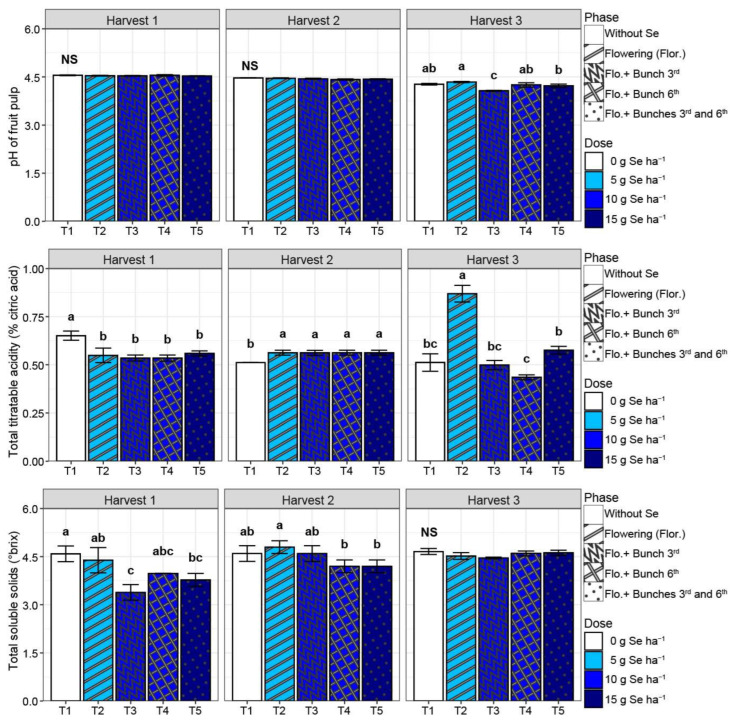
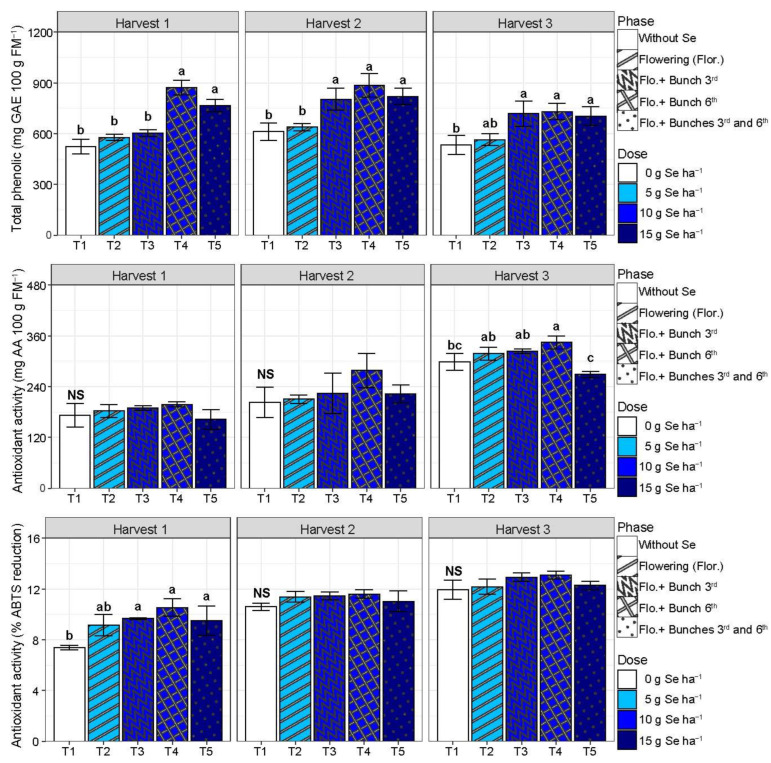
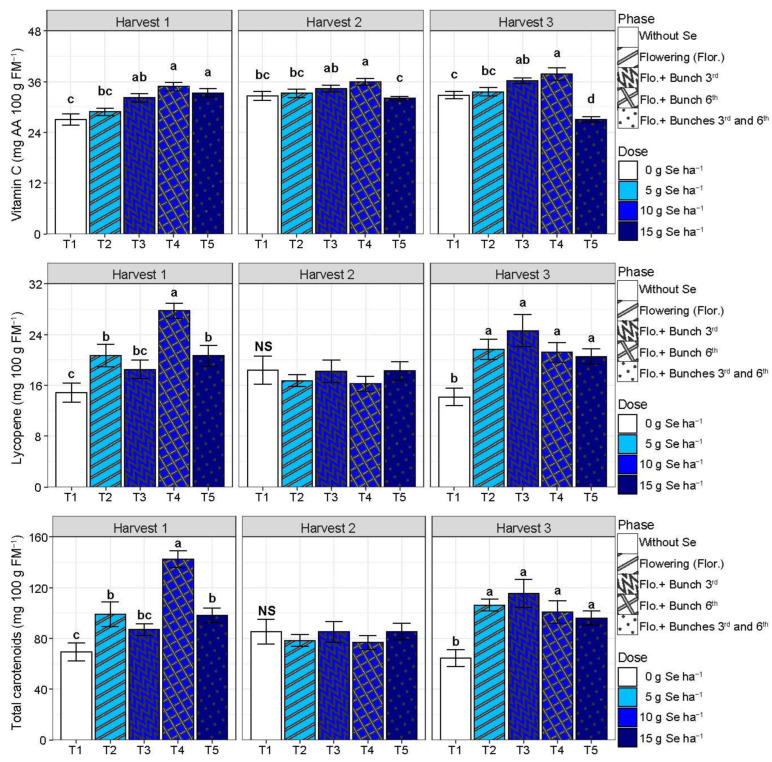
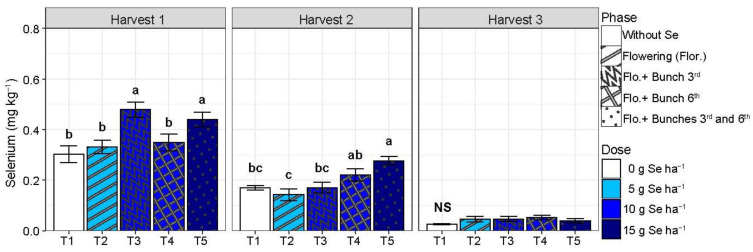
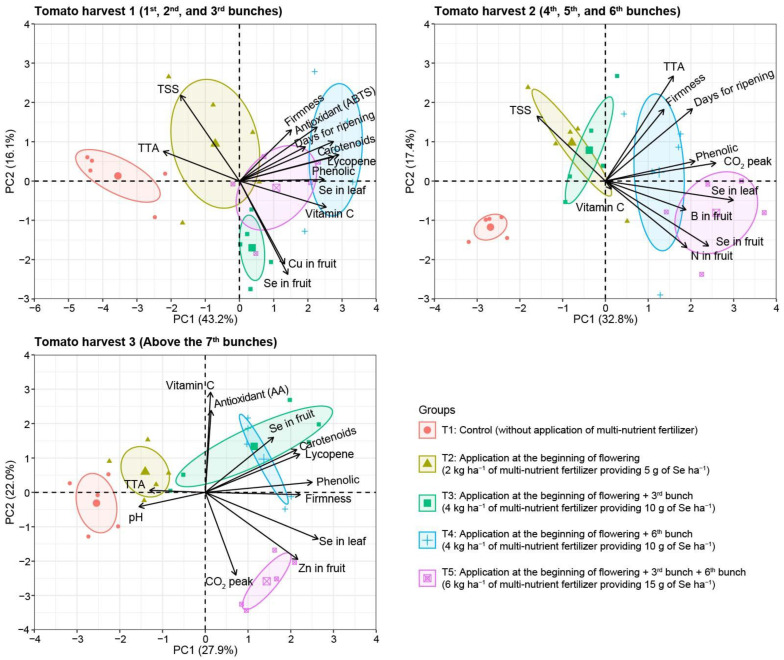
Selenium (Se) is a nutrient whose daily intake is often below the recommended levels in people. Biofortification with Se is a method to increase this intake by raising the Se concentration in tomato fruits, an effect dependent on sources and modes of application. Additionally, Se application can promote the enhancement of other compounds in tomato fruits, altering their metabolism, which may increase the fruit's shelf life. This study aimed to determine how different strategies of applying a multi-nutrient fertilizer containing Se (SeMNF) can increase the Se content and other bioactive compounds and enhance the shelf life of tomato ( L.) fruits. Different foliar fertilization strategies involving the use of SeMNF were evaluated in field trials conducted on commercial tomato crops. Indeterminate-growth tomatoes were used, and different Se doses and application strategies were tested. Harvesting was conducted in three phases according to fruit ripening. Each harvested fruit was assessed for the Se content, macro and micronutrients, total phenolic compounds, vitamin C, antioxidant activity, carotenoids, pH, total titratable acidity, and total soluble solids in tomato fruits. Doses of 15 g ha of Se, split into three applications, increased the Se content in the fruits at 1 and 2 harvests. The application of SeMNF at Se doses above 10 g of Se ha increased firmness, days of ripening, and the nutritional quality of the tomatoes (higher contents of carotenoids (+39%), lycopene (+33%), antioxidant activity (+16%), total phenolic compounds (+38%), and vitamin C (+14%) in a dose-dependent effect of the application strategy used. These results contributed to an increase in the shelf life of tomatoes, consequently reducing food waste.
硒(Se)是一种营养素,人们的每日摄入量往往低于推荐水平。通过生物强化增加硒含量是一种提高番茄果实中硒浓度的方法,这种效果取决于硒的来源和施用方式。此外,施用硒可以促进番茄果实中其他化合物的增加,改变其新陈代谢,这可能会延长果实的货架期。本研究旨在确定施用含硒多元肥料(SeMNF)的不同策略如何增加番茄(L.)果实中的硒含量和其他生物活性化合物,并延长其货架期。在商业番茄作物上进行的田间试验中,评估了涉及使用SeMNF的不同叶面施肥策略。使用无限生长型番茄,并测试了不同的硒剂量和施用策略。根据果实成熟度分三个阶段进行收获。对每个收获的果实评估其硒含量、常量和微量营养素、总酚类化合物、维生素C、抗氧化活性、类胡萝卜素、pH值、总可滴定酸度和番茄果实中的总可溶性固形物。15 g/ha的硒剂量分三次施用,在第一次和第二次收获时增加了果实中的硒含量。施用高于10 g/ha硒剂量的SeMNF可提高番茄的硬度、成熟天数和营养品质(类胡萝卜素(+39%)、番茄红素(+33%)、抗氧化活性(+16%)、总酚类化合物(+38%)和维生素C(+14%)含量更高),这取决于所采用的施用策略的剂量依赖性效应。这些结果有助于延长番茄的货架期,从而减少食物浪费。