Burtonshaw James E J, Paluszny Adriana, Mohammadpour Aslan, Zimmerman Robert W
Department of Earth Science & Engineering, Imperial College London, South Kensington, London SW7 2AZ, UK.
iScience. 2024 Jul 24;27(8):110553. doi: 10.1016/j.isci.2024.110553. eCollection 2024 Aug 16.
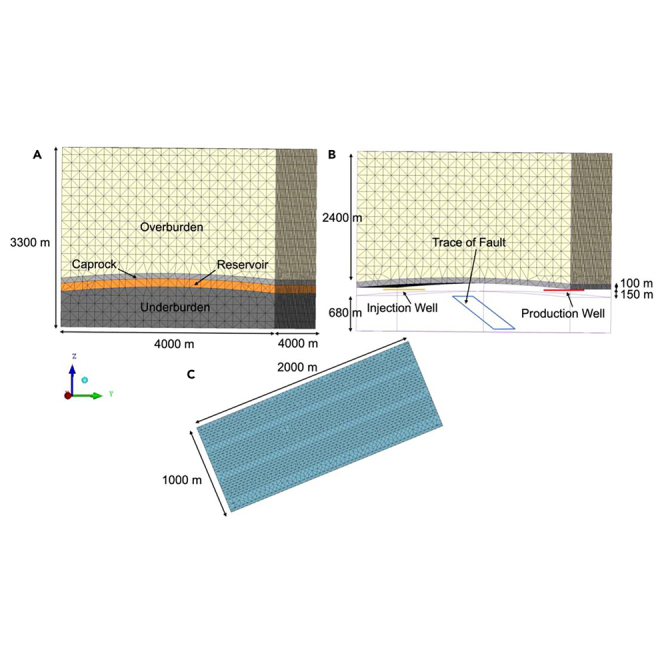
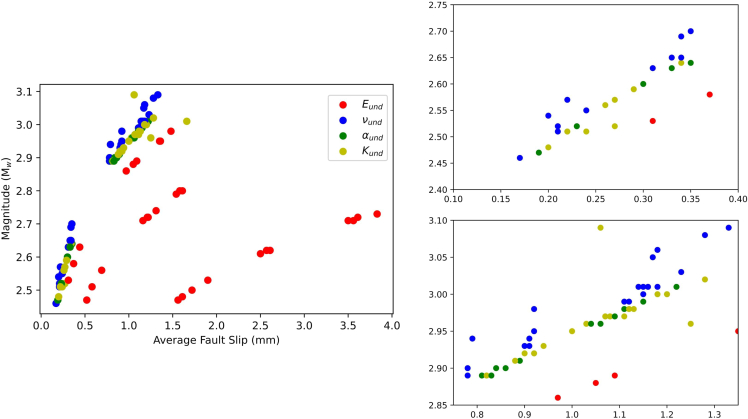
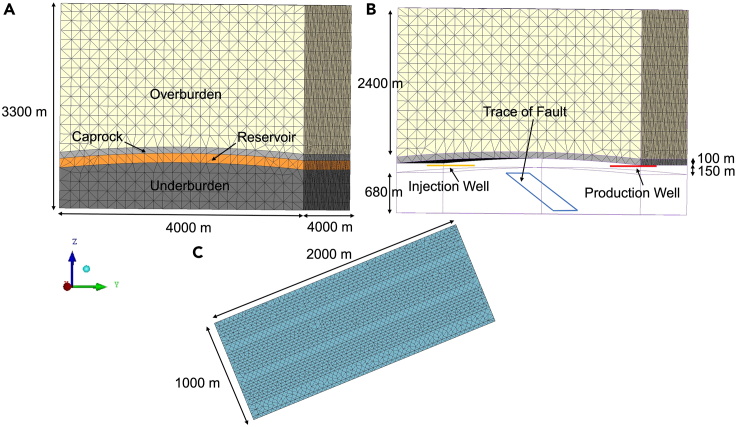
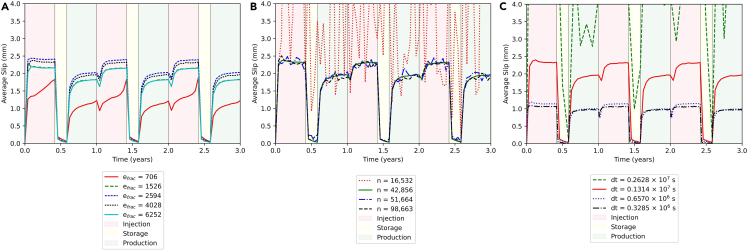
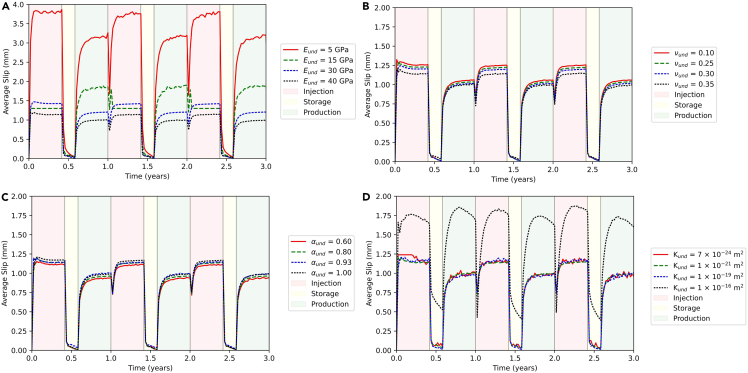
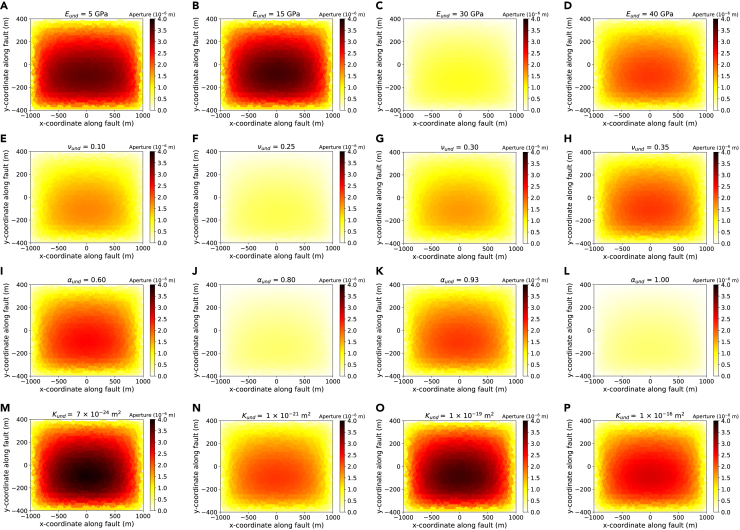
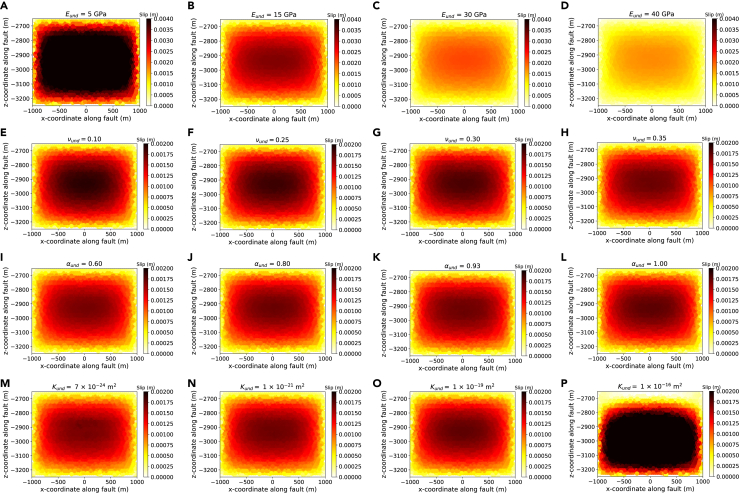
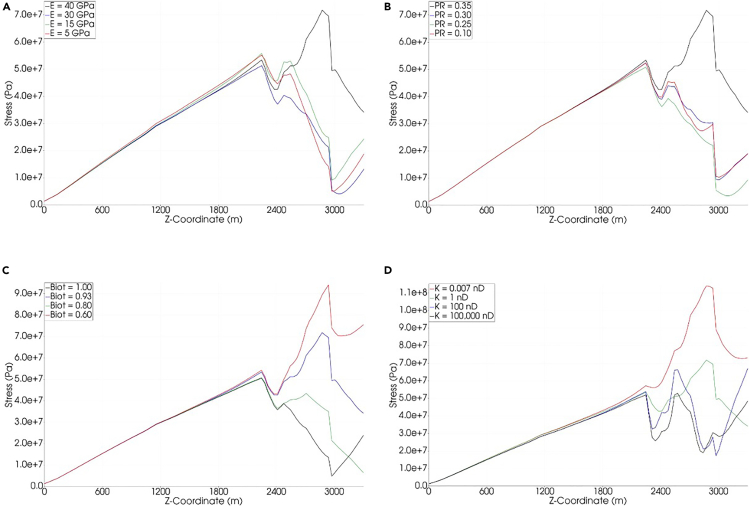
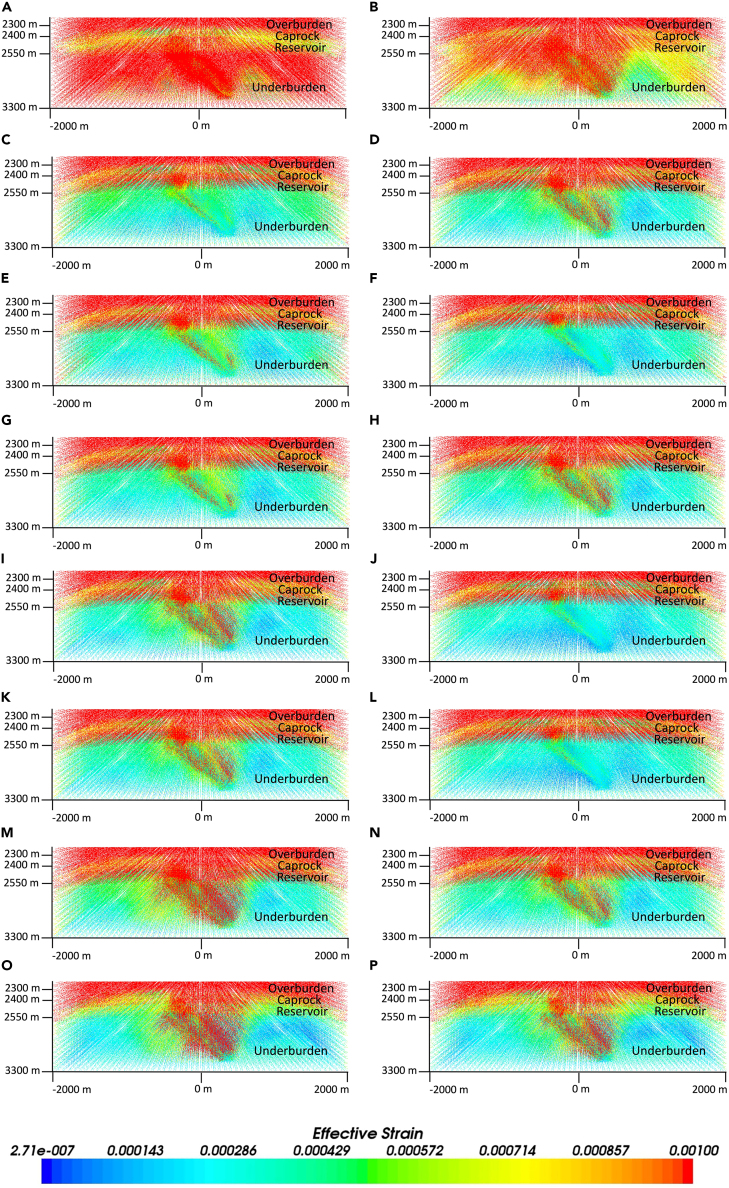
This study models the geomechanical deformation of a depleted gas field, wherein gaseous hydrogen is stored in a North Sea reservoir, and is cyclically injected and withdrawn. A fault is modeled within the underburden, and its slip is investigated during a three year storage period. Parametric simulations are conducted to study the influence of the underburden mechanical properties, such as Young's modulus, Poisson's ratio, and permeability on induced seismicity. The fault is predominantly in stick during the bulk of the injection, storage, and withdrawal periods, but minor fault slip ( 4 mm) occurs shortly after a change in operational regime. The Young's modulus of the underburden unit has the strongest control on fault slip. To reduce the seismic hazard, an underburden with low Young's modulus ( 15 GPa), high Poisson's ratio ( 0.25), low Biot coefficient, and low permeability ( m) is found to be most suitable for hydrogen storage.
本研究对一个枯竭气田的地质力学变形进行了建模,其中气态氢存储在北海储层中,并进行循环注入和采出。在覆盖层内对一条断层进行了建模,并研究了其在三年储存期内的滑动情况。进行了参数模拟,以研究覆盖层力学性质(如杨氏模量、泊松比和渗透率)对诱发地震活动的影响。在大部分注入、储存和采出期间,断层主要处于黏滞状态,但在运行状态发生变化后不久会出现微小的断层滑动(<4毫米)。覆盖层单元的杨氏模量对断层滑动的控制作用最强。为降低地震风险,发现杨氏模量低(<15吉帕)、泊松比高(>0.25)、比奥系数低且渗透率低(< 立方米)的覆盖层最适合氢气储存。