Departamento de Bioingeniería, Universidad Carlos III de Madrid, Madrid, Spain.
Unidad de Medicina y Cirugía Experimental, Instituto de Investigación Sanitaria Gregorio Marañón, Madrid, Spain.
Front Immunol. 2024 Aug 13;15:1432816. doi: 10.3389/fimmu.2024.1432816. eCollection 2024.
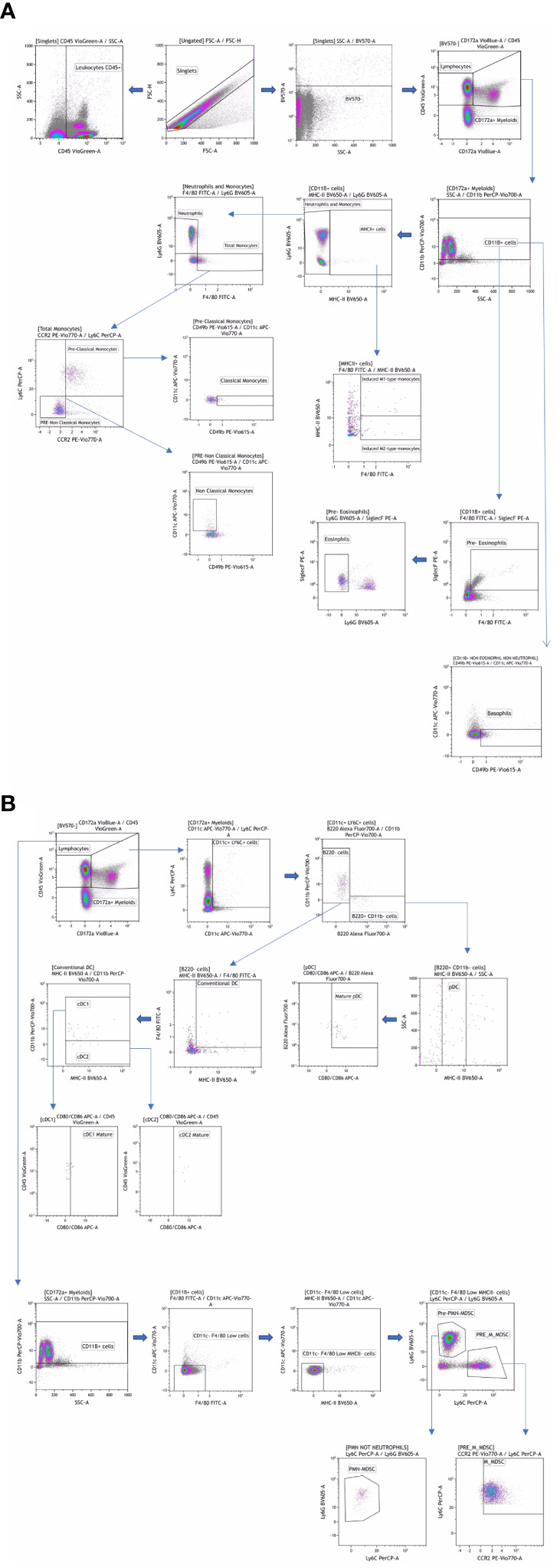
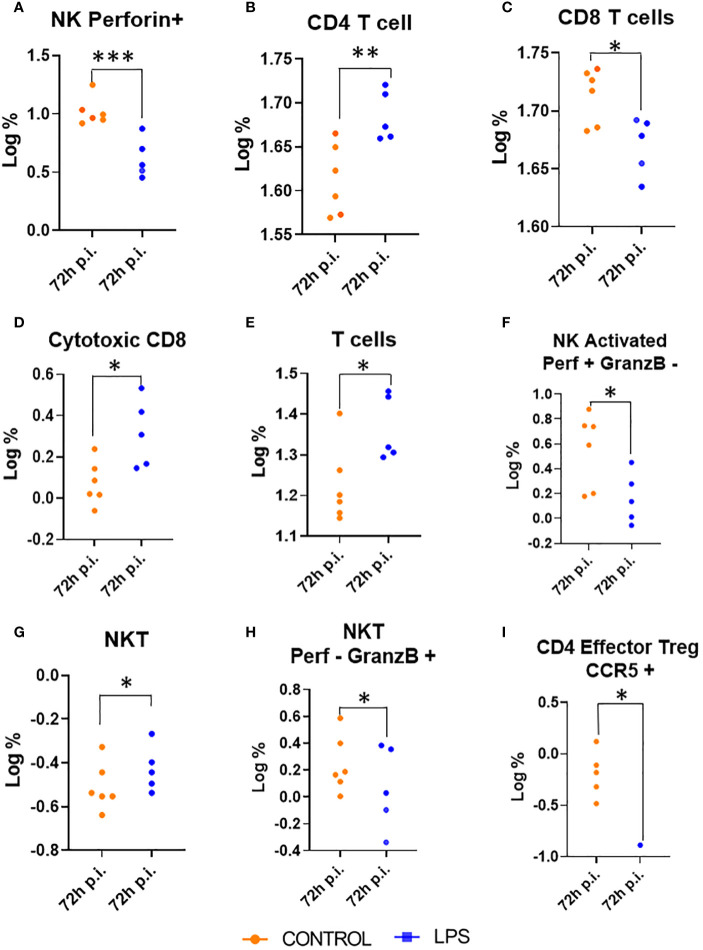
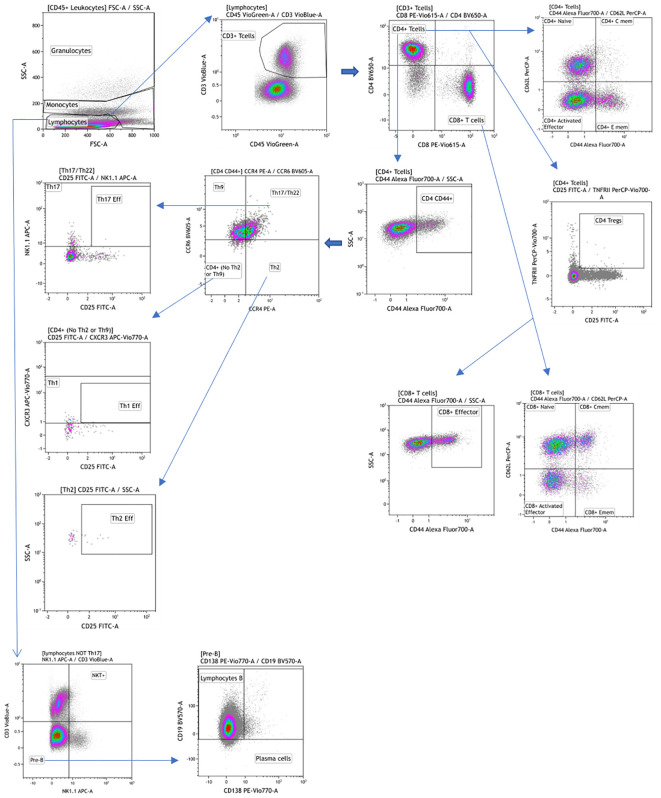
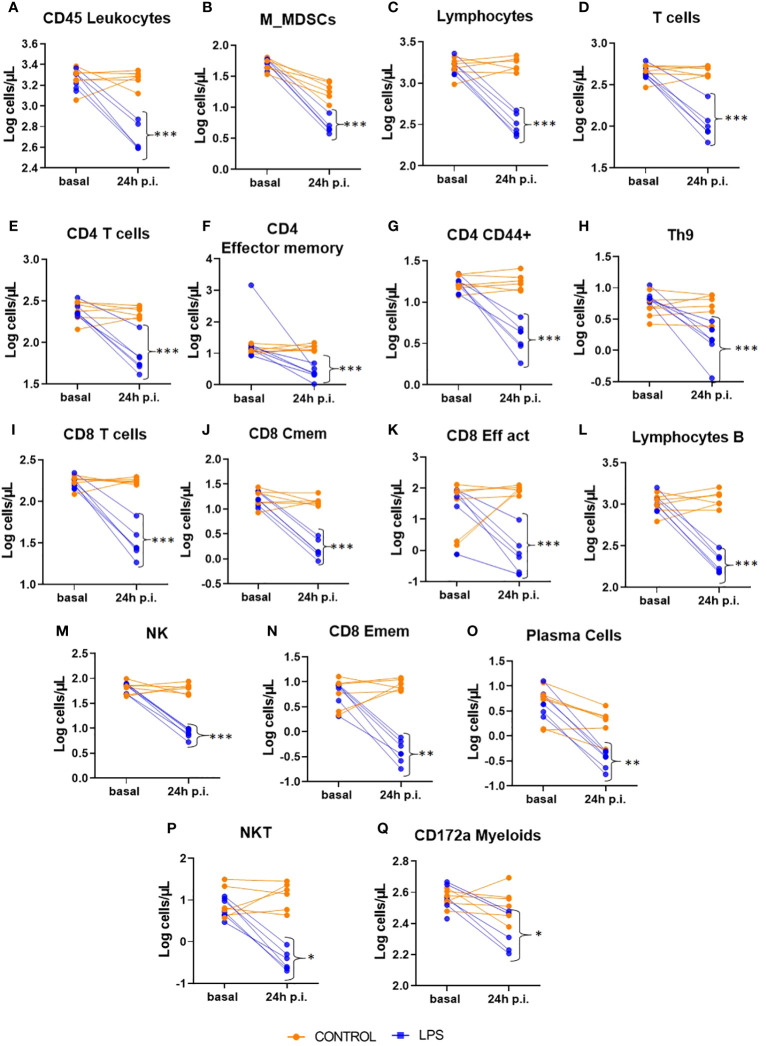
The use of flow cytometry in mice is constrained by several factors, including the limited availability of mouse-specific antibodies and the need to work with small volumes of peripheral blood. This is particularly challenging for longitudinal studies, as serial blood samples should not exceed 10% of the total blood volume in mice. To address this, we have developed two novel flow cytometry panels designed to extensively analyze immune cell populations in mice during longitudinal studies, using only 50 µL of peripheral blood per panel. Additionally, a third panel has been designed to conduct a more detailed analysis of cytotoxic and inhibitory markers at the end point. These panels have been validated on a lipopolysaccharide (LPS)-induced lung inflammation model. Two experiments were conducted to 1) validate the panels' sensitivity to immune challenges (=12) and 2) to assess intrinsic variability of measurements (=5). In both experiments, we collected 50 µL of peripheral blood for each cytometry panel from the maxillary venous sinus. All antibodies were titrated to identify the optimal concentration that maximized the signal from the positive population while minimizing the signal from the negative population. Samples were processed within 1 hour of collection using a MACSQuant Analyzer 16 cytometer. Our results demonstrate that these immunological panels are sensitive enough to detect changes in peripheral blood after LPS induction. Moreover, our findings help determine the sample size needed based on the immune population variability. In conclusion, the panels we have designed enable a comprehensive analysis of the murine immune system with a low blood volume requirement, enabling the measure of both absolute values and relative percentages effectively. This approach provides a robust platform for longitudinal studies in mice and can be used to uncover significant insights into immune responses.
流式细胞术在小鼠中的应用受到多种因素的限制,包括小鼠特异性抗体的有限可用性以及需要处理小体积的外周血。这对于纵向研究尤其具有挑战性,因为连续的血样不应超过小鼠总血量的 10%。为了解决这个问题,我们开发了两个新的流式细胞术面板,旨在使用每个面板仅 50 µL 的外周血,对纵向研究中的免疫细胞群体进行广泛分析。此外,还设计了第三个面板,以在终点对细胞毒性和抑制性标志物进行更详细的分析。这些面板已在脂多糖(LPS)诱导的肺炎症模型上进行了验证。进行了两项实验来 1)验证面板对免疫挑战的敏感性(=12)和 2)评估测量的固有变异性(=5)。在这两项实验中,我们从上颌静脉窦采集每个流式细胞术面板的 50 µL 外周血。所有抗体均经过滴定,以确定最佳浓度,该浓度最大程度地提高阳性群体的信号,同时最小化阴性群体的信号。收集后 1 小时内使用 MACSQuant Analyzer 16 流式细胞仪处理样本。我们的结果表明,这些免疫面板足够灵敏,可以检测 LPS 诱导后外周血中的变化。此外,我们的研究结果有助于根据免疫群体变异性确定所需的样本量。总之,我们设计的面板能够以低血量要求对小鼠免疫系统进行全面分析,有效地测量绝对值和相对百分比。这种方法为小鼠的纵向研究提供了一个强大的平台,并可用于揭示免疫反应的重要见解。