Department of Surgery, Universitat Autònoma de Barcelona, Barcelona, Spain.
Department of Anesthesiology and Intensive Care, University Hospital Vall d'Hebron, Barcelona, Spain.
Ann Card Anaesth. 2024 Oct 1;27(4):372-374. doi: 10.4103/aca.aca_36_24. Epub 2024 Aug 28.
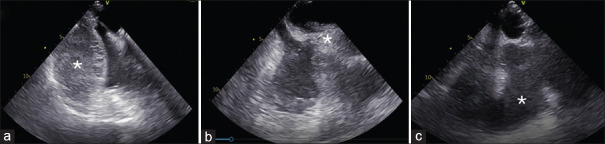
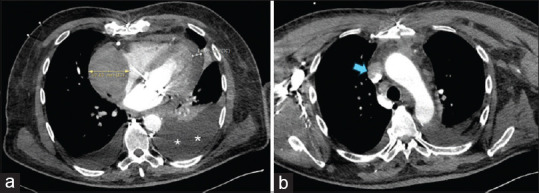
Although most superior vena cava (SVC) syndromes are due to intrathoracic malignancies, some are iatrogenic, such as those following the intravenous implantation of pacemaker wires. To date, the occurrence of this syndrome after epicardial pacemaker removal has not been described. The initial auricular laceration after removal can be complicated by the administration of anticoagulant and antiplatelet drugs, forming a hematoma that compresses the SVC cranially. Therefore, standardized practice may be necessary in these patients to address anticoagulant and antiplatelet therapy, perform serial echocardiography, and pay attention to underlying symptoms, which may be insidious and delayed.
虽然大多数上腔静脉(SVC)综合征是由于胸腔内恶性肿瘤引起的,但有些是医源性的,如心脏外膜起搏器导线植入后的情况。迄今为止,尚未有描述这种综合征在上腔静脉移除后发生的报道。在移除后,最初的耳廓撕裂可能会因给予抗凝和抗血小板药物而变得复杂,形成血肿,使 SVC 向颅侧受压。因此,对于这些患者,可能需要标准化的治疗措施,包括调整抗凝和抗血小板治疗、进行连续超声心动图检查,并注意潜在的症状,这些症状可能是隐匿和延迟的。