Dias Ingrid R S B, Costa Rafaela G A, Rodrigues Ana Carolina B da C, Silva Suellen L R, Oliveira Maiara de S, Soares Milena B P, Dias Rosane B, Valverde Ludmila F, Gurgel Rocha Clarissa A, Cairns Lauren V, Mills Ken I, Bezerra Daniel P
Gonçalo Moniz Institute, Oswaldo Cruz Foundation (IGM-FIOCRUZ/BA), Salvador, Bahia, Brazil.
SENAI Institute for Innovation in Advanced Health Systems, SENAI CIMATEC, Salvador, BA, Brazil.
Cell Death Discov. 2024 Aug 29;10(1):390. doi: 10.1038/s41420-024-02148-3.
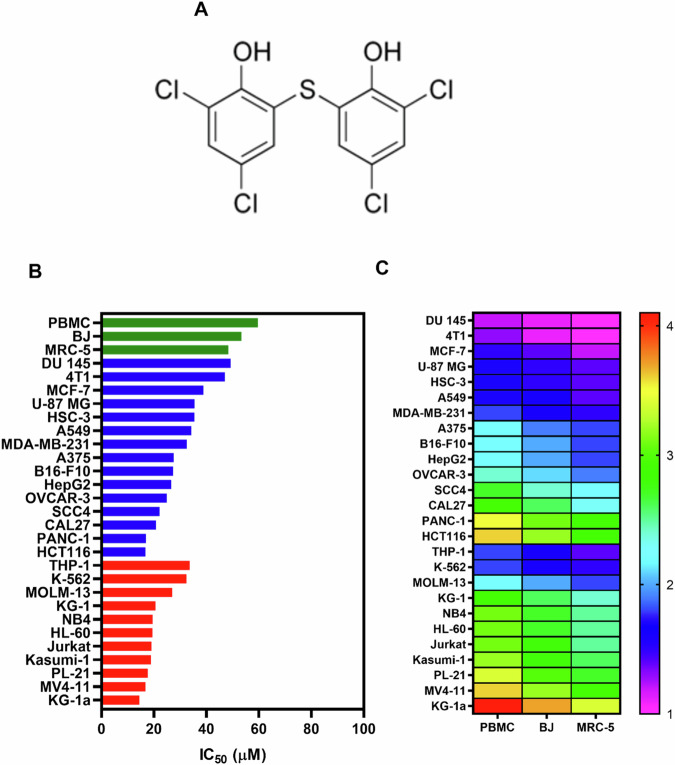
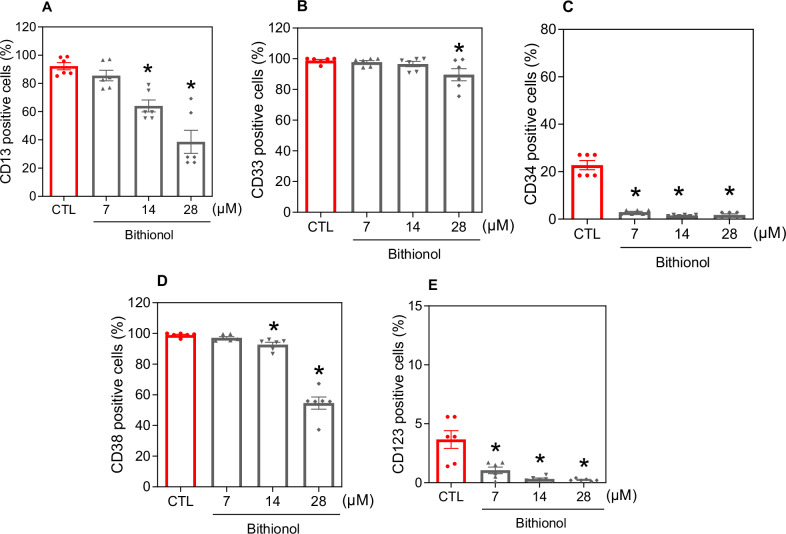
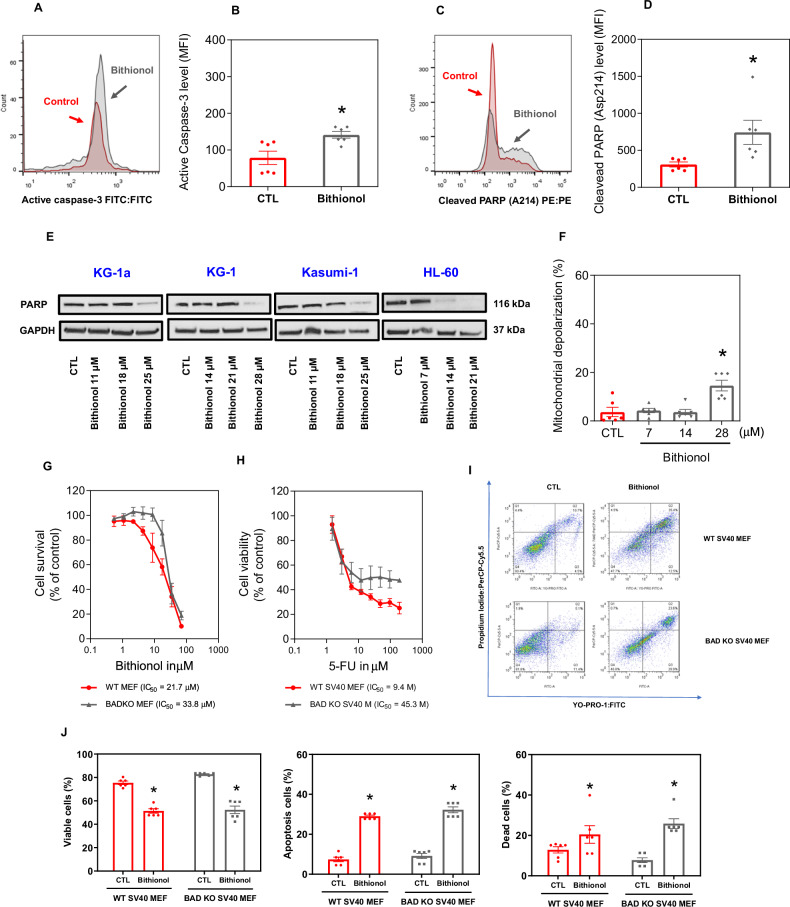
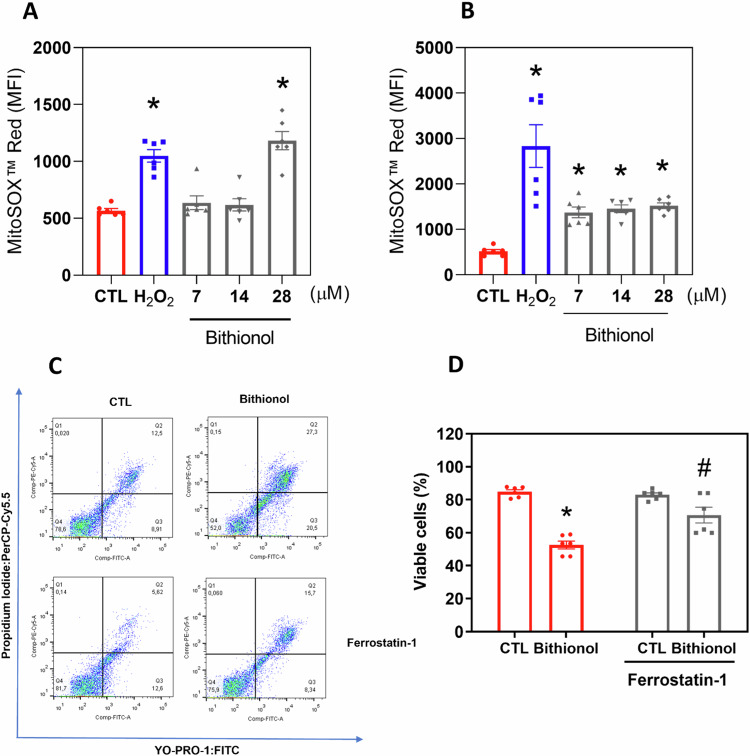
Acute myeloid leukaemia (AML) is a lethal bone marrow neoplasm caused by genetic alterations in blood cell progenitors. Leukaemic stem cells (LSCs) are responsible for the development of AML, drug resistance and relapse. Bithionol is an old anthelmintic drug with potential antibacterial, antiviral, antifungal, anti-Alzheimer, and antitumour properties. In this work, we focused on the anti-AML LSC properties of bithionol. This compound inhibited the viability of both solid and haematological cancer cells, suppressed AML stem-like cells, and inhibited AML growth in NSG mice at a dosage of 50 mg/kg, with tolerable systemic toxicity. Bithionol significantly reduced the levels of phospho-NF-κB p65 (Ser529) and phospho-NF-κB p65 (Ser536) and nuclear NF-κB p65 translocation in AML cells, indicating that this molecule can suppress NF-κB signalling. DNA fragmentation, nuclear condensation, cell shrinkage, phosphatidylserine externalisation, loss of transmembrane mitochondrial potential, caspase-3 activation and PARP-(Asp 214) cleavage were detected in bithionol-treated AML cells, indicating the induction of apoptosis. Furthermore, this compound increased mitochondrial superoxide levels, and bithionol-induced cell death was partially prevented by cotreatment with the selective ferroptosis inhibitor ferrostatin-1, indicating the induction of ferroptosis. In addition, bithionol synergised with venetoclax in AML cells, indicating the translational potential of bithionol to enhance the effects of venetoclax in patients with AML. Taken together, these data indicate that bithionol is a potential new anti-AML drug.
急性髓系白血病(AML)是一种由血细胞祖细胞基因改变引起的致死性骨髓肿瘤。白血病干细胞(LSCs)是AML发生、耐药和复发的原因。硫双二氯酚是一种古老的驱虫药,具有潜在的抗菌、抗病毒、抗真菌、抗阿尔茨海默病和抗肿瘤特性。在这项研究中,我们聚焦于硫双二氯酚的抗AML LSC特性。该化合物在50mg/kg剂量下可抑制实体瘤和血液系统癌细胞的活力,抑制AML干细胞样细胞,并抑制NSG小鼠体内的AML生长,且全身毒性可耐受。硫双二氯酚显著降低了AML细胞中磷酸化NF-κB p65(Ser529)和磷酸化NF-κB p65(Ser536)的水平以及核NF-κB p65的易位,表明该分子可抑制NF-κB信号通路。在经硫双二氯酚处理的AML细胞中检测到DNA片段化、核固缩、细胞皱缩、磷脂酰丝氨酸外化、跨膜线粒体电位丧失、半胱天冬酶-3激活和PARP-(Asp 214)裂解,表明诱导了细胞凋亡。此外,该化合物增加了线粒体超氧化物水平,并且与选择性铁死亡抑制剂铁抑素-1共同处理可部分阻止硫双二氯酚诱导的细胞死亡,表明诱导了铁死亡。此外,硫双二氯酚与维奈托克在AML细胞中具有协同作用,表明硫双二氯酚在增强维奈托克对AML患者疗效方面具有转化潜力。综上所述,这些数据表明硫双二氯酚是一种潜在的新型抗AML药物。