• 文献检索
  • 文档翻译
  • 深度研究
  • 学术资讯
  • Suppr Zotero 插件Zotero 插件
  • 邀请有礼
  • 套餐&价格
  • 历史记录
应用&插件
Suppr Zotero 插件Zotero 插件浏览器插件Mac 客户端Windows 客户端微信小程序
定价
高级版会员购买积分包购买API积分包
服务
文献检索文档翻译深度研究API 文档MCP 服务
关于我们
关于 Suppr公司介绍联系我们用户协议隐私条款
关注我们

Suppr 超能文献

核心技术专利:CN118964589B侵权必究
粤ICP备2023148730 号-1Suppr @ 2026

文献检索

告别复杂PubMed语法,用中文像聊天一样搜索,搜遍4000万医学文献。AI智能推荐,让科研检索更轻松。

立即免费搜索

文件翻译

保留排版,准确专业,支持PDF/Word/PPT等文件格式,支持 12+语言互译。

免费翻译文档

深度研究

AI帮你快速写综述,25分钟生成高质量综述,智能提取关键信息,辅助科研写作。

立即免费体验

核糖体 S6 激酶 1 通过衰老分泌组调节炎症衰老。

Ribosomal S6 kinase 1 regulates inflammaging via the senescence secretome.

机构信息

Medical Research Council Laboratory of Medical Sciences (LMS), London, UK.

Institute of Clinical Sciences (ICS), Faculty of Medicine, Imperial College London, London, UK.

出版信息

Nat Aging. 2024 Nov;4(11):1544-1561. doi: 10.1038/s43587-024-00695-z. Epub 2024 Aug 29.

DOI:10.1038/s43587-024-00695-z
PMID:39210150
原文链接:https://pmc.ncbi.nlm.nih.gov/articles/PMC11564105/
Abstract

Inhibition of S6 kinase 1 (S6K1) extends lifespan and improves healthspan in mice, but the underlying mechanisms are unclear. Cellular senescence is a stable growth arrest accompanied by an inflammatory senescence-associated secretory phenotype (SASP). Cellular senescence and SASP-mediated chronic inflammation contribute to age-related pathology, but the specific role of S6K1 has not been determined. Here we show that S6K1 deletion does not reduce senescence but ameliorates inflammation in aged mouse livers. Using human and mouse models of senescence, we demonstrate that reduced inflammation is a liver-intrinsic effect associated with S6K deletion. Specifically, we show that S6K1 deletion results in reduced IRF3 activation; impaired production of cytokines, such as IL1β; and reduced immune infiltration. Using either liver-specific or myeloid-specific S6K knockout mice, we also demonstrate that reduced immune infiltration and clearance of senescent cells is a hepatocyte-intrinsic phenomenon. Overall, deletion of S6K reduces inflammation in the liver, suggesting that suppression of the inflammatory SASP by loss of S6K could underlie the beneficial effects of inhibiting this pathway on healthspan and lifespan.

摘要

S6 激酶 1(S6K1)的抑制作用可延长小鼠的寿命并改善健康寿命,但潜在机制尚不清楚。细胞衰老是一种伴随着炎症性衰老相关分泌表型(SASP)的稳定生长停滞。细胞衰老和 SASP 介导的慢性炎症导致与年龄相关的病理学,但 S6K1 的具体作用尚未确定。在这里,我们表明 S6K1 的缺失不会减少衰老,但会改善老年小鼠肝脏的炎症。使用人类和小鼠衰老模型,我们证明减少炎症是与 S6K 缺失相关的肝脏内在效应。具体来说,我们表明 S6K1 的缺失导致 IRF3 激活减少;细胞因子(如 IL1β)的产生受损;以及免疫浸润减少。使用肝脏特异性或髓样细胞特异性 S6K 敲除小鼠,我们还表明免疫浸润减少和衰老细胞的清除是肝细胞内在的现象。总体而言,S6K 的缺失可减少肝脏中的炎症,这表明通过 S6K 的缺失抑制炎症性 SASP 可能是抑制该途径对健康寿命和寿命有益的基础。
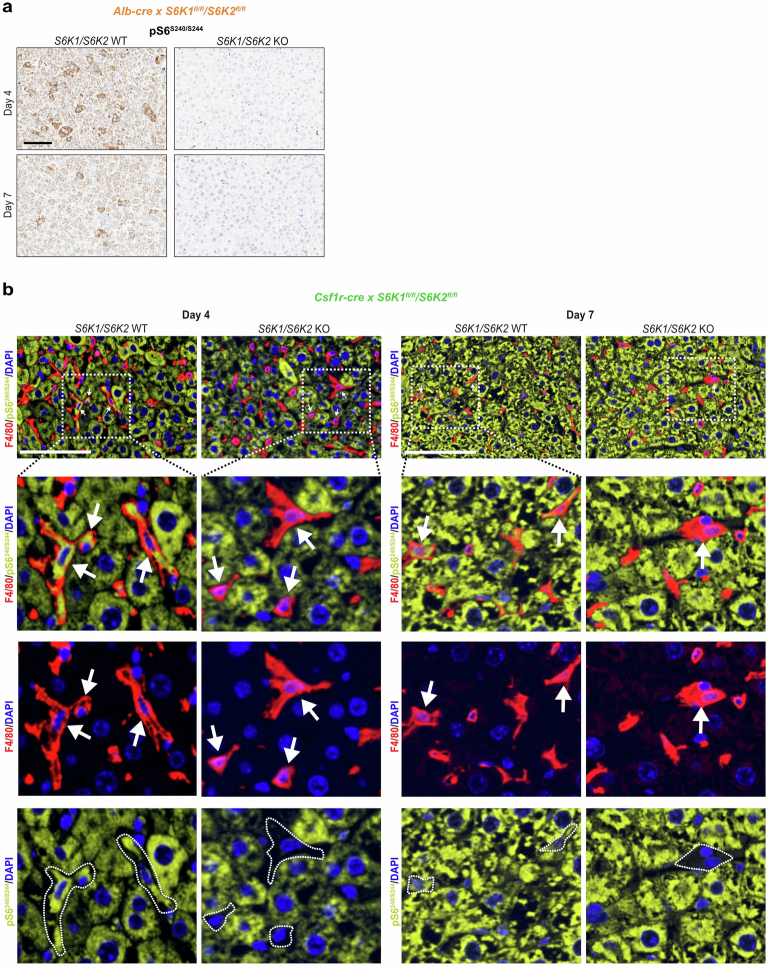
https://cdn.ncbi.nlm.nih.gov/pmc/blobs/01fb/11564105/65ac694a6c60/43587_2024_695_Fig18_ESM.jpg
https://cdn.ncbi.nlm.nih.gov/pmc/blobs/01fb/11564105/6e80fba872d2/43587_2024_695_Fig1_HTML.jpg
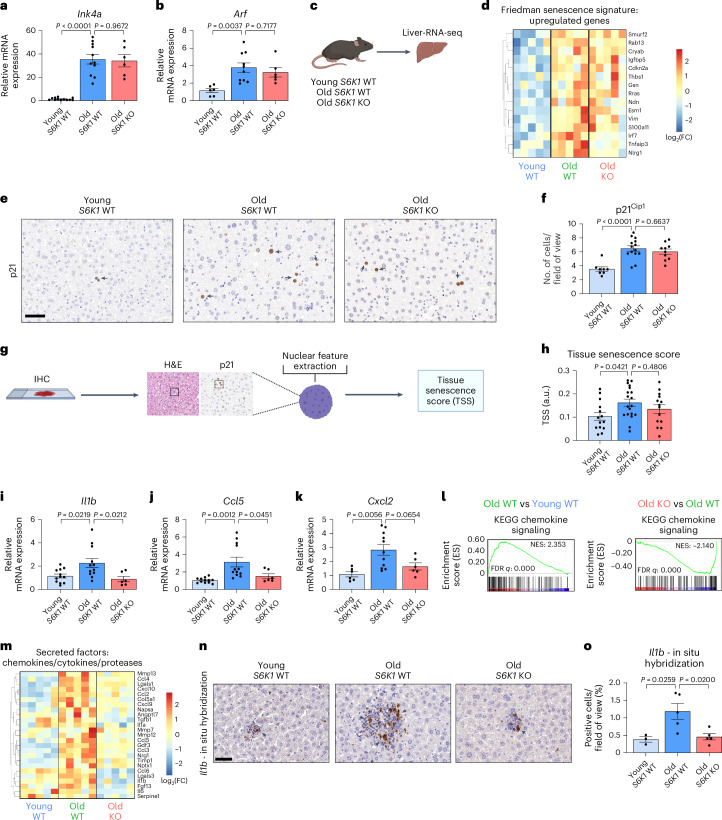
https://cdn.ncbi.nlm.nih.gov/pmc/blobs/01fb/11564105/d07daf259f51/43587_2024_695_Fig2_HTML.jpg
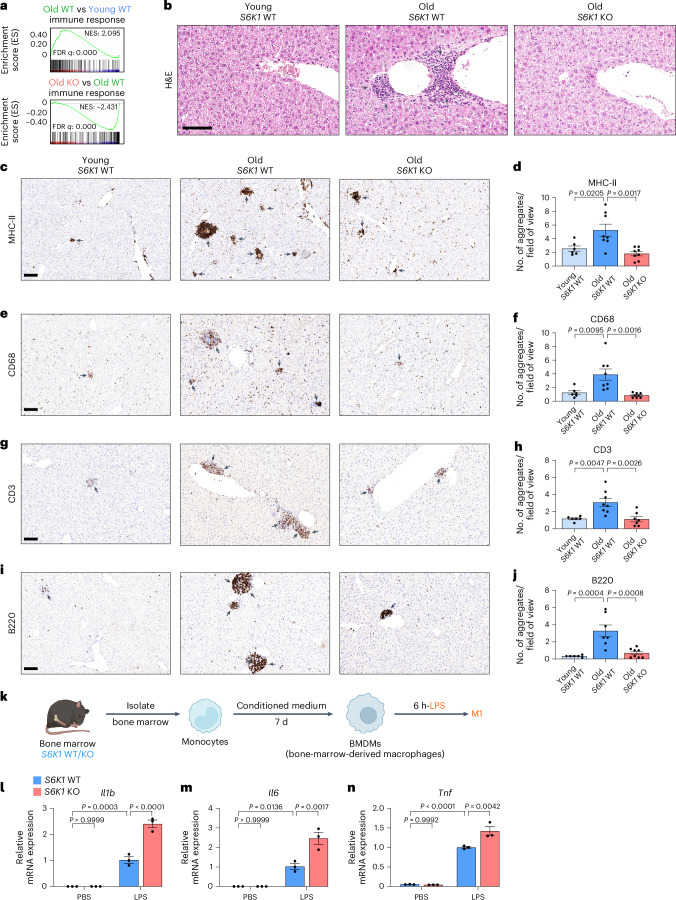
https://cdn.ncbi.nlm.nih.gov/pmc/blobs/01fb/11564105/b21661e10e03/43587_2024_695_Fig3_HTML.jpg
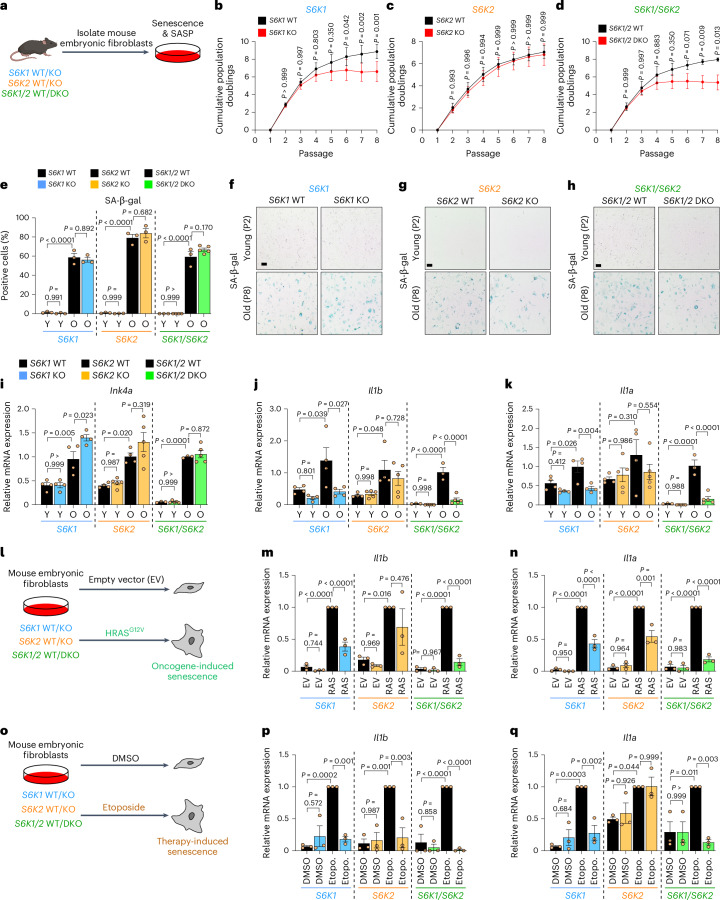
https://cdn.ncbi.nlm.nih.gov/pmc/blobs/01fb/11564105/0415facc5be0/43587_2024_695_Fig4_HTML.jpg
https://cdn.ncbi.nlm.nih.gov/pmc/blobs/01fb/11564105/a2fcae755e86/43587_2024_695_Fig5_HTML.jpg
https://cdn.ncbi.nlm.nih.gov/pmc/blobs/01fb/11564105/388386ac92ce/43587_2024_695_Fig6_HTML.jpg
https://cdn.ncbi.nlm.nih.gov/pmc/blobs/01fb/11564105/3f89e0ab8b3d/43587_2024_695_Fig7_HTML.jpg
https://cdn.ncbi.nlm.nih.gov/pmc/blobs/01fb/11564105/e86deb3b01d5/43587_2024_695_Fig8_HTML.jpg
https://cdn.ncbi.nlm.nih.gov/pmc/blobs/01fb/11564105/7338830e4980/43587_2024_695_Fig9_ESM.jpg
https://cdn.ncbi.nlm.nih.gov/pmc/blobs/01fb/11564105/7c4dde377246/43587_2024_695_Fig10_ESM.jpg
https://cdn.ncbi.nlm.nih.gov/pmc/blobs/01fb/11564105/d352c1c526a2/43587_2024_695_Fig11_ESM.jpg
https://cdn.ncbi.nlm.nih.gov/pmc/blobs/01fb/11564105/a93205d8ada5/43587_2024_695_Fig12_ESM.jpg
https://cdn.ncbi.nlm.nih.gov/pmc/blobs/01fb/11564105/0c9cc4c8709b/43587_2024_695_Fig13_ESM.jpg
https://cdn.ncbi.nlm.nih.gov/pmc/blobs/01fb/11564105/72c017186067/43587_2024_695_Fig14_ESM.jpg
https://cdn.ncbi.nlm.nih.gov/pmc/blobs/01fb/11564105/06512ea3a924/43587_2024_695_Fig15_ESM.jpg
https://cdn.ncbi.nlm.nih.gov/pmc/blobs/01fb/11564105/4ec2b876a3f5/43587_2024_695_Fig16_ESM.jpg
https://cdn.ncbi.nlm.nih.gov/pmc/blobs/01fb/11564105/25ac7f08421b/43587_2024_695_Fig17_ESM.jpg
https://cdn.ncbi.nlm.nih.gov/pmc/blobs/01fb/11564105/65ac694a6c60/43587_2024_695_Fig18_ESM.jpg
https://cdn.ncbi.nlm.nih.gov/pmc/blobs/01fb/11564105/6e80fba872d2/43587_2024_695_Fig1_HTML.jpg
https://cdn.ncbi.nlm.nih.gov/pmc/blobs/01fb/11564105/d07daf259f51/43587_2024_695_Fig2_HTML.jpg
https://cdn.ncbi.nlm.nih.gov/pmc/blobs/01fb/11564105/b21661e10e03/43587_2024_695_Fig3_HTML.jpg
https://cdn.ncbi.nlm.nih.gov/pmc/blobs/01fb/11564105/0415facc5be0/43587_2024_695_Fig4_HTML.jpg
https://cdn.ncbi.nlm.nih.gov/pmc/blobs/01fb/11564105/a2fcae755e86/43587_2024_695_Fig5_HTML.jpg
https://cdn.ncbi.nlm.nih.gov/pmc/blobs/01fb/11564105/388386ac92ce/43587_2024_695_Fig6_HTML.jpg
https://cdn.ncbi.nlm.nih.gov/pmc/blobs/01fb/11564105/3f89e0ab8b3d/43587_2024_695_Fig7_HTML.jpg
https://cdn.ncbi.nlm.nih.gov/pmc/blobs/01fb/11564105/e86deb3b01d5/43587_2024_695_Fig8_HTML.jpg
https://cdn.ncbi.nlm.nih.gov/pmc/blobs/01fb/11564105/7338830e4980/43587_2024_695_Fig9_ESM.jpg
https://cdn.ncbi.nlm.nih.gov/pmc/blobs/01fb/11564105/7c4dde377246/43587_2024_695_Fig10_ESM.jpg
https://cdn.ncbi.nlm.nih.gov/pmc/blobs/01fb/11564105/d352c1c526a2/43587_2024_695_Fig11_ESM.jpg
https://cdn.ncbi.nlm.nih.gov/pmc/blobs/01fb/11564105/a93205d8ada5/43587_2024_695_Fig12_ESM.jpg
https://cdn.ncbi.nlm.nih.gov/pmc/blobs/01fb/11564105/0c9cc4c8709b/43587_2024_695_Fig13_ESM.jpg
https://cdn.ncbi.nlm.nih.gov/pmc/blobs/01fb/11564105/72c017186067/43587_2024_695_Fig14_ESM.jpg
https://cdn.ncbi.nlm.nih.gov/pmc/blobs/01fb/11564105/06512ea3a924/43587_2024_695_Fig15_ESM.jpg
https://cdn.ncbi.nlm.nih.gov/pmc/blobs/01fb/11564105/4ec2b876a3f5/43587_2024_695_Fig16_ESM.jpg
https://cdn.ncbi.nlm.nih.gov/pmc/blobs/01fb/11564105/25ac7f08421b/43587_2024_695_Fig17_ESM.jpg
https://cdn.ncbi.nlm.nih.gov/pmc/blobs/01fb/11564105/65ac694a6c60/43587_2024_695_Fig18_ESM.jpg

相似文献

1
Ribosomal S6 kinase 1 regulates inflammaging via the senescence secretome.核糖体 S6 激酶 1 通过衰老分泌组调节炎症衰老。
Nat Aging. 2024 Nov;4(11):1544-1561. doi: 10.1038/s43587-024-00695-z. Epub 2024 Aug 29.
2
Role of p38 mitogen-activated protein kinase in vascular endothelial aging: interaction with Arginase-II and S6K1 signaling pathway.p38丝裂原活化蛋白激酶在血管内皮细胞衰老中的作用:与精氨酸酶-II和S6K1信号通路的相互作用
Aging (Albany NY). 2015 Jan;7(1):70-81. doi: 10.18632/aging.100722.
3
Apoptosis signal-regulating kinase 1 promotes inflammation in senescence and aging.凋亡信号调节激酶 1 促进衰老和老化中的炎症。
Commun Biol. 2024 Jun 5;7(1):691. doi: 10.1038/s42003-024-06386-0.
4
Positive crosstalk between arginase-II and S6K1 in vascular endothelial inflammation and aging.精氨酸酶-II 与 S6K1 在血管内皮炎症和衰老中的正对话。
Aging Cell. 2012 Dec;11(6):1005-16. doi: 10.1111/acel.12001. Epub 2012 Sep 18.
5
S6 kinase inactivation impairs growth and translational target phosphorylation in muscle cells maintaining proper regulation of protein turnover.S6激酶失活会损害肌肉细胞的生长和翻译靶标磷酸化,从而维持蛋白质周转的适当调节。
Am J Physiol Cell Physiol. 2007 Aug;293(2):C712-22. doi: 10.1152/ajpcell.00499.2006. Epub 2007 May 9.
6
Senescence-associated secretory factors induced by cisplatin in melanoma cells promote non-senescent melanoma cell growth through activation of the ERK1/2-RSK1 pathway.顺铂诱导黑色素瘤细胞衰老相关分泌因子通过激活 ERK1/2-RSK1 通路促进非衰老黑色素瘤细胞生长。
Cell Death Dis. 2018 Feb 15;9(3):260. doi: 10.1038/s41419-018-0303-9.
7
Reducing Ribosomal Protein S6 Kinase 1 Expression Improves Spatial Memory and Synaptic Plasticity in a Mouse Model of Alzheimer's Disease.降低核糖体蛋白S6激酶1的表达可改善阿尔茨海默病小鼠模型的空间记忆和突触可塑性。
J Neurosci. 2015 Oct 14;35(41):14042-56. doi: 10.1523/JNEUROSCI.2781-15.2015.
8
S6 kinase 1 is required for rapamycin-sensitive liver proliferation after mouse hepatectomy.S6 激酶 1 对于 rapamycin 敏感的小鼠肝切除术后肝脏增殖是必需的。
J Clin Invest. 2011 Jul;121(7):2821-32. doi: 10.1172/JCI44203.
9
S6K-STING interaction regulates cytosolic DNA-mediated activation of the transcription factor IRF3.S6K与STING的相互作用调节胞质DNA介导的转录因子IRF3的激活。
Nat Immunol. 2016 May;17(5):514-522. doi: 10.1038/ni.3433. Epub 2016 Apr 4.
10
S6K1(-/-)/S6K2(-/-) mice exhibit perinatal lethality and rapamycin-sensitive 5'-terminal oligopyrimidine mRNA translation and reveal a mitogen-activated protein kinase-dependent S6 kinase pathway.S6K1基因敲除/S6K2基因敲除小鼠表现出围产期致死性以及对雷帕霉素敏感的5'-末端寡嘧啶mRNA翻译,并揭示了一条丝裂原活化蛋白激酶依赖性S6激酶途径。
Mol Cell Biol. 2004 Apr;24(8):3112-24. doi: 10.1128/MCB.24.8.3112-3124.2004.

引用本文的文献

1
β-Sitosterol improves murine ulcerative colitis by inhibiting the expression of ribosomal proteins and the attempted polarization of type 1 macrophages.β-谷甾醇通过抑制核糖体蛋白的表达和1型巨噬细胞的尝试极化来改善小鼠溃疡性结肠炎。
Int J Colorectal Dis. 2025 Aug 5;40(1):169. doi: 10.1007/s00384-025-04974-y.
2
The Role of S6K1 in Aging and Alzheimer's Disease: Mechanistic Insights and Therapeutic Potential.S6K1在衰老和阿尔茨海默病中的作用:机制洞察与治疗潜力
Int J Mol Sci. 2025 Jun 20;26(13):5923. doi: 10.3390/ijms26135923.
3
Preclinical Evidence That Mesoglycan Unfolds Complex Anti-Aging Effects in Photoaged Female Facial Skin.

本文引用的文献

1
Inhibition of S6K lowers age-related inflammation and increases lifespan through the endolysosomal system.抑制 S6K 通过内溶酶体系统降低与年龄相关的炎症并延长寿命。
Nat Aging. 2024 Apr;4(4):491-509. doi: 10.1038/s43587-024-00578-3. Epub 2024 Feb 27.
2
Detection of senescence using machine learning algorithms based on nuclear features.基于核特征的机器学习算法检测衰老。
Nat Commun. 2024 Feb 3;15(1):1041. doi: 10.1038/s41467-024-45421-w.
3
Reduced insulin signaling in neurons induces sex-specific health benefits.神经元胰岛素信号转导降低可诱导性别特异性健康益处。
关于硫酸乙酰肝素在光老化女性面部皮肤中展现复杂抗老化作用的临床前证据。
Int J Mol Sci. 2025 Jun 17;26(12):5787. doi: 10.3390/ijms26125787.
4
Targeting Senescence: A Review of Senolytics and Senomorphics in Anti-Aging Interventions.靶向衰老:衰老细胞溶解剂和衰老细胞形态调节剂在抗衰老干预中的综述
Biomolecules. 2025 Jun 13;15(6):860. doi: 10.3390/biom15060860.
5
Senotherapy for chronic lung disease.慢性肺病的衰老细胞疗法
Pharmacol Rev. 2025 May 28;77(4):100069. doi: 10.1016/j.pharmr.2025.100069.
6
S6K1 Controls DNA Damage Signaling Modulated by the MRN Complex to Induce Radioresistance in Lung Cancer.S6K1 通过调控 MRN 复合物控制 DNA 损伤信号转导,从而诱导肺癌的放射抵抗。
Int J Mol Sci. 2024 Sep 28;25(19):10461. doi: 10.3390/ijms251910461.
Sci Adv. 2023 Feb 22;9(8):eade8137. doi: 10.1126/sciadv.ade8137.
4
Sex- and age-dependent genetics of longevity in a heterogeneous mouse population.性别和年龄依赖性遗传与异质鼠群的长寿相关。
Science. 2022 Sep 30;377(6614):eabo3191. doi: 10.1126/science.abo3191.
5
A compound directed against S6K1 hampers fat mass expansion and mitigates diet-induced hepatosteatosis.一种针对 S6K1 的化合物可阻碍脂肪量的增加并减轻饮食诱导的肝脂肪变性。
JCI Insight. 2022 Jul 22;7(14):e150461. doi: 10.1172/jci.insight.150461.
6
mTOR as a senescence manipulation target: A forked road.mTOR 作为衰老干预靶点:分岔的道路。
Adv Cancer Res. 2021;150:335-363. doi: 10.1016/bs.acr.2021.02.002. Epub 2021 Mar 18.
7
Type I interferons and related pathways in cell senescence.I 型干扰素及相关通路在细胞衰老中的作用。
Aging Cell. 2020 Oct;19(10):e13234. doi: 10.1111/acel.13234. Epub 2020 Sep 12.
8
Is metformin a geroprotector? A peek into the current clinical and experimental data.二甲双胍是一种抗衰老药物吗?当前临床与实验数据的初探。
Mech Ageing Dev. 2020 Oct;191:111350. doi: 10.1016/j.mad.2020.111350. Epub 2020 Sep 6.
9
Senolytic CAR T cells reverse senescence-associated pathologies.衰老细胞清除型 CAR T 细胞可逆转与衰老相关的病理。
Nature. 2020 Jul;583(7814):127-132. doi: 10.1038/s41586-020-2403-9. Epub 2020 Jun 17.
10
mTOR at the nexus of nutrition, growth, ageing and disease.mTOR 在营养、生长、衰老和疾病的交汇点。
Nat Rev Mol Cell Biol. 2020 Apr;21(4):183-203. doi: 10.1038/s41580-019-0199-y. Epub 2020 Jan 14.