Shen Ruidan, Brownless Alfie-Louise R, Alansson Nikolas, Corbella Marina, Kamerlin Shina C L, Hengge Alvan C
Department of Chemistry and Biochemistry, Utah State University, Logan, Utah 84322-0300, United States.
School of Chemistry and Biochemistry, Georgia Institute of Technology, 901 Atlantic Drive NW, Atlanta, Georgia 30332-0400, United States.
JACS Au. 2024 Jul 17;4(8):2874-2885. doi: 10.1021/jacsau.4c00078. eCollection 2024 Aug 26.
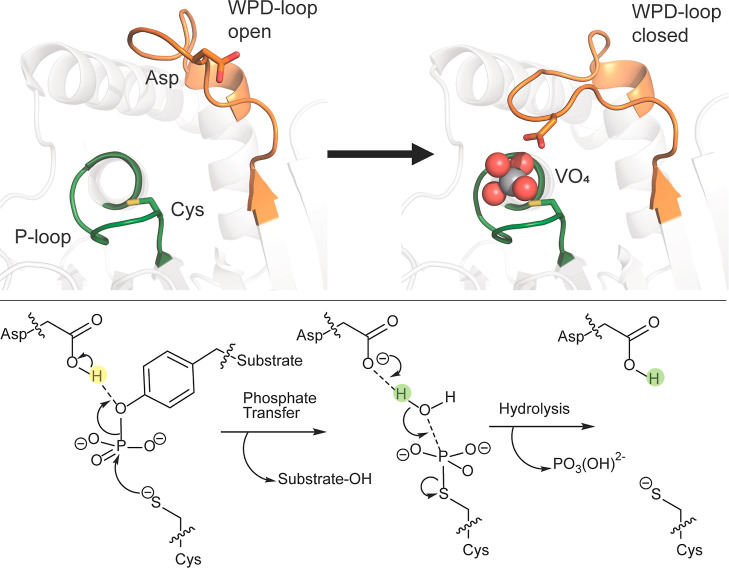
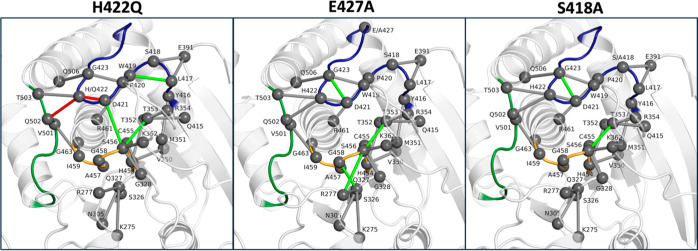
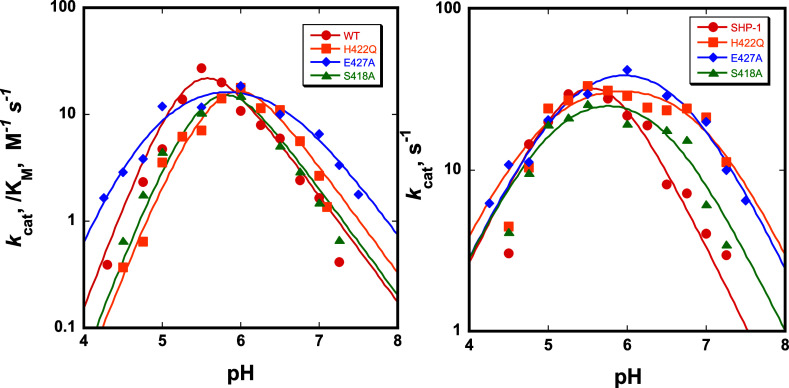
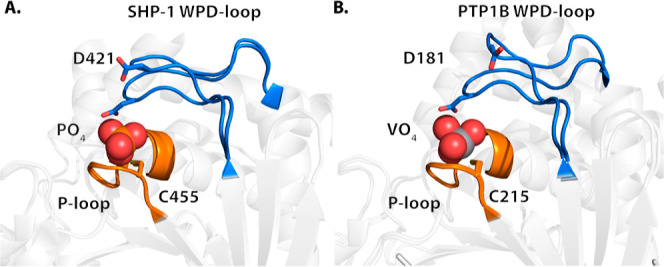
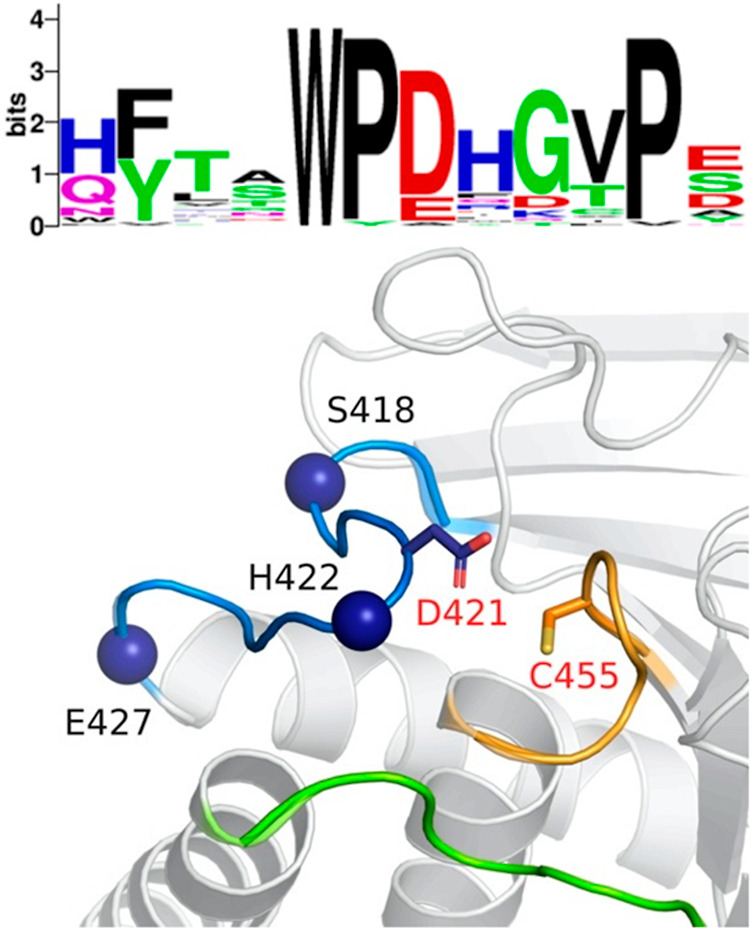
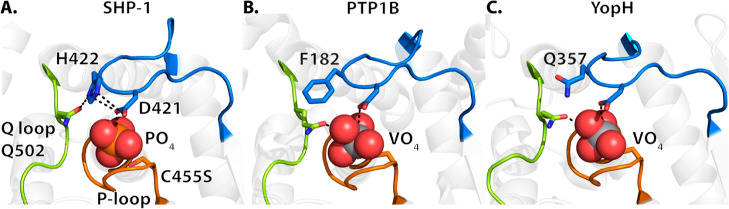
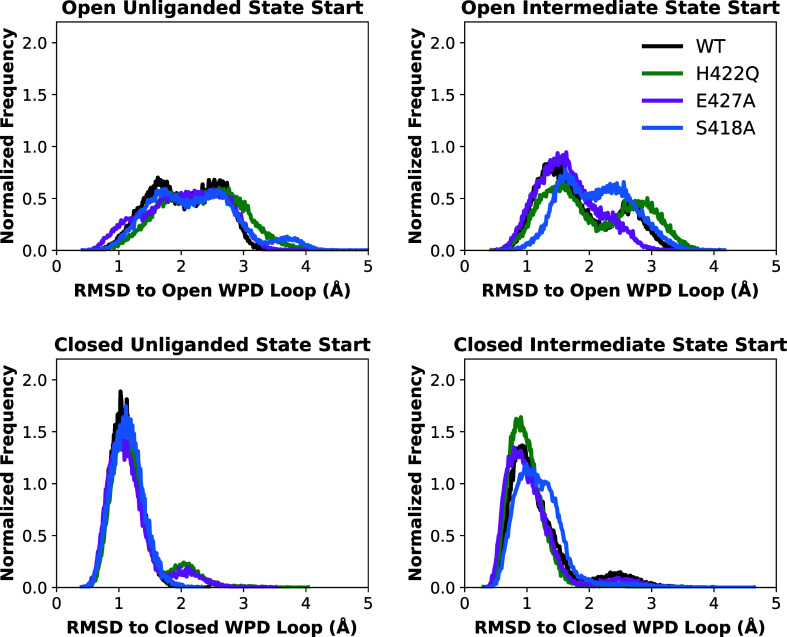
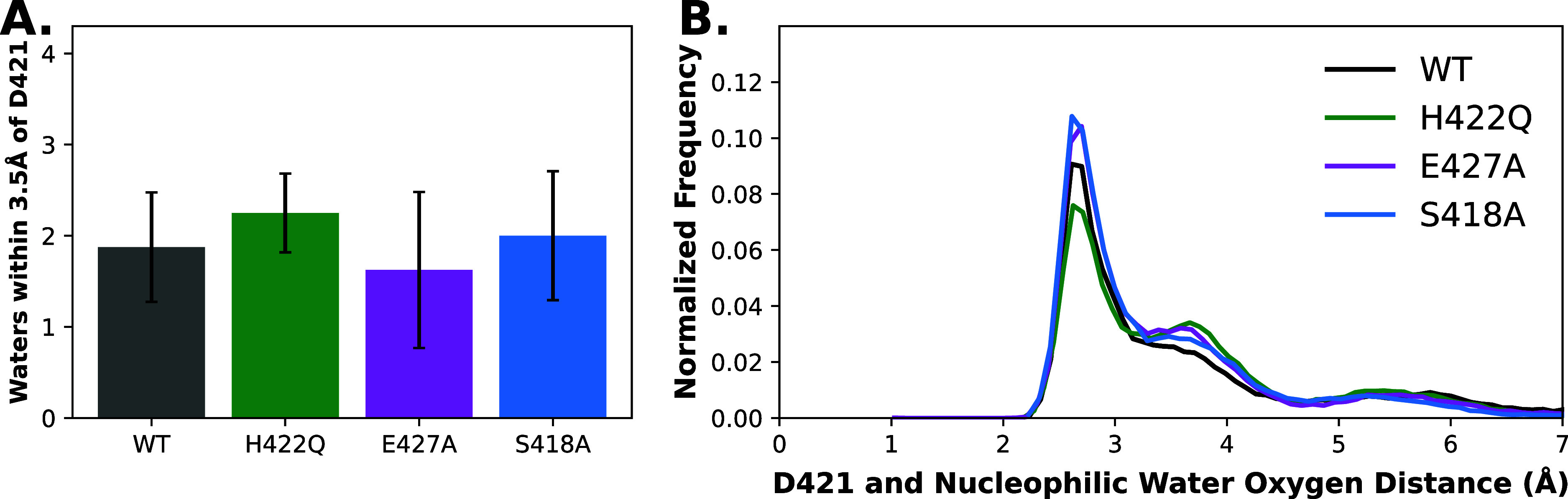
The protein tyrosine phosphatase (PTP) SHP-1 plays an important role in both immune regulation and oncogenesis. This enzyme is part of a broader family of PTPs that all play important regulatory roles in vivo. Common to these enzymes is a highly conserved aspartic acid (D421 in SHP-1) that acts as an acid/base catalyst during the PTP-catalyzed reaction. This residue is located on a mobile loop, the WPD-loop, the dynamic behavior of which is intimately connected to the catalytic activity. The SHP-1 WPD-loop variants H422Q, E427A, and S418A have been kinetically characterized and compared to those of the wild-type (WT) enzyme. These variants exhibit limiting magnitudes of ranging from 43 to 77% of the WT enzyme. However, their pH profiles are significantly broadened in the basic pH range. As a result, above pH 6, the E427A and S418A variants have turnover numbers notably higher than those of WT SHP-1. Molecular modeling results indicate that the shifted pH dependencies result primarily from changes in solvation and hydrogen-bonding networks that affect the p of the D421 residue, explaining the changes in pH-rate profiles for on the basic side. In contrast, a previous study of a noncatalytic residue variant of the PTP YopH, which also exhibited changes in pH dependency, showed that the catalytic change arose from mutation-induced changes in conformational equilibria of the WPD-loop. This finding and the present study show the existence of distinct strategies for nature to tune the activity of PTPs in particular environments through controlling the pH dependency of catalysis.
蛋白酪氨酸磷酸酶(PTP)SHP - 1在免疫调节和肿瘤发生过程中均发挥着重要作用。该酶是更广泛的PTP家族的一员,这些PTP在体内均发挥着重要的调节作用。这些酶的共同特点是存在一个高度保守的天冬氨酸(SHP - 1中的D421),它在PTP催化反应中充当酸碱催化剂。该残基位于一个可移动的环——WPD环上,其动态行为与催化活性密切相关。已对SHP - 1的WPD环变体H422Q、E427A和S418A进行了动力学表征,并与野生型(WT)酶进行了比较。这些变体的极限值范围为野生型酶的43%至77%。然而,它们在碱性pH范围内的pH谱显著变宽。因此,在pH高于6时,E427A和S418A变体的周转数明显高于野生型SHP - 1。分子模拟结果表明,pH依赖性的改变主要源于影响D421残基pKa的溶剂化和氢键网络的变化,这解释了碱性一侧kcat对pH速率曲线的变化。相比之下,先前对PTP YopH的一个非催化残基变体的研究也显示出pH依赖性的变化,该研究表明催化变化源于WPD环构象平衡的突变诱导变化。这一发现与本研究表明,自然界存在不同的策略,通过控制催化的pH依赖性来在特定环境中调节PTP的活性。