Key Laboratory of Respiratory Disease of Zhejiang Province, Department of Respiratory and Critical Care Medicine, The Second Affiliated Hospital of Zhejiang University School of Medicine, Hangzhou, Zhejiang, China.
Surgery Intensive Care Unit, The Second Affiliated Hospital of Zhejiang University School of Medicine, Hangzhou, Zhejiang, China.
Cell Death Dis. 2024 Aug 30;15(8):637. doi: 10.1038/s41419-024-07029-2.
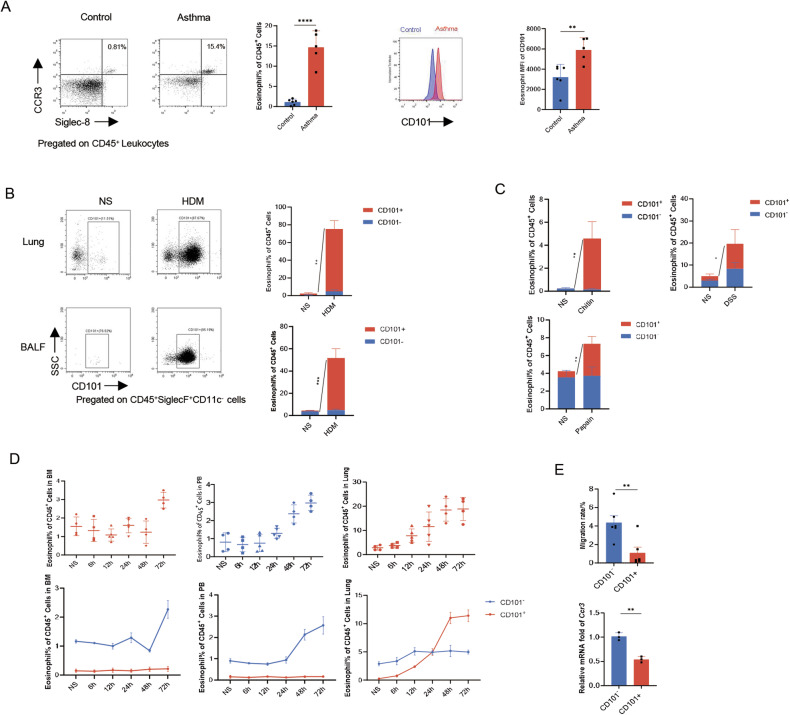
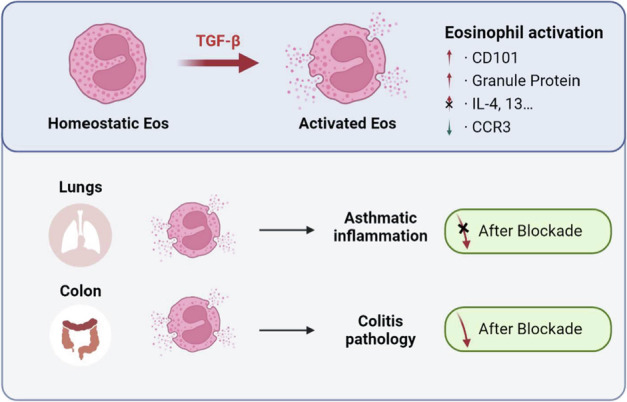
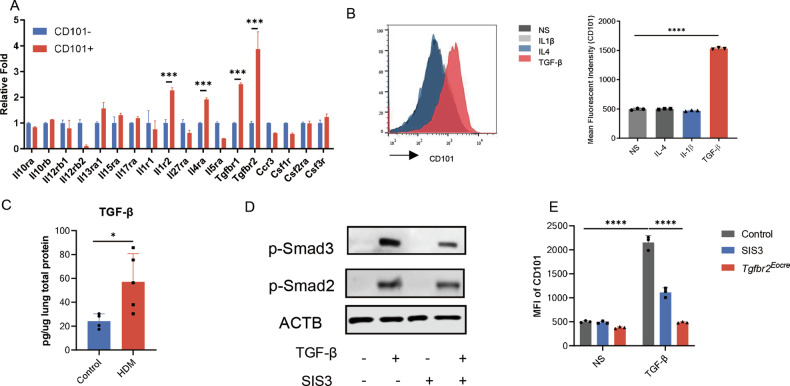
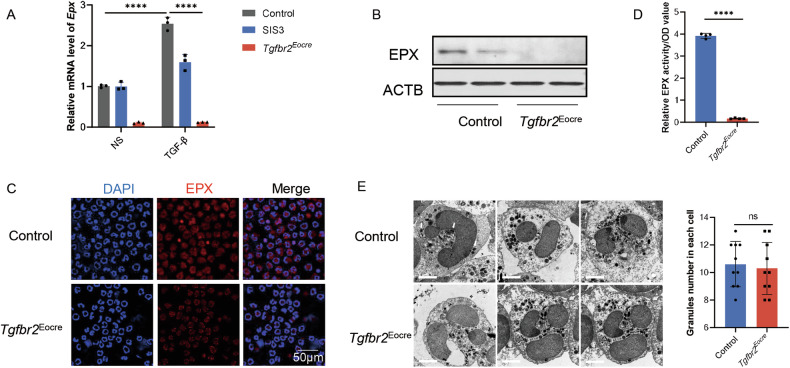
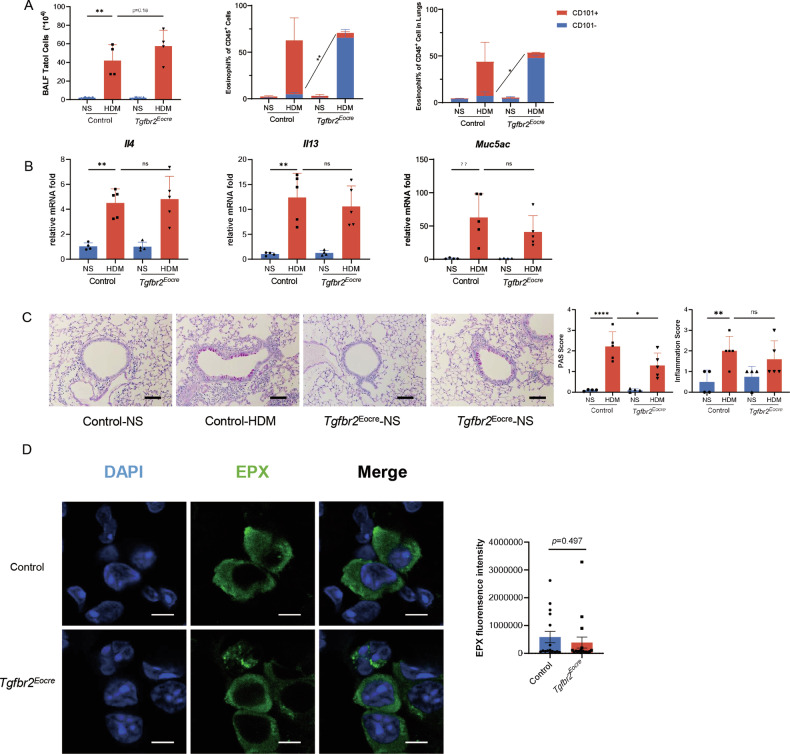
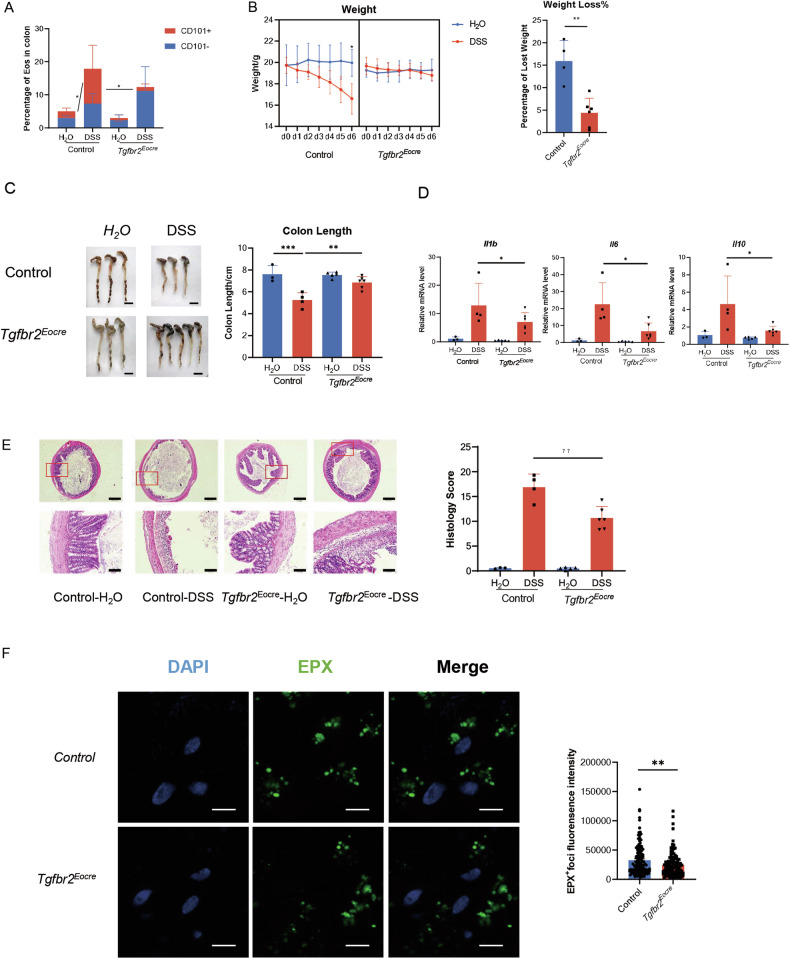
Eosinophils, traditionally associated with allergic phenomena, play a pivotal role in inflammatory responses. Despite accumulating evidence suggesting their pro-inflammatory function upon activation, the underlying mechanisms governing eosinophil activation remain incompletely characterized. In this study, we investigate the local activation of pulmonary and colon eosinophils within the inflammatory microenvironment. Leveraging transcriptional sequencing, we identify TGF-β as a putative regulator of eosinophil activation, leading to the secretion of granule proteins, including peroxidase. Genetic deletion of TGF-β receptors on eosinophils resulted in the inhibition of peroxidase synthesis, affirming the significance of TGF-β signaling in eosinophil activation. Using models of HDM-induced asthma and DSS-induced colitis, we demonstrate the indispensability of TGF-β-driven eosinophil activation in both disease contexts. Notably, while TGF-β signaling did not significantly influence asthmatic inflammation, its knockout conferred protection against experimental colitis. This study delineates a distinct pattern of eosinophil activation within inflammatory responses, highlighting the pivotal role of TGF-β signaling in regulating eosinophil behavior. These findings deepen our comprehension of eosinophil-related pathophysiology and may pave the way for targeted therapeutic approaches in allergic and inflammatory diseases.
嗜酸性粒细胞传统上与过敏现象有关,在炎症反应中起着关键作用。尽管越来越多的证据表明它们在激活后具有促炎功能,但调节嗜酸性粒细胞激活的潜在机制仍未完全阐明。在这项研究中,我们研究了肺部和结肠嗜酸性粒细胞在炎症微环境中的局部激活。利用转录组测序,我们鉴定出 TGF-β 是嗜酸性粒细胞激活的一个潜在调节剂,导致颗粒蛋白(包括过氧化物酶)的分泌。在嗜酸性粒细胞上敲除 TGF-β 受体导致过氧化物酶合成的抑制,证实了 TGF-β 信号在嗜酸性粒细胞激活中的重要性。利用 HDM 诱导的哮喘和 DSS 诱导的结肠炎模型,我们证明了 TGF-β 驱动的嗜酸性粒细胞激活在这两种疾病情况下都是必不可少的。值得注意的是,虽然 TGF-β 信号对哮喘炎症没有显著影响,但它的敲除对实验性结肠炎提供了保护。这项研究描绘了炎症反应中嗜酸性粒细胞激活的独特模式,突出了 TGF-β 信号在调节嗜酸性粒细胞行为中的关键作用。这些发现加深了我们对嗜酸性粒细胞相关病理生理学的理解,并可能为过敏和炎症性疾病的靶向治疗方法铺平道路。