Department of Urologic Sciences, University of British Columbia, Vancouver, BC, V5Z 1M9, Canada.
Vancouver Prostate Centre, Vancouver, BC, V6H 3Z6, Canada.
Nat Commun. 2022 Aug 13;13(1):4760. doi: 10.1038/s41467-022-32530-7.
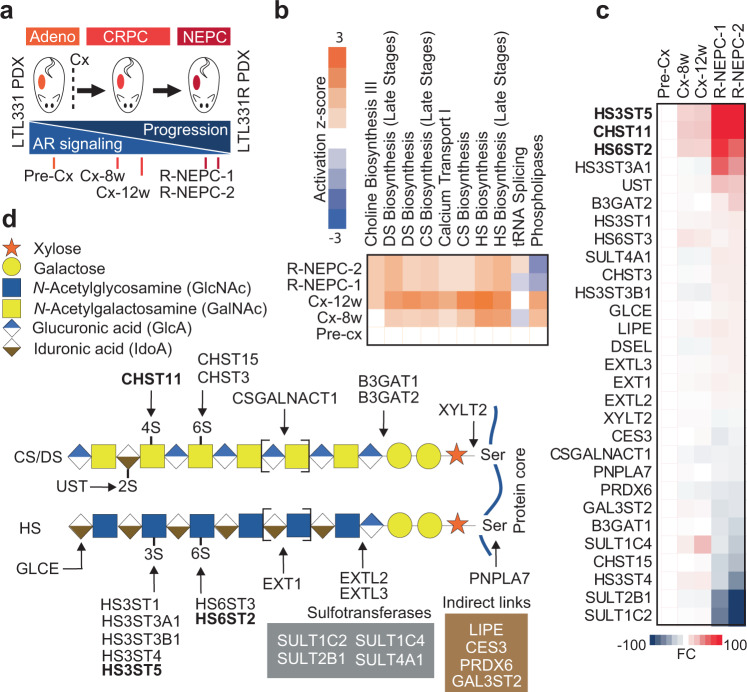
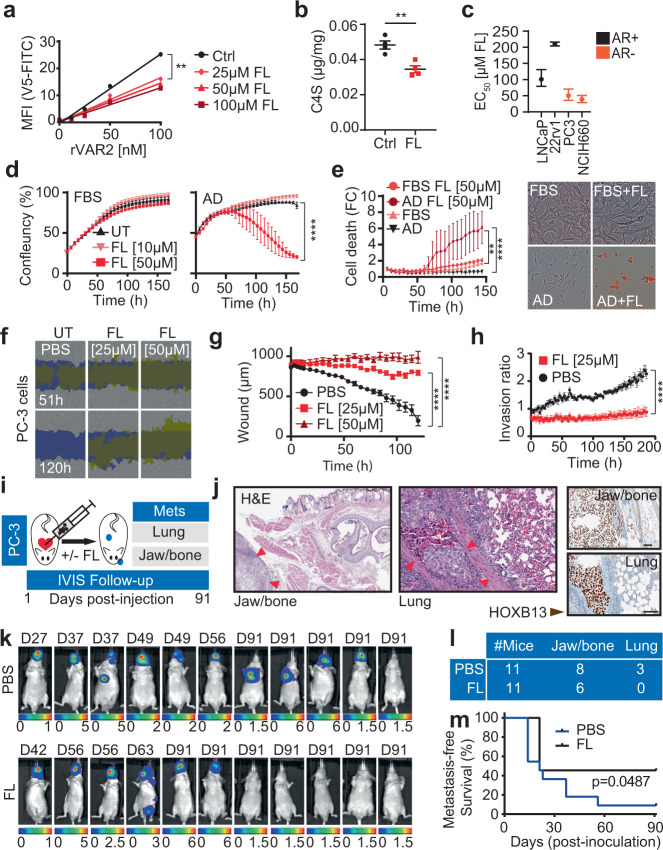
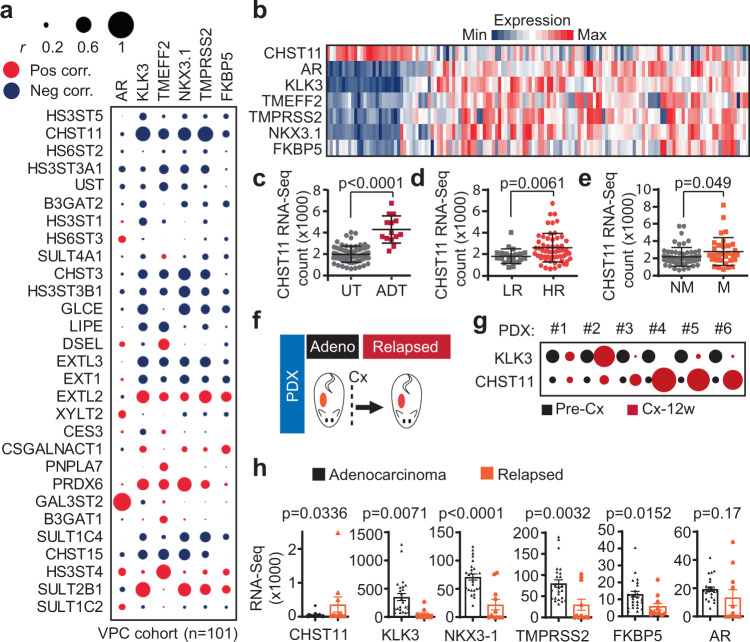
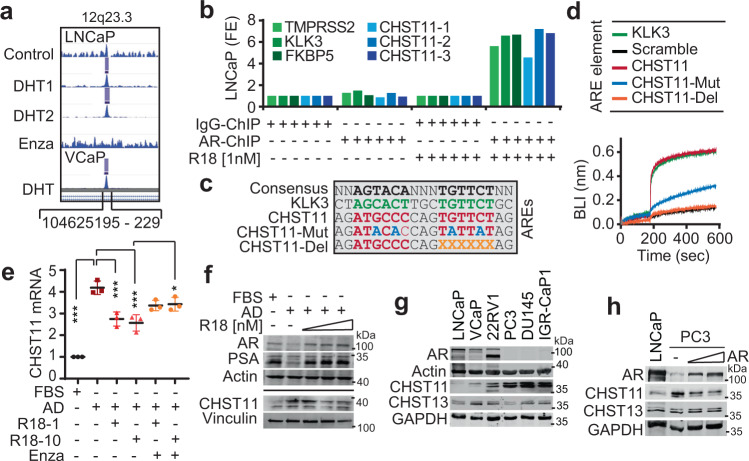
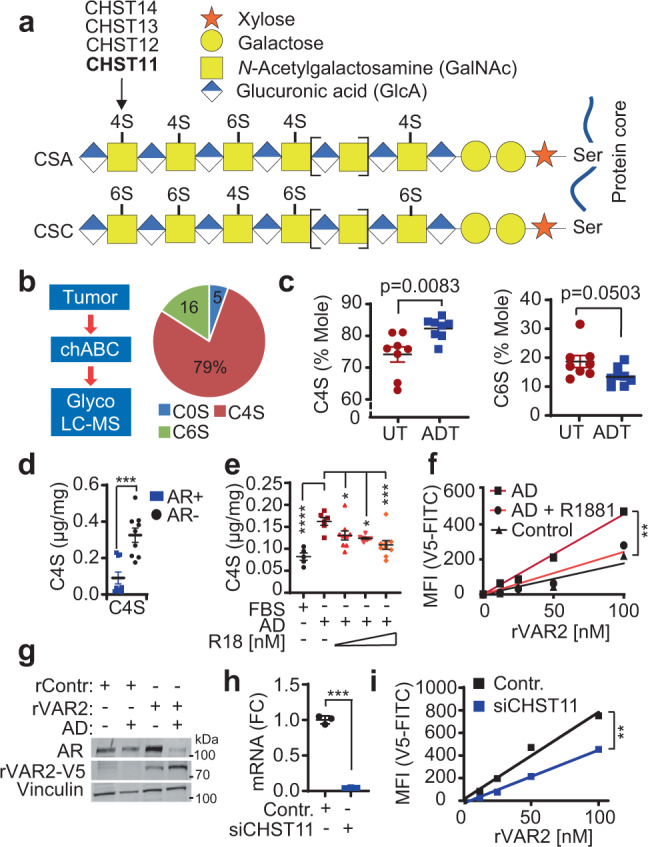
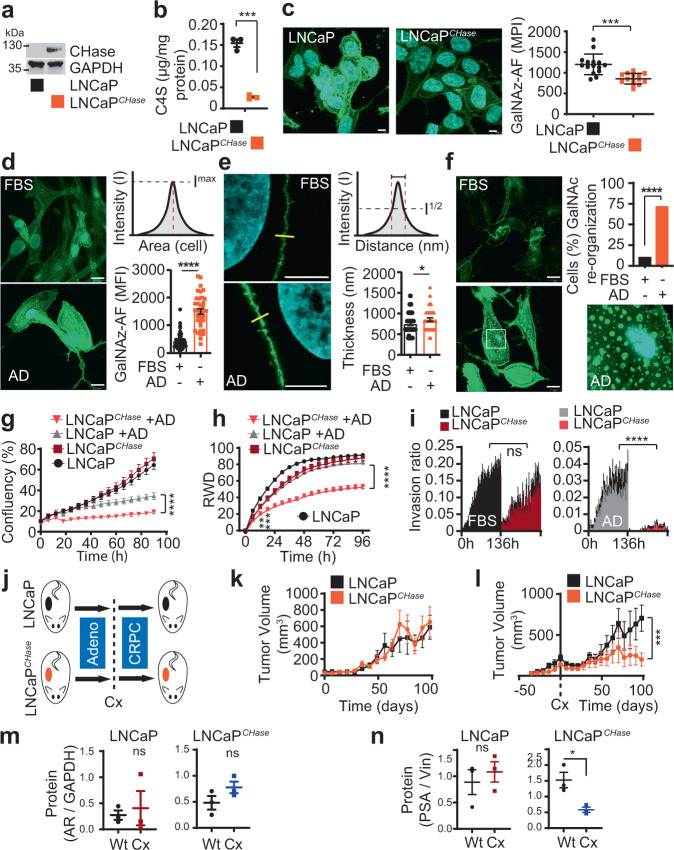
Lineage plasticity of prostate cancer is associated with resistance to androgen receptor (AR) pathway inhibition (ARPI) and supported by a reactive tumor microenvironment. Here we show that changes in chondroitin sulfate (CS), a major glycosaminoglycan component of the tumor cell glycocalyx and extracellular matrix, is AR-regulated and promotes the adaptive progression of castration-resistant prostate cancer (CRPC) after ARPI. AR directly represses transcription of the 4-O-sulfotransferase gene CHST11 under basal androgen conditions, maintaining steady-state CS in prostate adenocarcinomas. When AR signaling is inhibited by ARPI or lost during progression to non-AR-driven CRPC as a consequence of lineage plasticity, CHST11 expression is unleashed, leading to elevated 4-O-sulfated chondroitin levels. Inhibition of the tumor cell CS glycocalyx delays CRPC progression, and impairs growth and motility of prostate cancer after ARPI. Thus, a reactive CS glycocalyx supports adaptive survival and treatment resistance after ARPI, representing a therapeutic opportunity in patients with advanced prostate cancer.
前列腺癌的谱系可塑性与雄激素受体 (AR) 通路抑制 (ARPI) 的耐药性有关,并得到反应性肿瘤微环境的支持。在这里,我们表明,软骨素硫酸盐 (CS) 的变化,即肿瘤细胞糖萼和细胞外基质的主要糖胺聚糖成分,受 AR 调节,并促进 ARPI 后去势抵抗性前列腺癌 (CRPC) 的适应性进展。在基础雄激素条件下,AR 直接抑制 4-O-硫酸转移酶基因 CHST11 的转录,从而维持前列腺腺癌中 CS 的稳态。当 AR 信号通路被 ARPI 抑制或在向非 AR 驱动的 CRPC 进展过程中由于谱系可塑性而丢失时,CHST11 的表达被释放,导致 4-O-硫酸化软骨素水平升高。肿瘤细胞 CS 糖萼的抑制可延迟 CRPC 的进展,并在 ARPI 后损害前列腺癌的生长和迁移。因此,反应性 CS 糖萼在 ARPI 后支持适应性存活和治疗耐药性,为晚期前列腺癌患者提供了治疗机会。