Department of Cardiology, Tangdu Hospital, Airforce Medical University, Xi'an, 710032, China.
Department of Physiology and Pathophysiology, Airforce Medical University, Xi'an, 710032, China.
J Nanobiotechnology. 2024 Aug 31;22(1):527. doi: 10.1186/s12951-024-02800-1.
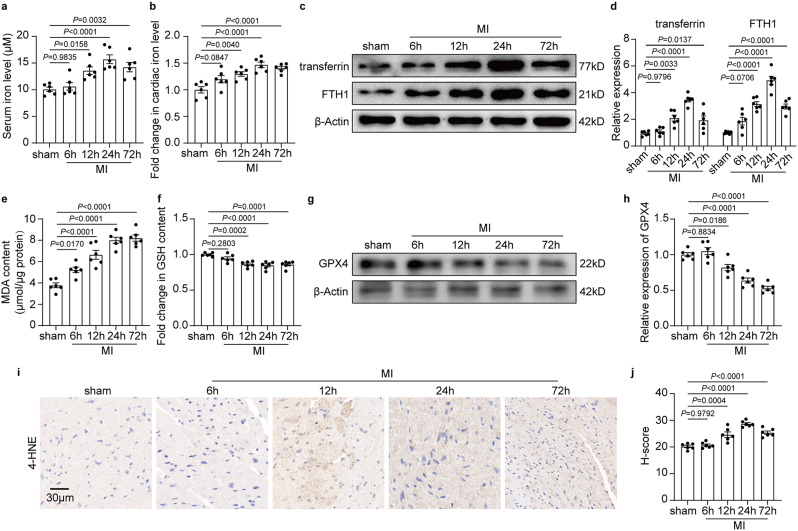
Cardiac iron overload and ferroptosis greatly contribute to the poor prognosis of myocardial infarction (MI). Iron chelator is one of the most promising strategies for scavenging excessive iron and alleviating cardiac dysfunction post MI. However, various side effects of existing chemical iron chelators restrict their clinical application, which calls for a more viable and safer approach to protect against iron injury in ischemic hearts.
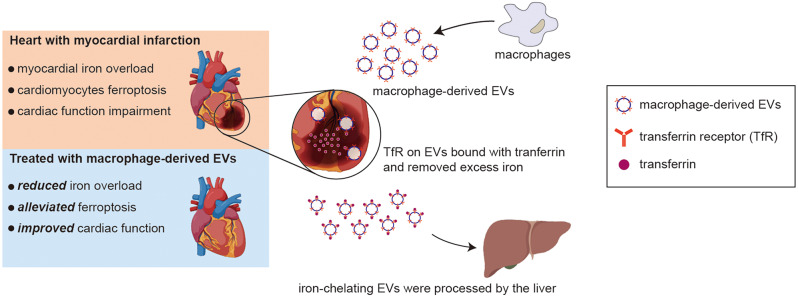
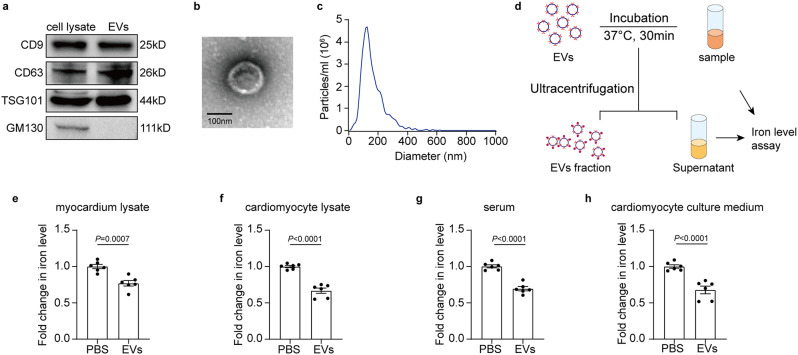
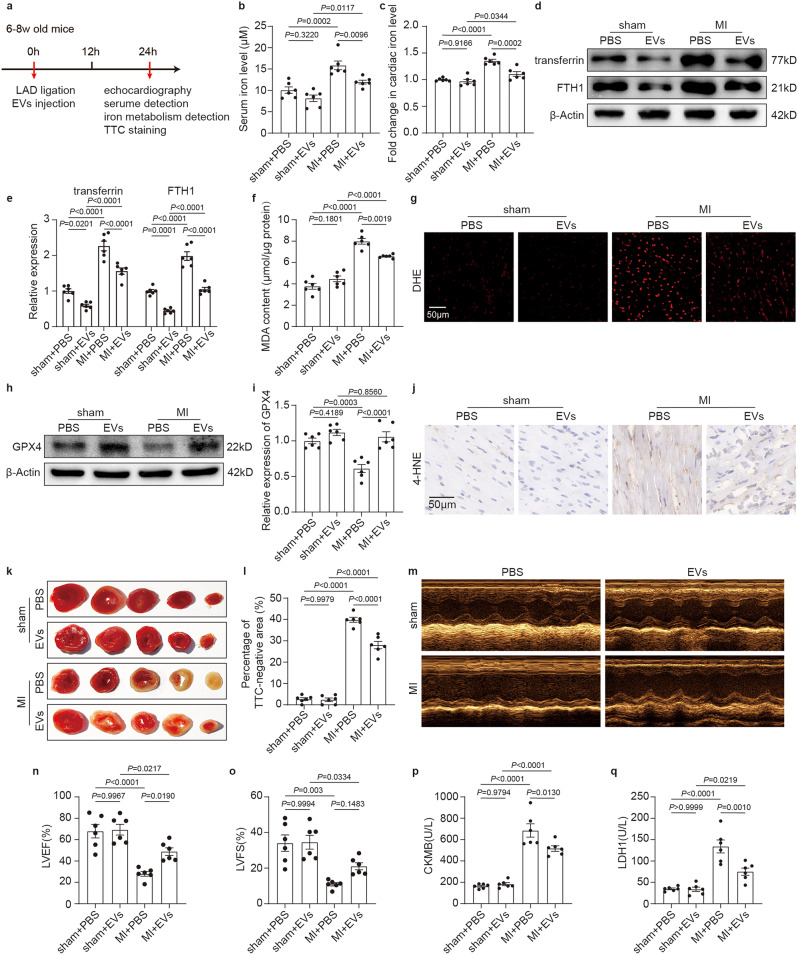
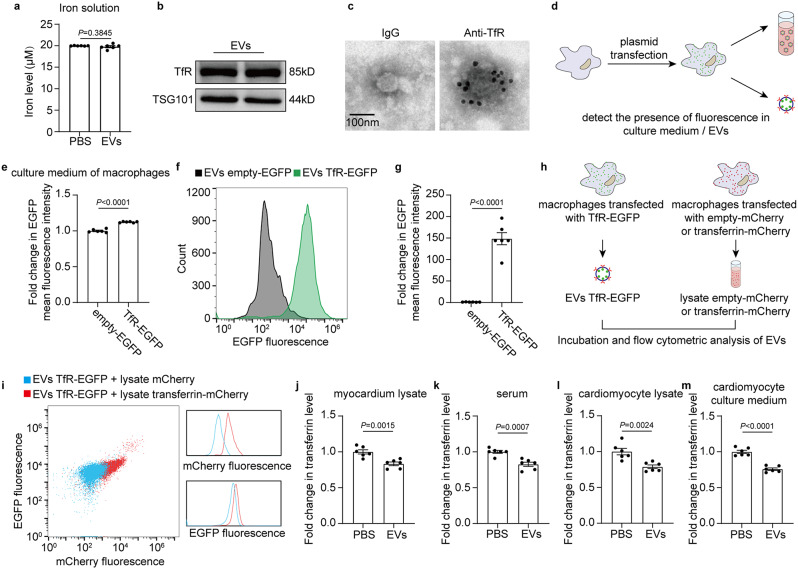
In this study, we isolated macrophage-derived extracellular vesicles (EVs) and identified macrophage-derived EVs as a novel endogenous biological chelator for iron. The administration of macrophage-derived EVs effectively reduced iron overload in hypoxia-treated cardiomyocytes and hearts post MI. Moreover, the oxidative stress and ferroptosis induced by excessive iron were considerably suppressed by application of macrophage-derived EVs. Mechanistically, transferrin receptor (TfR), which was inherited from macrophage to the surface of EVs, endowed EVs with the ability to bind to transferrin and remove excess protein-bound iron. EVs with TfR deficiency exhibited a loss of function in preventing MI-induced iron overload and protecting the heart from MI injury. Furthermore, the iron-chelating EVs were ultimately captured and processed by macrophages in the liver.
These results highlight the potential of macrophage-derived EVs as a powerful endogenous candidate for iron chelation therapy, offering a novel and promising therapeutic approach to protect against iron overload-induced injury in MI and other cardiovascular diseases.
心脏铁过载和铁死亡极大地导致了心肌梗死(MI)的预后不良。铁螯合剂是清除过多铁并缓解 MI 后心脏功能障碍的最有前途的策略之一。然而,现有化学铁螯合剂的各种副作用限制了它们的临床应用,这就需要一种更可行和更安全的方法来防止缺血心脏中的铁损伤。
在本研究中,我们分离了巨噬细胞衍生的细胞外囊泡(EVs),并将巨噬细胞衍生的 EVs 鉴定为一种新型的内源性生物铁螯合剂。给予巨噬细胞衍生的 EVs 可有效减少缺氧处理的心肌细胞和 MI 后心脏中的铁过载。此外,应用巨噬细胞衍生的 EVs 可显著抑制过量铁诱导的氧化应激和铁死亡。机制上,转铁蛋白受体(TfR)从巨噬细胞遗传到 EVs 的表面,赋予 EVs 结合转铁蛋白并去除多余的蛋白结合铁的能力。缺乏 TfR 的 EVs 在预防 MI 诱导的铁过载和保护心脏免受 MI 损伤方面丧失了功能。此外,铁螯合的 EVs 最终被肝脏中的巨噬细胞捕获和处理。
这些结果强调了巨噬细胞衍生的 EVs 作为一种强大的内源性铁螯合治疗候选物的潜力,为保护 MI 和其他心血管疾病中的铁过载诱导损伤提供了一种新的有前途的治疗方法。