Kim Jung Ha, Kim Kabsun, Kim Inyoung, Seong Semun, Koh Jeong-Tae, Kim Nacksung
Department of Pharmacology, Chonnam National University Medical School, Gwangju, 61469, Republic of Korea.
Hard-Tissue Biointerface Research Center, School of Dentistry, Chonnam National University, Gwangju, 61186, Republic of Korea.
Exp Mol Med. 2024 Sep;56(9):1991-2001. doi: 10.1038/s12276-024-01302-2. Epub 2024 Sep 2.
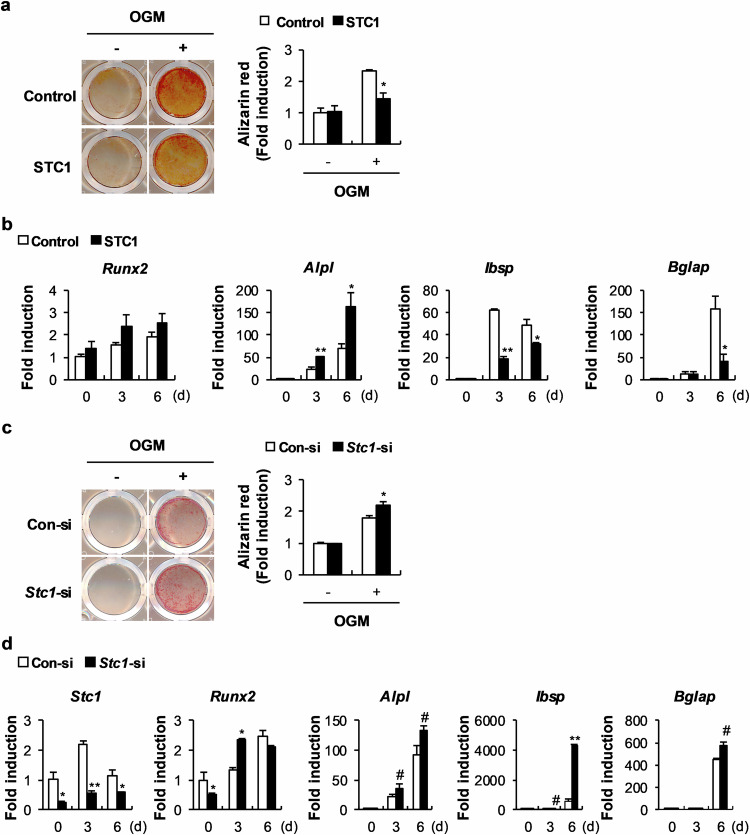
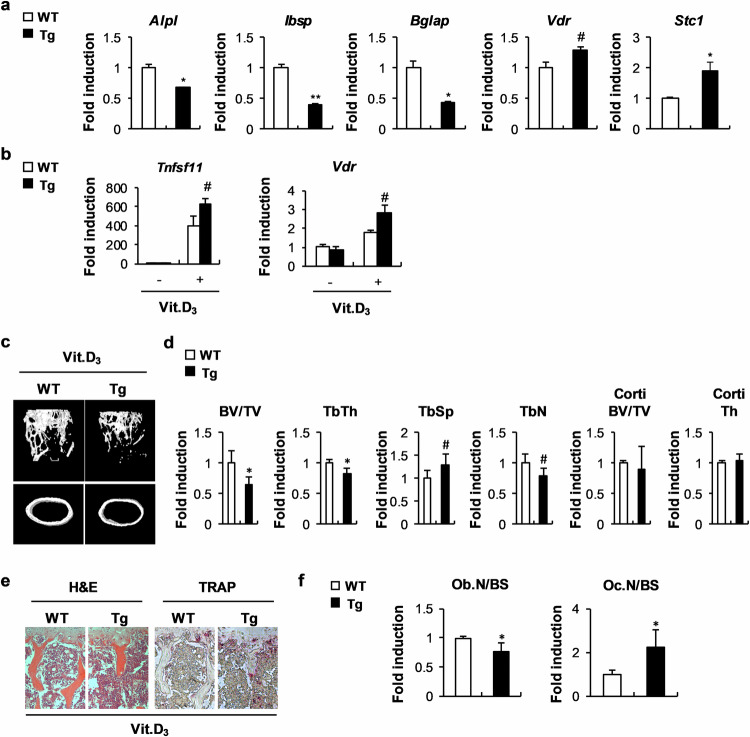
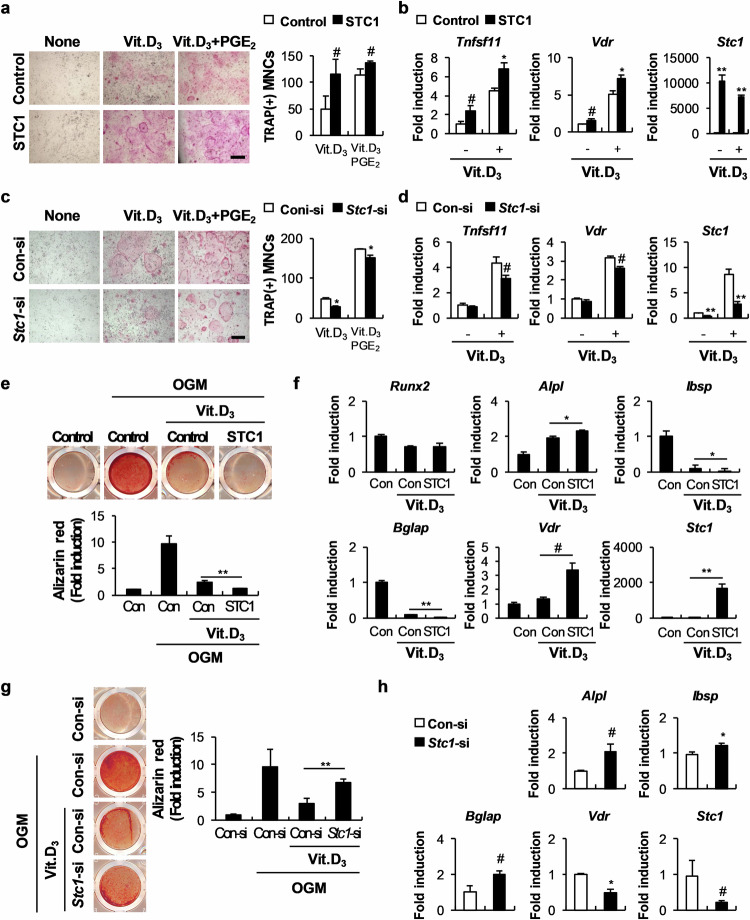
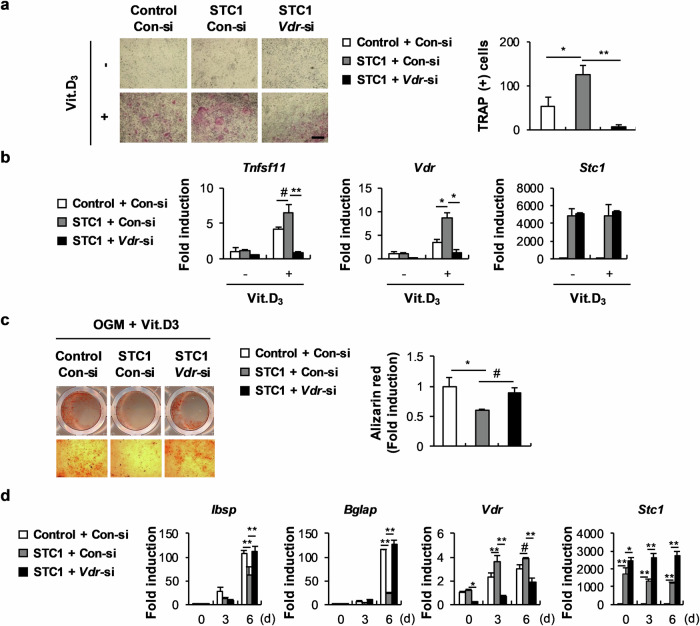
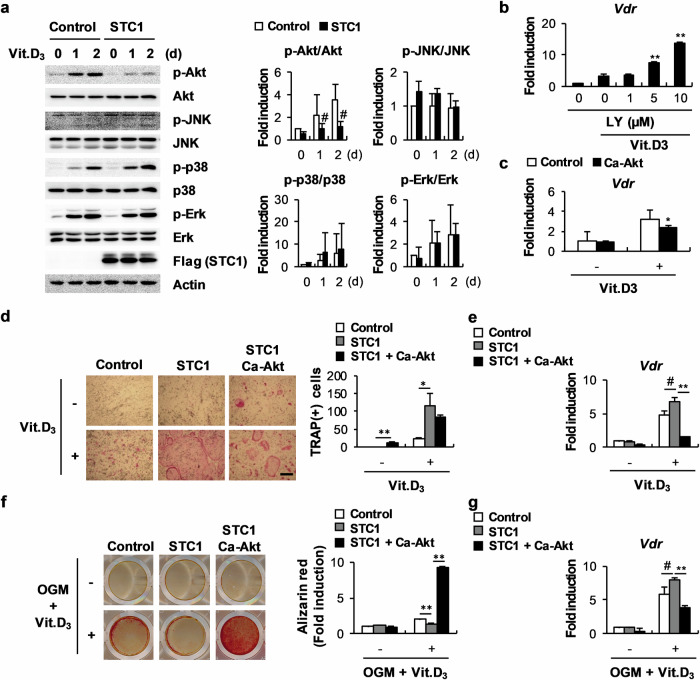
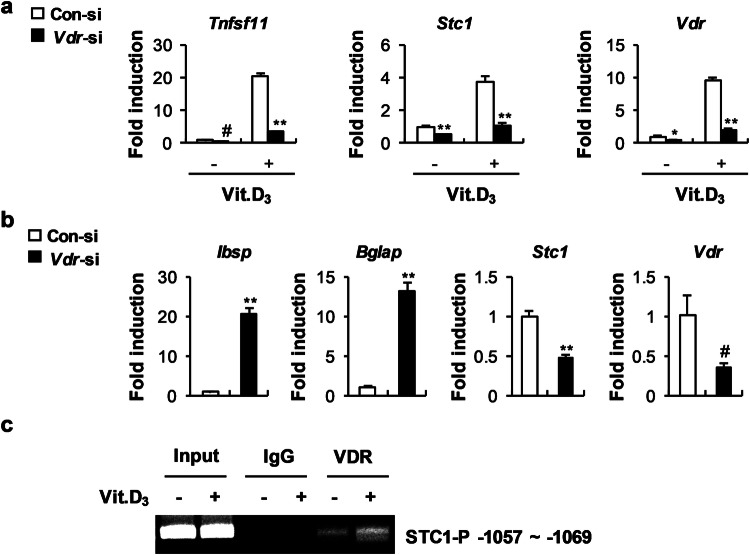
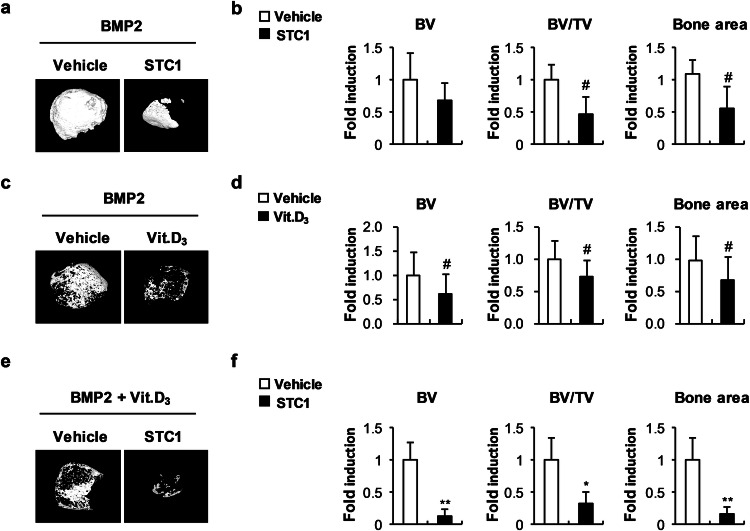
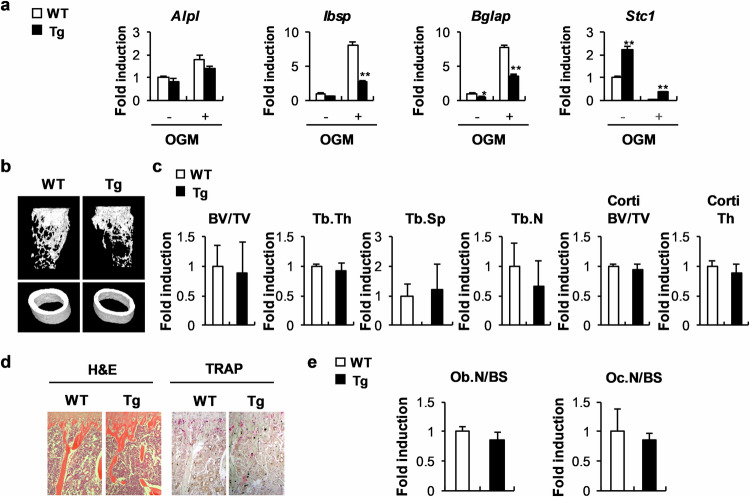
Stanniocalcin 1 (STC1) is a calcium- and phosphate-regulating hormone that is expressed in all tissues, including bone tissues, and is involved in calcium and phosphate homeostasis. Previously, STC1 expression was found to be increased by 1,25-dihydroxyvitamin D [1,25(OH)D] administration in renal proximal tubular cells. In this study, we investigated whether STC1 directly regulates osteoblast differentiation or reciprocally controls the effects of 1,25(OH)D on osteoblasts to contribute to bone homeostasis. We found that STC1 inhibited osteoblast differentiation in vitro and bone morphogenetic protein 2 (BMP2)-induced ectopic bone formation in vivo. Moreover, 1,25(OH)D increased STC1 expression through direct binding to the Stc1 promoter of the vitamin D receptor (VDR). STC1 activated the 1,25(OH)D-VDR signaling pathway through the upregulation of VDR expression mediated by the inhibition of Akt phosphorylation in osteoblasts. STC1 further increased the effects of 1,25(OH)D on receptor activator of nuclear factor-κB ligand (RANKL) secretion and inhibited osteoblast differentiation by exhibiting a positive correlation with 1,25(OH)D. The long-bone phenotype of transgenic mice overexpressing STC1 specifically in osteoblasts was not significantly different from that of wild-type mice. However, compared with that in the wild-type mice, 1,25(OH)D administration significantly decreased bone mass in the STC1 transgenic mice. Collectively, these results suggest that STC1 negatively regulates osteoblast differentiation and bone formation; however, the inhibitory effect of STC1 on osteoblasts is transient and can be reversed under normal conditions. Nevertheless, the synergistic effect of STC1 and 1,25(OH)D through 1,25(OH)D administration may reduce bone mass by inhibiting osteoblast differentiation.
鲽源钙调蛋白1(STC1)是一种调节钙和磷的激素,在包括骨组织在内的所有组织中均有表达,并参与钙和磷的稳态调节。此前研究发现,在肾近端小管细胞中,给予1,25 - 二羟基维生素D [1,25(OH)D]可使STC1表达增加。在本研究中,我们探究了STC1是否直接调节成骨细胞分化,或反向调控1,25(OH)D对成骨细胞的作用,以维持骨稳态。我们发现,STC1在体外抑制成骨细胞分化,并在体内抑制骨形态发生蛋白2(BMP2)诱导的异位骨形成。此外,1,25(OH)D通过直接结合维生素D受体(VDR)的Stc1启动子来增加STC1的表达。STC1通过抑制成骨细胞中Akt磷酸化介导的VDR表达上调,激活1,25(OH)D - VDR信号通路。STC1进一步增强了1,25(OH)D对核因子κB受体活化因子配体(RANKL)分泌的作用,并通过与1,25(OH)D呈正相关抑制成骨细胞分化。在成骨细胞中特异性过表达STC1的转基因小鼠的长骨表型与野生型小鼠无显著差异。然而,与野生型小鼠相比,给予1,25(OH)D后,STC1转基因小鼠的骨量显著降低。总体而言,这些结果表明STC1对成骨细胞分化和骨形成具有负向调节作用;然而,STC1对成骨细胞的抑制作用是短暂的,在正常条件下可逆转。尽管如此,通过给予1,25(OH)D,STC1与1,25(OH)D的协同作用可能通过抑制成骨细胞分化而降低骨量。