Fanshawe Thomas R, Nicholson Brian D, Perera Rafael, Oke Jason L
Nuffield Department of Primary Care Health Sciences, University of Oxford, Woodstock Road, Oxford, OX2 6GG, UK.
Diagn Progn Res. 2024 Sep 3;8(1):8. doi: 10.1186/s41512-024-00175-3.
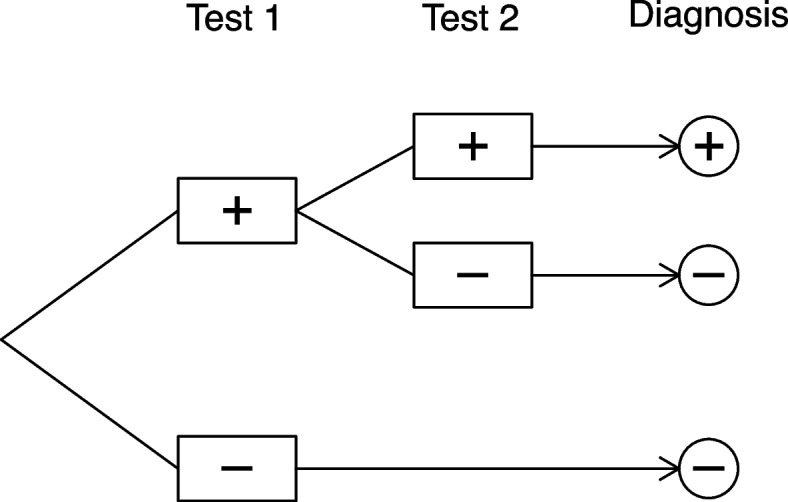
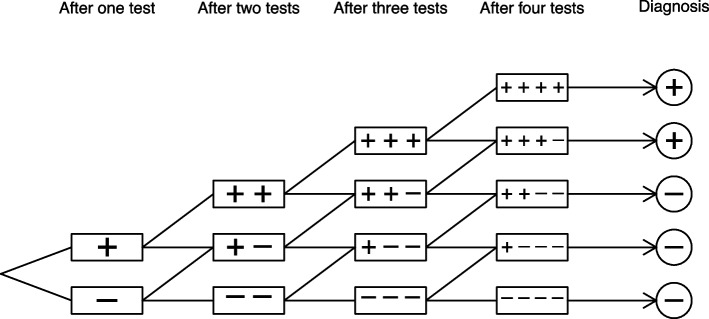
Many clinical pathways for the diagnosis of disease are based on diagnostic tests that are performed in sequence. The performance of the full diagnostic sequence is dictated by the diagnostic performance of each test in the sequence as well as the conditional dependence between them, given true disease status. Resulting estimates of performance, such as the sensitivity and specificity of the test sequence, are key parameters in health-economic evaluations. We conducted a methodological review of statistical methods for assessing the performance of diagnostic tests performed in sequence, with the aim of guiding data analysts towards classes of methods that may be suitable given the design and objectives of the testing sequence.
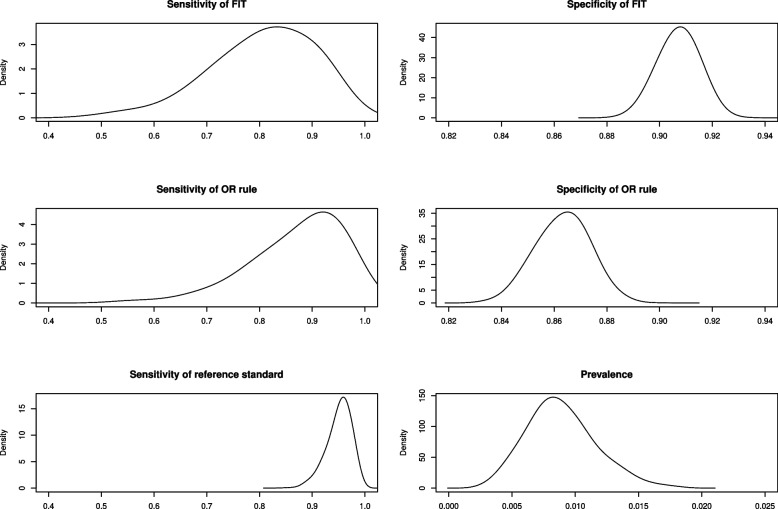
We searched PubMed, Scopus and Web of Science for relevant papers describing methodology for analysing sequences of diagnostic tests. Papers were classified by the characteristics of the method used, and these were used to group methods into themes. We illustrate some of the methods using data from a cohort study of repeat faecal immunochemical testing for colorectal cancer in symptomatic patients, to highlight the importance of allowing for conditional dependence in test sequences and adjustment for an imperfect reference standard.
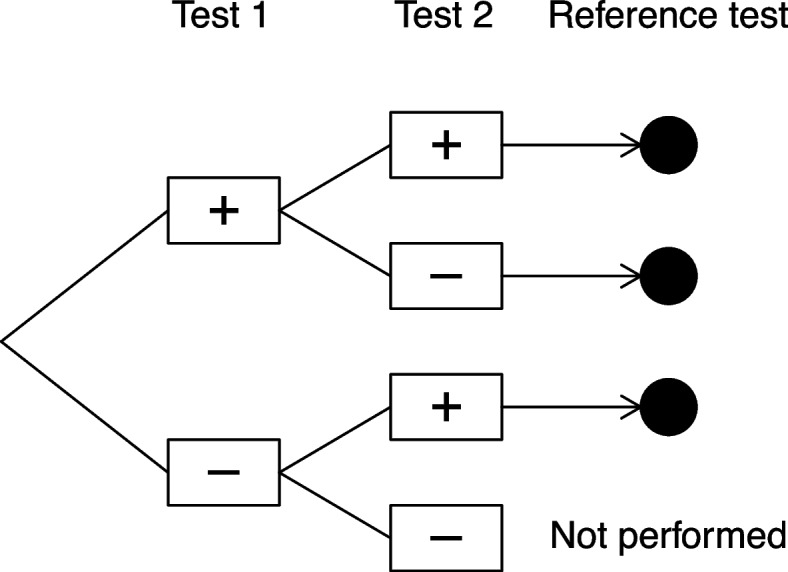
Five overall themes were identified, detailing methods for combining multiple tests in sequence, estimating conditional dependence, analysing sequences of diagnostic tests used for risk assessment, analysing test sequences in conjunction with an imperfect or incomplete reference standard, and meta-analysis of test sequences.
This methodological review can be used to help researchers identify suitable analytic methods for studies that use diagnostic tests performed in sequence.
许多疾病诊断的临床路径基于按顺序进行的诊断测试。完整诊断序列的性能取决于序列中每个测试的诊断性能以及它们在给定真实疾病状态下的条件依赖性。由此得出的性能估计值,如测试序列的敏感性和特异性,是健康经济评估中的关键参数。我们对评估按顺序进行的诊断测试性能的统计方法进行了方法学综述,旨在指导数据分析师根据测试序列的设计和目标选择合适的方法类别。
我们在PubMed、Scopus和Web of Science中搜索了描述分析诊断测试序列方法的相关论文。根据所使用方法的特征对论文进行分类,并据此将方法归纳为不同主题。我们使用有症状患者重复粪便免疫化学检测用于结直肠癌队列研究的数据来说明其中一些方法,以强调考虑测试序列中的条件依赖性和针对不完善的参考标准进行调整的重要性。
确定了五个总体主题,详细介绍了按顺序组合多个测试、估计条件依赖性、分析用于风险评估的诊断测试序列、结合不完善或不完整的参考标准分析测试序列以及测试序列的荟萃分析的方法。
本方法学综述可用于帮助研究人员为使用按顺序进行的诊断测试的研究确定合适的分析方法。