Department of Dermatology, University of Pennsylvania School of Medicine, Philadelphia, Pennsylvania, USA.
Duke Molecular Physiology Institute, Durham, North Carolina, USA.
J Clin Invest. 2024 Sep 3;134(17):e178711. doi: 10.1172/JCI178711.
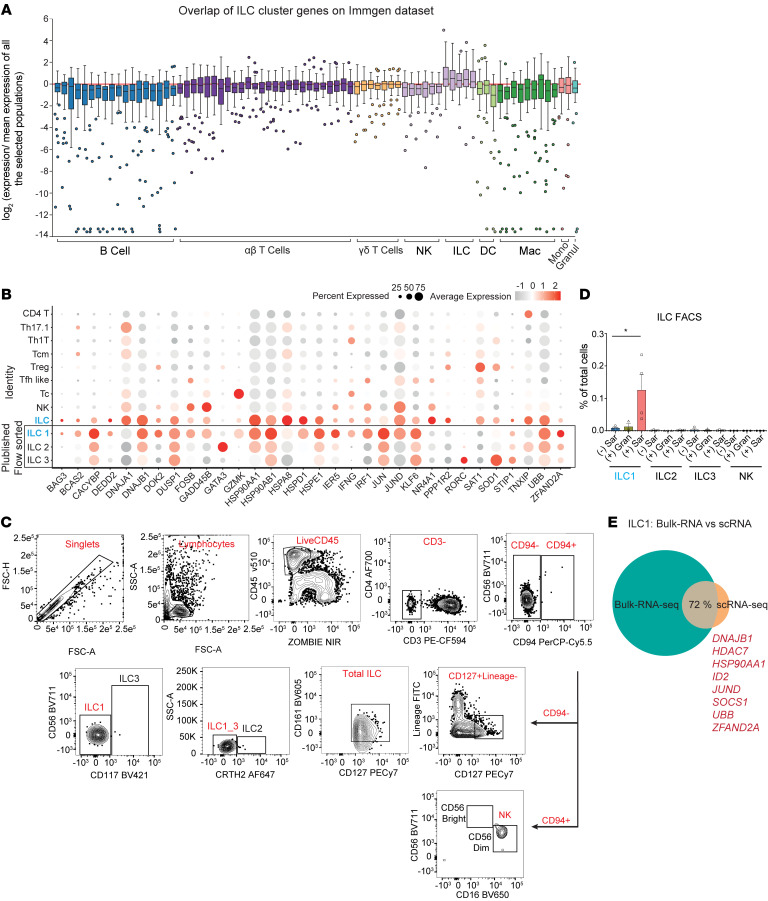
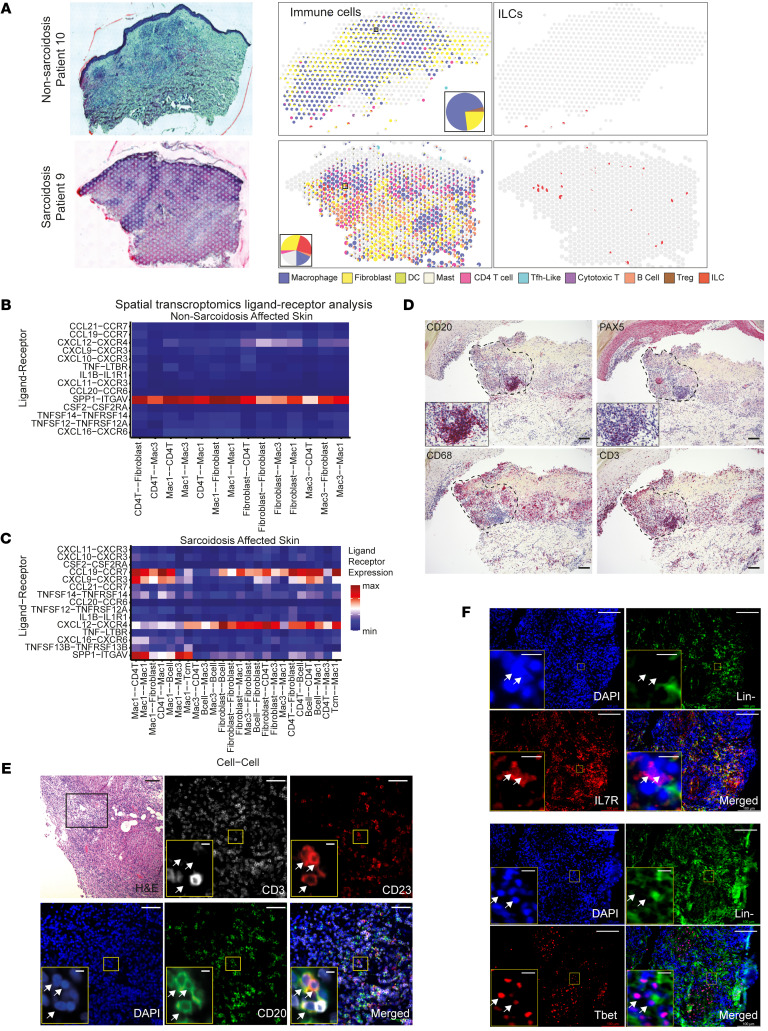
Sarcoidosis is a multiorgan granulomatous disease that lacks diagnostic biomarkers and targeted treatments. Using blood and skin from patients with sarcoid and non-sarcoid skin granulomas, we discovered that skin granulomas from different diseases exhibit unique immune cell recruitment and molecular signatures. Sarcoid skin granulomas were specifically enriched for type 1 innate lymphoid cells (ILC1s) and B cells and exhibited molecular programs associated with formation of mature tertiary lymphoid structures (TLSs), including increased CXCL12/CXCR4 signaling. Lung sarcoidosis granulomas also displayed similar immune cell recruitment. Thus, granuloma formation was not a generic molecular response. In addition to tissue-specific effects, patients with sarcoidosis exhibited an 8-fold increase in circulating ILC1s, which correlated with treatment status. Multiple immune cell types induced CXCL12/CXCR4 signaling in sarcoidosis, including Th1 T cells, macrophages, and ILCs. Mechanistically, CXCR4 inhibition reduced sarcoidosis-activated immune cell migration, and targeting CXCR4 or total ILCs attenuated granuloma formation in a noninfectious mouse model. Taken together, our results show that ILC1s are a tissue and circulating biomarker that distinguishes sarcoidosis from other skin granulomatous diseases. Repurposing existing CXCR4 inhibitors may offer a new targeted treatment for this devastating disease.
结节病是一种多器官肉芽肿性疾病,缺乏诊断生物标志物和靶向治疗方法。我们使用来自结节病和非结节病皮肤肉芽肿患者的血液和皮肤,发现来自不同疾病的皮肤肉芽肿具有独特的免疫细胞募集和分子特征。结节病皮肤肉芽肿特别富含 1 型先天淋巴细胞(ILC1)和 B 细胞,并表现出与成熟三级淋巴样结构(TLS)形成相关的分子程序,包括增加 CXCL12/CXCR4 信号传导。肺结节病肉芽肿也显示出类似的免疫细胞募集。因此,肉芽肿的形成不是一种通用的分子反应。除了组织特异性影响外,结节病患者的循环 ILC1 增加了 8 倍,这与治疗状况相关。多种免疫细胞类型在结节病中诱导 CXCL12/CXCR4 信号传导,包括 Th1 T 细胞、巨噬细胞和 ILC。从机制上讲,CXCR4 抑制减少了结节病激活的免疫细胞迁移,并且靶向 CXCR4 或总 ILC 可减弱非传染性小鼠模型中的肉芽肿形成。总之,我们的研究结果表明,ILC1 是区分结节病与其他皮肤肉芽肿性疾病的组织和循环生物标志物。重新利用现有的 CXCR4 抑制剂可能为这种破坏性疾病提供新的靶向治疗方法。