School of Cardiovascular and Metabolic Health, University of Glasgow, Glasgow, Scotland.
Oregon Health & Science University, Portland.
JAMA Cardiol. 2024 Nov 1;9(11):990-1000. doi: 10.1001/jamacardio.2024.2781.
Impaired exercise capacity is a cardinal manifestation of obstructive hypertrophic cardiomyopathy (HCM). The Phase 3 Trial to Evaluate the Efficacy and Safety of Aficamten Compared to Placebo in Adults With Symptomatic Obstructive HCM (SEQUOIA-HCM) is a pivotal study characterizing the treatment effect of aficamten, a next-in-class cardiac myosin inhibitor, on a comprehensive set of exercise performance and clinical measures.
To evaluate the effect of aficamten on exercise performance using cardiopulmonary exercise testing with a novel integrated measure of maximal and submaximal exercise performance and evaluate other exercise measures and clinical correlates.
DESIGN, SETTING, AND PARTICIPANTS: This was a prespecified analysis from SEQUOIA-HCM, a double-blind, placebo-controlled, randomized clinical trial. Patients were recruited from 101 sites in 14 countries (North America, Europe, Israel, and China). Individuals with symptomatic obstructive HCM with objective exertional intolerance (peak oxygen uptake [pVO2] ≤90% predicted) were included in the analysis. Data were analyzed from January to March 2024.
Randomized 1:1 to aficamten (5-20 mg daily) or matching placebo for 24 weeks.
The primary outcome was change from baseline to week 24 in integrated exercise performance, defined as the 2-component z score of pVO2 and ventilatory efficiency throughout exercise (minute ventilation [VE]/carbon dioxide output [VCO2] slope). Response rates for achieving clinically meaningful thresholds for change in pVO2 and correlations with clinical measures of treatment effect (health status, echocardiographic/cardiac biomarkers) were also assessed.
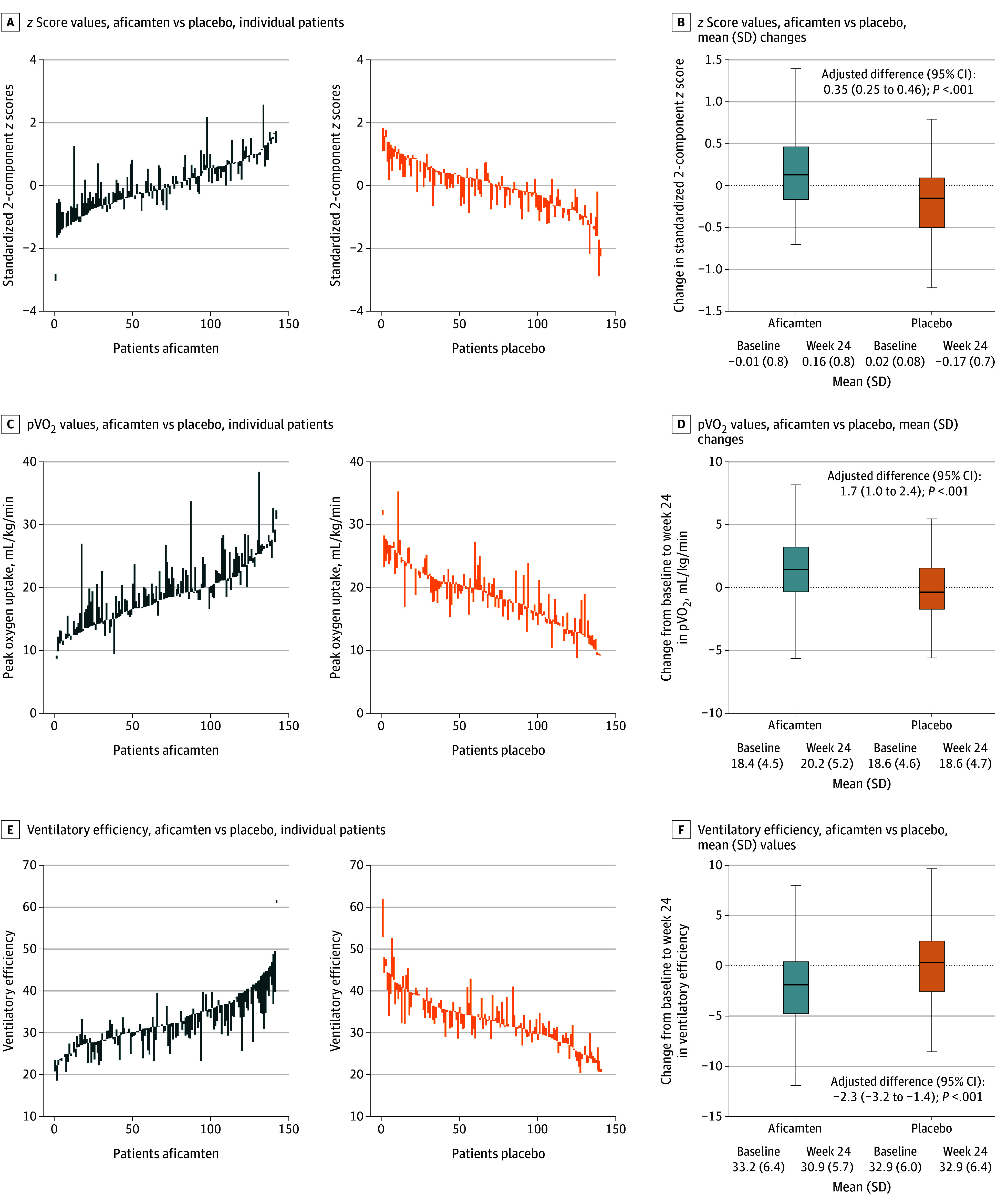
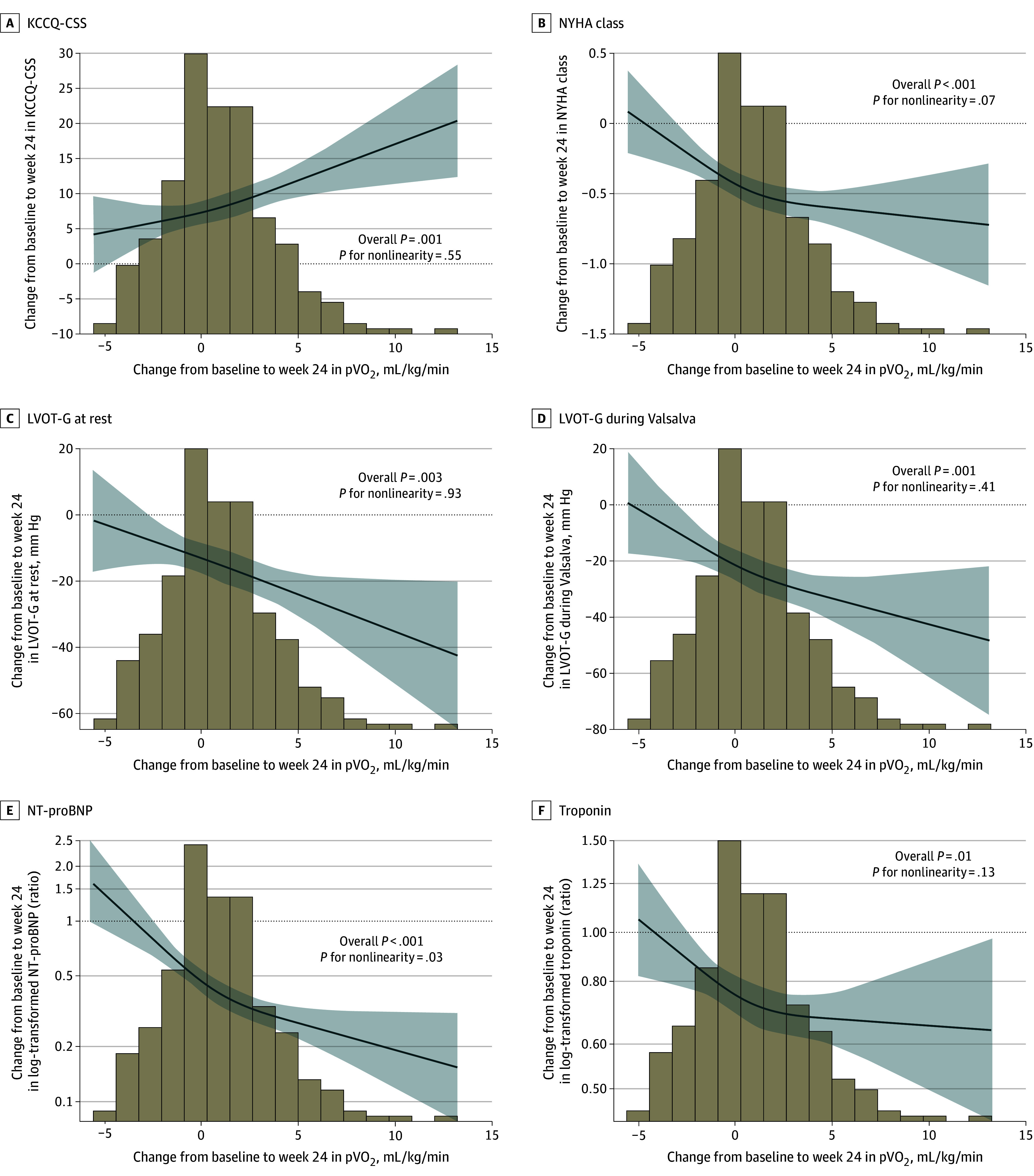
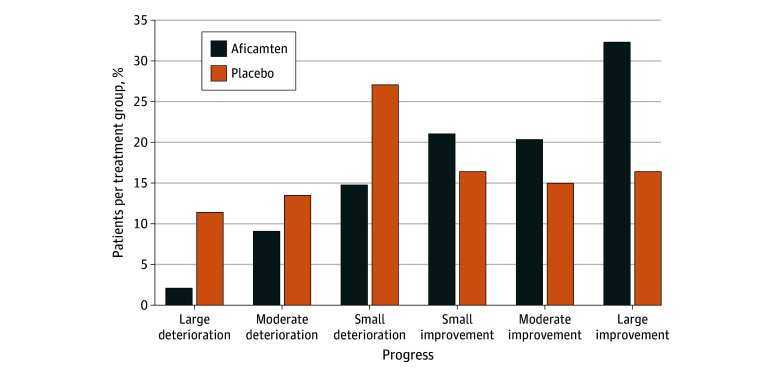
Among 282 randomized patients (mean [SD] age, 59.1 [12.9] years; 115 female [40.8%], 167 male [59.2%]), 263 (93.3%) had core laboratory-validated exercise testing at baseline and week 24. Integrated composite exercise performance improved in the aficamten group (mean [SD] z score, 0.17 [0.51]) from baseline to week 24, whereas the placebo group deteriorated (mean [SD] z score, -0.19 [0.45]), yielding a placebo-corrected improvement of 0.35 (95% CI, 0.25-0.46; P <.001). Further, aficamten treatment demonstrated significant improvements in total workload, circulatory power, exercise duration, heart rate reserve, peak heart rate, ventilatory efficiency, ventilatory power, and anaerobic threshold (all P <.001). In the aficamten group, large improvements (≥3.0 mL/kg per minute) in pVO2 were more common than large reductions (32% and 2%, respectively) compared with placebo (16% and 11%, respectively). Improvements in both components of the primary outcome, pVO2 and VE/VCO2 slope throughout exercise, were significantly correlated with improvements in symptom burden and hemodynamics (all P <.05).
This prespecified analysis of the SEQUOIA-HCM randomized clinical trial found that aficamten treatment improved a broad range of exercise performance measures. These findings offer valuable insight into the therapeutic effects of aficamten.
ClinicalTrials.gov Identifier: NCT05186818.
运动能力受损是梗阻性肥厚型心肌病(HCM)的主要表现。3 期临床试验旨在评估阿非卡肽与安慰剂相比在有症状梗阻性 HCM 成人中的疗效和安全性(SEQUOIA-HCM),这是一项重要的研究,描述了阿非卡肽(一种新型心脏肌球蛋白抑制剂)对综合运动表现和临床指标的治疗效果。
使用心肺运动试验评估阿非卡肽对运动表现的影响,该试验采用了一种新的最大和次最大运动性能综合测量方法,并评估了其他运动测量和临床相关性。
设计、地点和参与者:这是 SEQUOIA-HCM 的预设分析,这是一项双盲、安慰剂对照、随机临床试验。患者从 14 个国家(北美、欧洲、以色列和中国)的 101 个地点招募。纳入分析的是有症状梗阻性 HCM 伴有客观运动不耐受(峰值摄氧量[pVO2]≤90%预测值)的个体。数据于 2024 年 1 月至 3 月进行分析。
随机 1:1 接受阿非卡肽(5-20mg 每日)或匹配的安慰剂治疗 24 周。
主要结果是从基线到第 24 周综合运动表现的变化,定义为 pVO2 和整个运动过程中通气效率(分钟通气量[VE]/二氧化碳产量[VCO2]斜率)的 2 个组成部分 z 评分。还评估了达到 pVO2 变化的临床有意义阈值的反应率以及与治疗效果的临床指标(健康状况、超声心动图/心脏生物标志物)的相关性。
在 282 名随机患者(平均[SD]年龄,59.1[12.9]岁;115 名女性[40.8%],167 名男性[59.2%])中,263 名(93.3%)在基线和第 24 周进行了核心实验室验证的运动测试。阿非卡肽组的综合复合运动表现从基线到第 24 周有所改善(平均[SD]z 评分,0.17[0.51]),而安慰剂组则恶化(平均[SD]z 评分,-0.19[0.45]),导致安慰剂校正后改善 0.35(95%置信区间,0.25-0.46;P<.001)。此外,阿非卡肽治疗显著改善了总工作量、循环功率、运动持续时间、心率储备、峰值心率、通气效率、通气功率和无氧阈值(均 P<.001)。在阿非卡肽组中,与安慰剂组(分别为 32%和 2%)相比,pVO2 较大增加(≥3.0mL/kg/min)比较大减少更为常见(分别为 16%和 11%)。主要结局的两个组成部分(pVO2 和整个运动过程中的 VE/VCO2 斜率)的改善与症状负担和血液动力学的改善显著相关(均 P<.05)。
这是对 SEQUOIA-HCM 随机临床试验的预设分析发现,阿非卡肽治疗改善了广泛的运动表现指标。这些发现为阿非卡肽的治疗效果提供了有价值的见解。
ClinicalTrials.gov 标识符:NCT05186818。