Liu Bo, Cui Di, Liu Jie, Shi Jing-Shan
Key Lab for Basic Pharmacology and Joint International Laboratory of Ethnomedicine of Ministry of Education, Zunyi Medical University, Zunyi, China.
Front Pharmacol. 2024 Aug 21;15:1440515. doi: 10.3389/fphar.2024.1440515. eCollection 2024.
Senescence-accelerated mouse prone 8 (SAMP8) and age-matched SAMR1 mice are used to study the pathogenesis and therapeutics of Alzheimer's disease (AD); however, the molecular mechanisms are not completely understood.
This study aimed to examine the effects of the 5-month administration of formononetin in SAMP8 mice and used RNA-seq to explore the molecular targets.
SAMP8 mice were orally administered formononetin (0, 8, and 16 mg/kg) from 4 months of age, and age-matched SAMR1 mice were used as controls. Behavioral tests were performed in 9-month-old mice, followed by histopathologic analysis. Total RNA from the hippocampus was isolated and subjected to RNA-seq, RT-qPCR, and bioinformatics analysis.
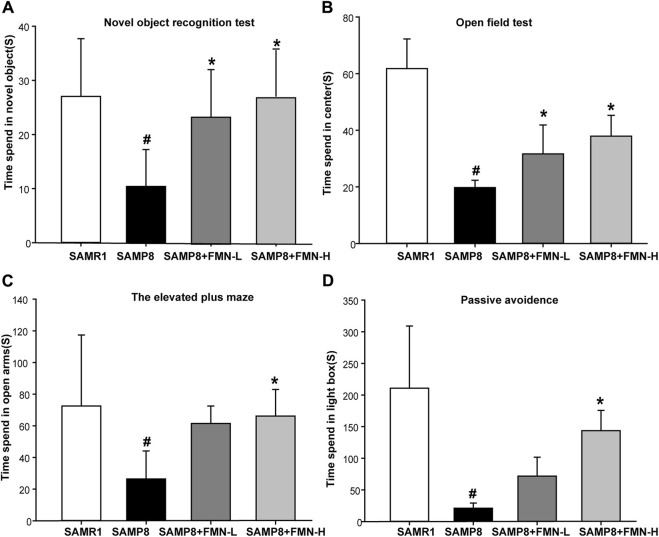
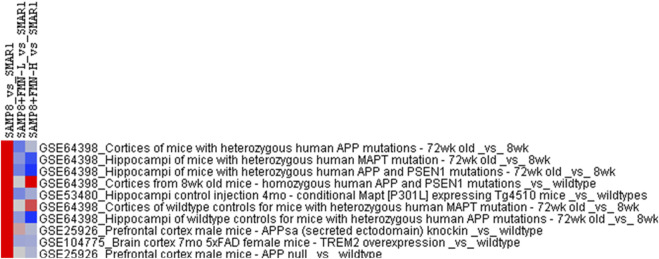
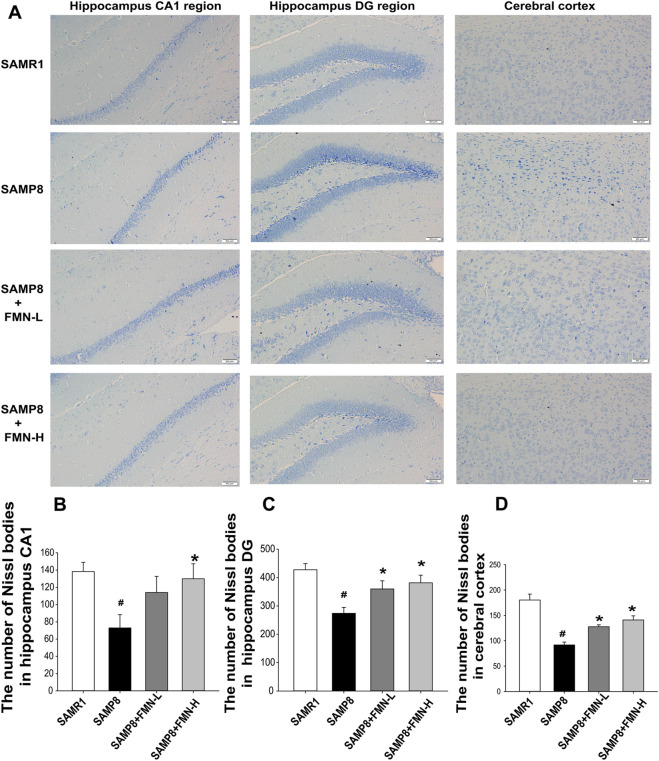
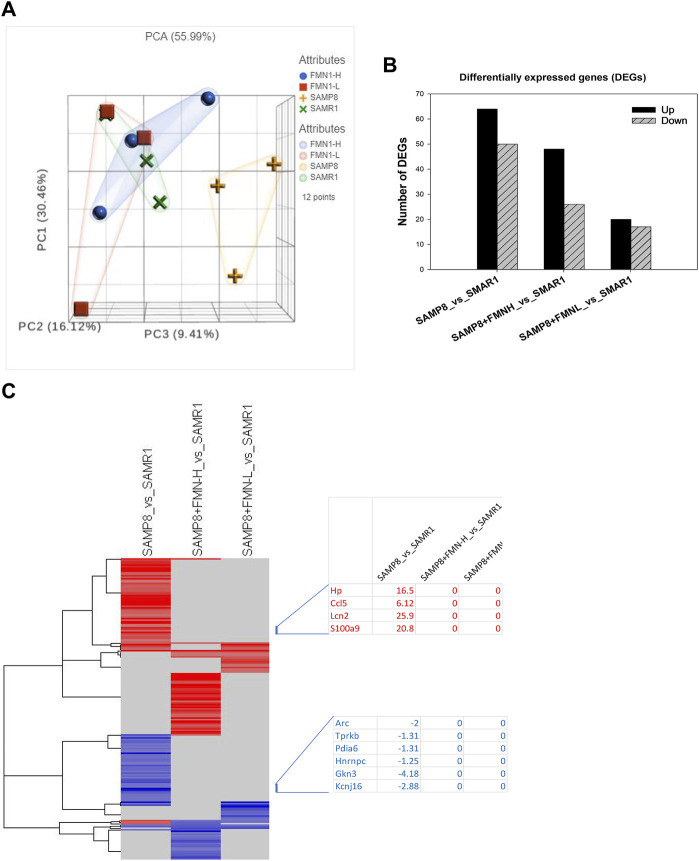
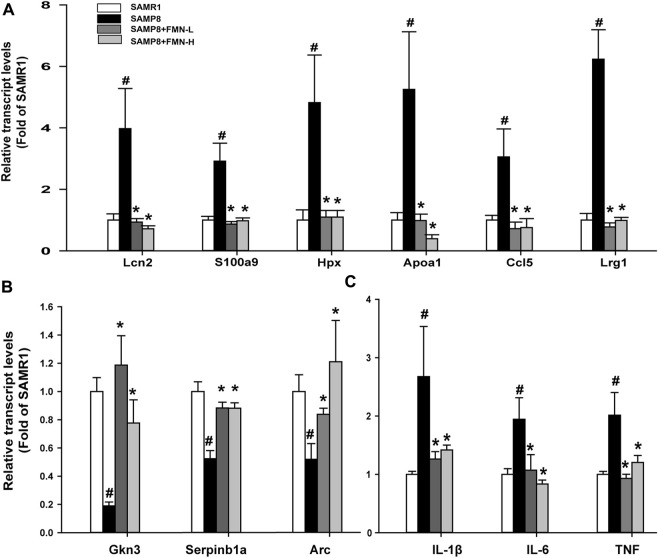
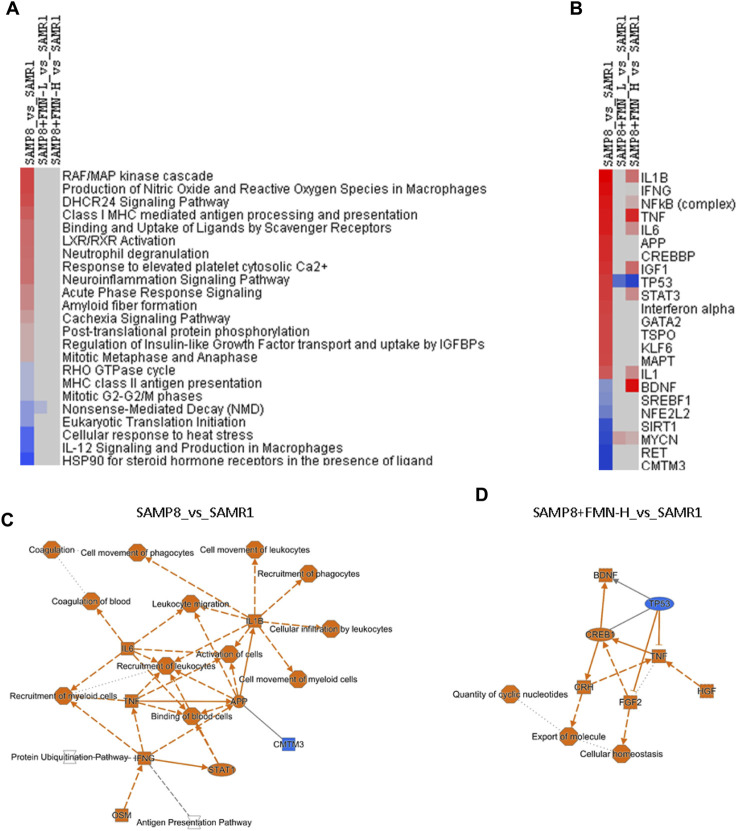
The 9-month-old SAMP8 mice exhibited cognition deficits, evidenced by novel object recognition, open-field test, elevated plus maze, and passive avoidance. Nissl bodies in the cortex and hippocampus were decreased. Formononetin treatments ameliorated behavioral deficits and improved morphological changes, which were evidenced by Nissl and H&E staining. RNA-seq revealed distinct gene expression patterns between SAMP8 and SAMR1 mice. Differentially expressed genes in SAMP8 mice were attenuated or normalized by formononetin. Ingenuity pathway analysis (IPA) of canonical pathway and upstream regulators revealed increases in proinflammatory factors and immune dysfunction and decreases in NRF2 and SIRT-1 signaling pathways, leading to neuroinflammation. Formononetin treatment attenuated or reversed these molecular changes. The transcriptome of SAMP8 mice was correlated with transcriptomic profiles of other AD mouse models in the GEO database.
Neuroinflammation and decreased antioxidant and SIRT-1 signaling contributed to cognitive deficits in aged SAMP8 mice, which are potential therapeutic targets of formononetin in combination with other therapies.
衰老加速小鼠8型(SAMP8)和年龄匹配的SAMR1小鼠用于研究阿尔茨海默病(AD)的发病机制和治疗方法;然而,其分子机制尚未完全明确。
本研究旨在探讨5个月给予SAMP8小鼠芒柄花素的效果,并利用RNA测序探索其分子靶点。
4月龄SAMP8小鼠口服给予芒柄花素(0、8和16mg/kg),年龄匹配的SAMR1小鼠作为对照。对9月龄小鼠进行行为测试,随后进行组织病理学分析。分离海马的总RNA,进行RNA测序、逆转录定量聚合酶链反应(RT-qPCR)和生物信息学分析。
9月龄SAMP8小鼠表现出认知缺陷,新物体识别、旷场试验、高架十字迷宫和被动回避试验均证实了这一点。皮质和海马中的尼氏体减少。芒柄花素治疗改善了行为缺陷并改善了形态学变化,尼氏体和苏木精-伊红(H&E)染色证实了这一点。RNA测序揭示了SAMP8和SAMR1小鼠之间不同的基因表达模式。芒柄花素使SAMP8小鼠中差异表达的基因减弱或恢复正常。对经典通路和上游调节因子的 Ingenuity 通路分析(IPA)显示促炎因子增加和免疫功能障碍,核因子E2相关因子2(NRF2)和沉默调节蛋白1(SIRT-1)信号通路减少,导致神经炎症。芒柄花素治疗减弱或逆转了这些分子变化。SAMP8小鼠的转录组与基因表达综合数据库(GEO)中其他AD小鼠模型的转录组谱相关。
神经炎症以及抗氧化和SIRT-1信号的降低导致老年SAMP8小鼠出现认知缺陷,这些是芒柄花素与其他疗法联合治疗的潜在靶点。