Elshafie Shaimaa, Trivedi Rupal, Villa-Zapata Lorenzo A, Tackett Randall L, Zaghloul Iman Y, Young Henry N
Department of Clinical and Administrative Pharmacy, College of Pharmacy, University of Georgia, Athens, Georgia, USA.
Central Administration for Drug Control, Egyptian Drug Authority, Cairo, Egypt.
Cancer. 2025 Jan 1;131(1):e35550. doi: 10.1002/cncr.35550. Epub 2024 Sep 5.
Despite significant advances in breast cancer control and survival with endocrine therapies (ETs), treatment utilization and outcomes in developing countries have not been adequately explored. This review evaluated ET adherence, potential benefits, and harms in populations across developing countries.
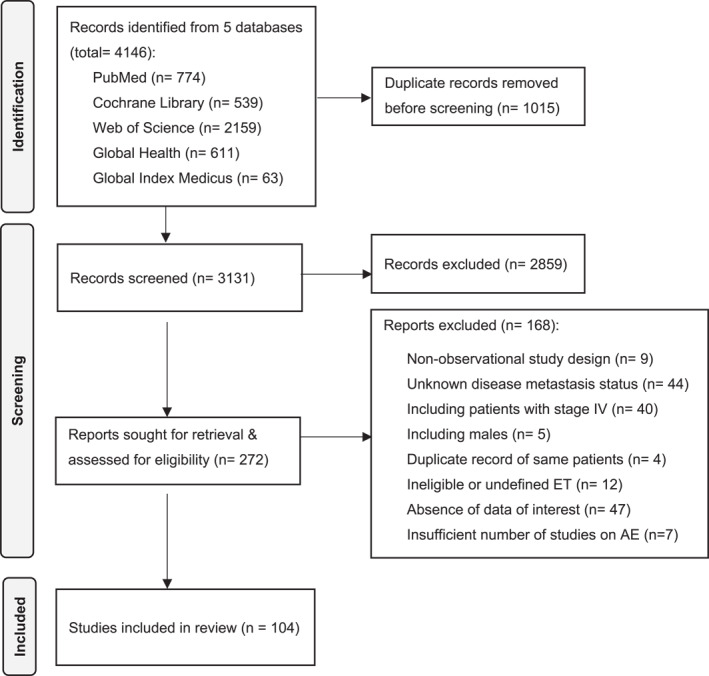
A literature search was conducted through August 2023 in five databases: PubMed, Cochrane Library, Web of Science, Global Health, and WHO Global Index Medicus. Retrieved records were screened to identify observational research presenting at least one outcome in women with nonmetastatic breast cancer in developing countries who received ET (tamoxifen or aromatase inhibitors). A random effects model was used to compute the rates of adherence, discontinuation, adverse events (AEs), disease progression, and death.
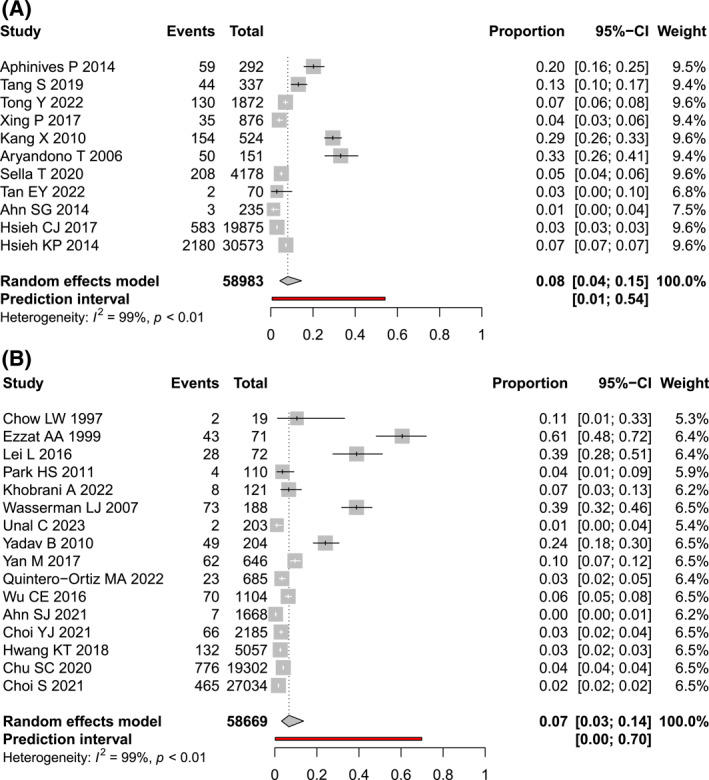
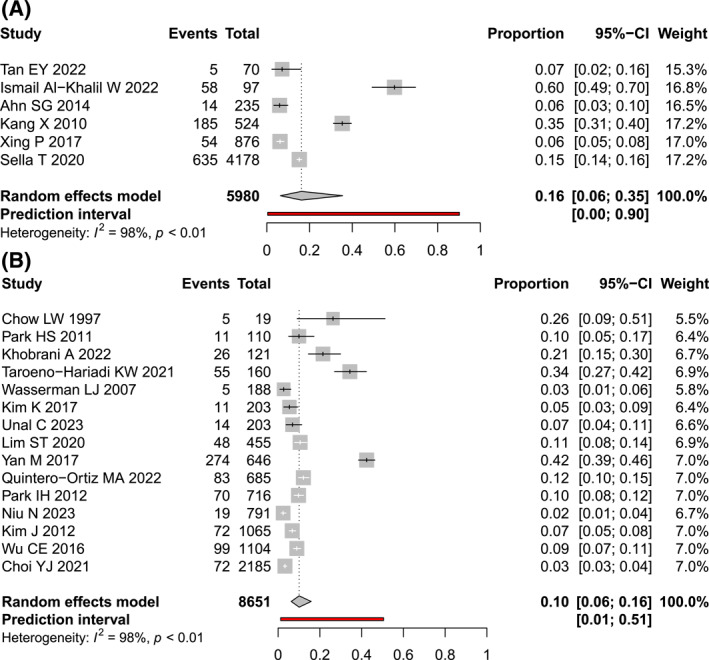
A total of 104 studies met the inclusion criteria. Risk of bias was low in most studies, and a large portion of the patients involved Asians. The overall heterogeneity between studies was partially attributed to variations in study design or outcome measurement method. Results showed a pooled adherence rate of 75% (95% confidence interval [CI], 67%-81%) and a discontinuation rate of 16% (95% CI, 10%-25%). Treatment side effects and young age consistently emerged as significant predictors of nonadherence. A wide range of AEs was identified in our analysis. The estimated average rates of cancer recurrence and mortality at 5-years were 16% and 8%, respectively.
The findings of this study underscore suboptimal ET use in developing countries and provide comprehensive insights into treatment experiences in the real-world setting. Targeted strategies are warranted to enhance adherence and subsequently optimize treatment benefits.
尽管内分泌疗法(ETs)在乳腺癌控制和生存方面取得了显著进展,但发展中国家的治疗应用情况和治疗结果尚未得到充分研究。本综述评估了发展中国家人群中ET的依从性、潜在益处和危害。
截至2023年8月,在五个数据库中进行了文献检索:PubMed、Cochrane图书馆、科学网、全球健康数据库和世界卫生组织全球医学索引。对检索到的记录进行筛选,以确定观察性研究,这些研究呈现了在发展中国家接受ET(他莫昔芬或芳香化酶抑制剂)的非转移性乳腺癌女性的至少一项结果。使用随机效应模型计算依从率、停药率、不良事件(AEs)、疾病进展率和死亡率。
共有104项研究符合纳入标准。大多数研究的偏倚风险较低,且大部分患者为亚洲人。研究之间的总体异质性部分归因于研究设计或结果测量方法的差异。结果显示,汇总的依从率为75%(95%置信区间[CI],67%-81%),停药率为16%(95%CI,10%-25%)。治疗副作用和年轻年龄一直是不依从的重要预测因素。在我们的分析中确定了广泛的不良事件。估计5年时癌症复发和死亡率的平均发生率分别为16%和8%。
本研究结果强调了发展中国家ET使用存在不足,并提供了对现实世界治疗经验的全面见解。有必要采取针对性策略来提高依从性,进而优化治疗效果。