• 文献检索
  • 文档翻译
  • 深度研究
  • 学术资讯
  • Suppr Zotero 插件Zotero 插件
  • 邀请有礼
  • 套餐&价格
  • 历史记录
应用&插件
Suppr Zotero 插件Zotero 插件浏览器插件Mac 客户端Windows 客户端微信小程序
定价
高级版会员购买积分包购买API积分包
服务
文献检索文档翻译深度研究API 文档MCP 服务
关于我们
关于 Suppr公司介绍联系我们用户协议隐私条款
关注我们

Suppr 超能文献

核心技术专利:CN118964589B侵权必究
粤ICP备2023148730 号-1Suppr @ 2026

文献检索

告别复杂PubMed语法,用中文像聊天一样搜索,搜遍4000万医学文献。AI智能推荐,让科研检索更轻松。

立即免费搜索

文件翻译

保留排版,准确专业,支持PDF/Word/PPT等文件格式,支持 12+语言互译。

免费翻译文档

深度研究

AI帮你快速写综述,25分钟生成高质量综述,智能提取关键信息,辅助科研写作。

立即免费体验

保持时间感:音乐训练如何促进认知能力。

Keeping time: How musical training may boost cognition.

机构信息

Institute of Neurobiology, National Autonomous University of Mexico, Querétaro, México.

Department of Psychology, New York University, New York, New York, United States of America.

出版信息

PLoS Biol. 2024 Sep 5;22(9):e3002810. doi: 10.1371/journal.pbio.3002810. eCollection 2024 Sep.

DOI:10.1371/journal.pbio.3002810
PMID:39236087
原文链接:https://pmc.ncbi.nlm.nih.gov/articles/PMC11407654/
Abstract

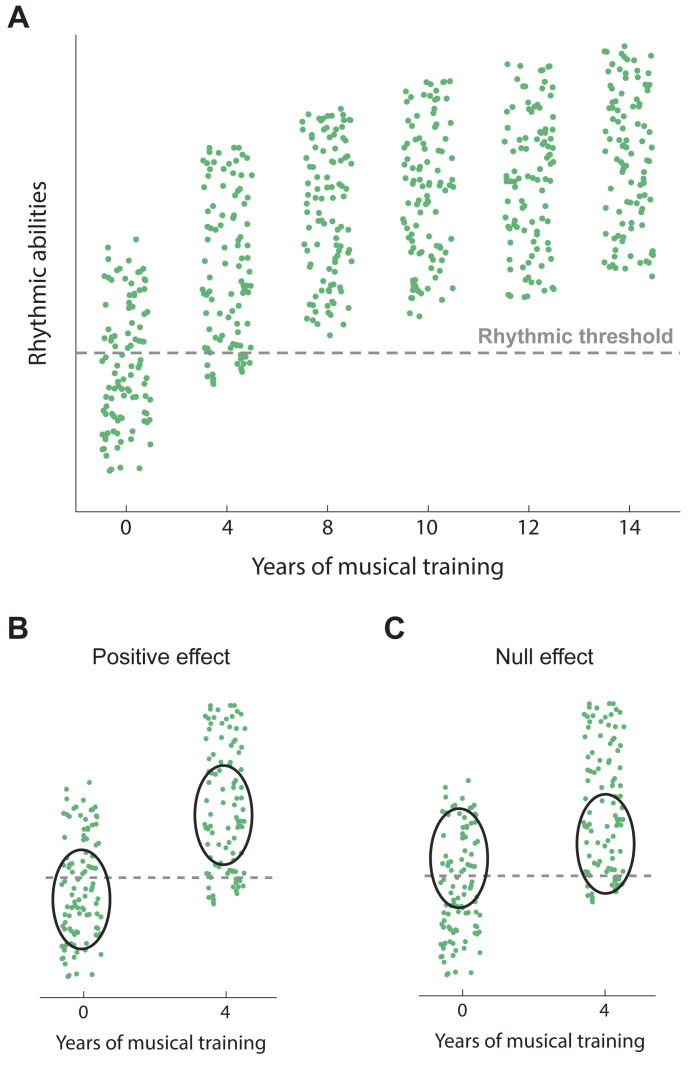
The relationship between musical training and intellect is controversial. A new hypothesis may help resolve the debate by proposing an explanation for how training in rhythmic skills can improve cognitive abilities in some individuals, but not others.

摘要

音乐训练与智力之间的关系颇具争议。一个新的假说或许能有助于解决这一争论,它提出了一种解释,即为何节奏感训练能提高某些人的认知能力,而对其他人则不然。
https://cdn.ncbi.nlm.nih.gov/pmc/blobs/024a/11407654/6566f5943b03/pbio.3002810.g001.jpg

相似文献

1
Keeping time: How musical training may boost cognition.保持时间感:音乐训练如何促进认知能力。
PLoS Biol. 2024 Sep 5;22(9):e3002810. doi: 10.1371/journal.pbio.3002810. eCollection 2024 Sep.
2
Musical training modulates the early but not the late stage of rhythmic syntactic processing.音乐训练调节节奏句法加工的早期阶段,但不调节晚期阶段。
Psychophysiology. 2018 Feb;55(2). doi: 10.1111/psyp.12983. Epub 2017 Aug 23.
3
Musical Competence is Predicted by Music Training, Cognitive Abilities, and Personality.音乐能力由音乐训练、认知能力和个性决定。
Sci Rep. 2018 Jun 15;8(1):9223. doi: 10.1038/s41598-018-27571-2.
4
Are there pre-existing neural, cognitive, or motoric markers for musical ability?是否存在音乐能力的预先存在的神经、认知或运动标记?
Brain Cogn. 2005 Nov;59(2):124-34. doi: 10.1016/j.bandc.2005.05.009. Epub 2005 Jul 28.
5
Rhythmic abilities and musical training in Parkinson's disease: do they help?帕金森病的节律能力与音乐训练:它们有帮助吗?
NPJ Parkinsons Dis. 2018 Mar 23;4:8. doi: 10.1038/s41531-018-0043-7. eCollection 2018.
6
Examining neural plasticity and cognitive benefit through the unique lens of musical training.通过音乐训练这一独特视角探究神经可塑性和认知益处。
Hear Res. 2014 Feb;308:84-97. doi: 10.1016/j.heares.2013.09.012. Epub 2013 Sep 27.
7
Individual differences in musical ability among adults with no music training.成人音乐训练中音乐能力的个体差异。
Q J Exp Psychol (Hove). 2023 Jul;76(7):1585-1598. doi: 10.1177/17470218221128557. Epub 2022 Oct 27.
8
Understanding the benefits of musical training: effects on oscillatory brain activity.了解音乐训练的益处:对大脑振荡活动的影响。
Ann N Y Acad Sci. 2009 Jul;1169:133-42. doi: 10.1111/j.1749-6632.2009.04589.x.
9
The effect of rhythmic musical training on healthy older adults' gait and cognitive function.节奏音乐训练对健康老年人步态和认知功能的影响。
Gerontologist. 2014 Aug;54(4):624-33. doi: 10.1093/geront/gnt050. Epub 2013 May 30.
10
Effects of musical training on key and harmony perception.音乐训练对调式与和声感知的影响。
Ann N Y Acad Sci. 2009 Jul;1169:164-8. doi: 10.1111/j.1749-6632.2009.04769.x.

本文引用的文献

1
Auditory-motor synchronization varies among individuals and is critically shaped by acoustic features.听觉-运动同步因人而异,并且受到声音特征的显著影响。
Commun Biol. 2023 Jun 21;6(1):658. doi: 10.1038/s42003-023-04976-y.
2
Rhythm but not melody processing helps reading via phonological awareness and phonological memory.节奏而非旋律加工通过语音意识和语音记忆帮助阅读。
Sci Rep. 2022 Aug 2;12(1):13224. doi: 10.1038/s41598-022-15596-7.
3
Tapping to Music Predicts Literacy Skills of First-Grade Children.随着音乐节奏打节拍可预测一年级儿童的读写能力。
Front Psychol. 2021 Oct 5;12:741540. doi: 10.3389/fpsyg.2021.741540. eCollection 2021.
4
Comparing the Effects of Rhythm-Based Music Training and Pitch-Based Music Training on Executive Functions in Preschoolers.比较基于节奏的音乐训练和基于音高的音乐训练对学龄前儿童执行功能的影响。
Front Integr Neurosci. 2019 Aug 27;13:41. doi: 10.3389/fnint.2019.00041. eCollection 2019.
5
Spontaneous synchronization to speech reveals neural mechanisms facilitating language learning.自发的语音同步揭示了促进语言学习的神经机制。
Nat Neurosci. 2019 Apr;22(4):627-632. doi: 10.1038/s41593-019-0353-z. Epub 2019 Mar 4.
6
Clapping in time parallels literacy and calls upon overlapping neural mechanisms in early readers.同步拍手与读写能力相似,并且早期阅读者会调用重叠的神经机制。
Ann N Y Acad Sci. 2018 May 12. doi: 10.1111/nyas.13704.
7
Individual Differences in Rhythm Skills: Links with Neural Consistency and Linguistic Ability.节奏技能的个体差异:与神经一致性和语言能力的关联。
J Cogn Neurosci. 2017 May;29(5):855-868. doi: 10.1162/jocn_a_01092. Epub 2017 Jan 27.
8
BAASTA: Battery for the Assessment of Auditory Sensorimotor and Timing Abilities.BAASTA:听觉感觉运动与时间感知能力评估量表
Behav Res Methods. 2017 Jun;49(3):1128-1145. doi: 10.3758/s13428-016-0773-6.
9
Beat synchronization predicts neural speech encoding and reading readiness in preschoolers.节拍同步可预测学龄前儿童的神经言语编码和阅读准备情况。
Proc Natl Acad Sci U S A. 2014 Oct 7;111(40):14559-64. doi: 10.1073/pnas.1406219111. Epub 2014 Sep 22.
10
Association between finger tapping, attention, memory, and cognitive diagnosis in elderly patients.老年患者手指敲击、注意力、记忆力与认知诊断之间的关联
Percept Mot Skills. 2014 Aug;119(1):259-78. doi: 10.2466/10.22.PMS.119c12z3. Epub 2014 Jun 24.