Division of Experimental Hematology and Cancer Biology, Cincinnati Children's Research Foundation, Cincinnati, Ohio, USA.
Pharmacology Division, CSIR-Central Drug Research Institute, Lucknow, India.
Aging Cell. 2024 Oct;23(10):e14324. doi: 10.1111/acel.14324. Epub 2024 Sep 5.
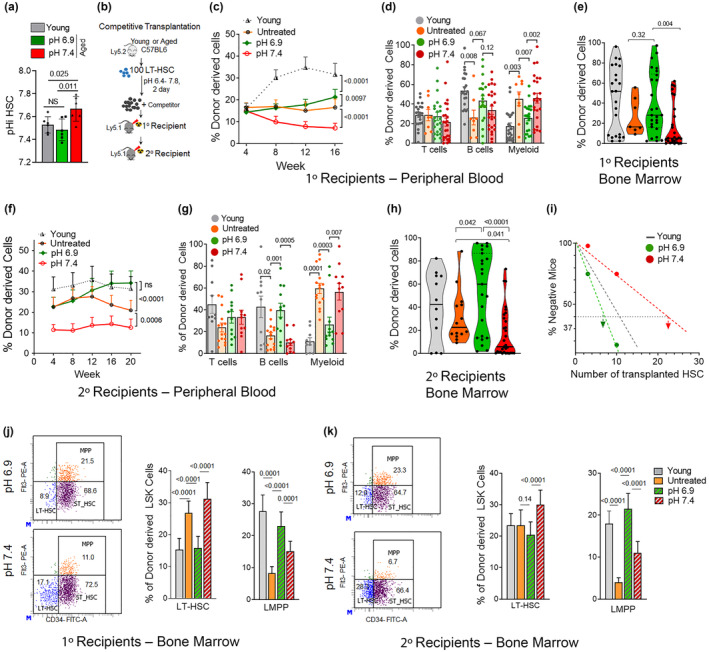
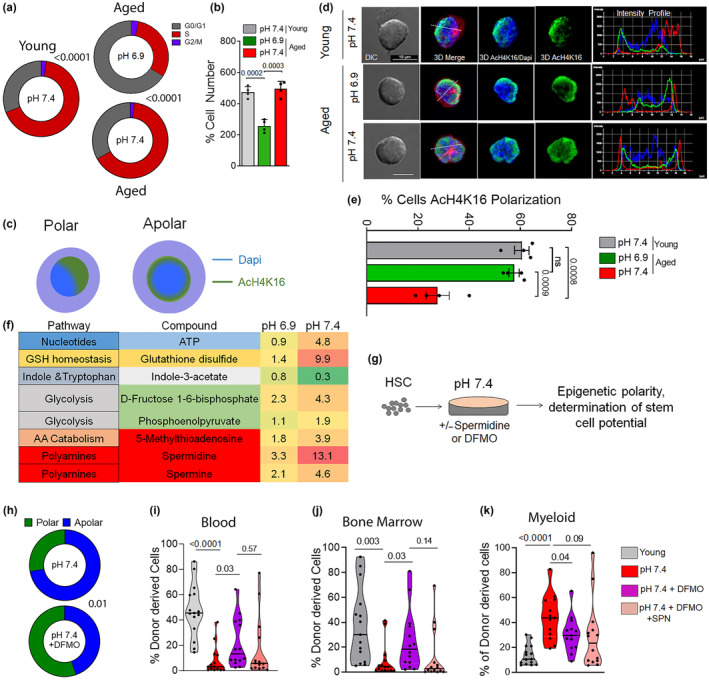
Aged hematopoietic stem cells (HSCs) show reduced reconstitution potential, limiting their use in transplantation settings in the clinic. We demonstrate here that exposure of aged HSCs ex vivo to a pH of 6.9 instead of the commonly used pH of 7.4 results in enhanced HSCs potential that is consistent with rejuvenation, including attenuation of the myeloid bias of aged HSC and restoration of a youthful frequency of epigenetic polarity. Rejuvenation of aged HSCs by pH 6.9 is, at least in part, due to alterations in the polyamine/methionine pathway within pH 6.9 HSCs, and consequently, attenuation of the production of spermidine also attenuated aging of HSCs. Exposure of aged HSCs to pH 6.9, or pharmacological targeting of the polyamine pathway, might thus extend the use of HSCs from aged donors for therapeutic applications.
衰老的造血干细胞(HSCs)表现出重建能力降低,限制了它们在临床上移植环境中的应用。我们在这里证明,将衰老的 HSCs 在体外暴露于 pH 值为 6.9 而不是常用的 pH 值 7.4,可增强 HSCs 的潜能,这与恢复活力一致,包括减轻衰老 HSC 的髓样偏向,并恢复年轻的表观遗传极性频率。通过 pH 值 6.9 实现衰老 HSCs 的恢复活力至少部分归因于 pH 值 6.9 HSCs 中多胺/蛋氨酸途径的改变,因此,降低 spermidine 的产生也减弱了 HSCs 的衰老。因此,使衰老的 HSCs 暴露于 pH 值 6.9 或对多胺途径进行药物靶向治疗,可能会延长衰老供体的 HSCs 在治疗应用中的使用。