Laboratory of Child Health and Development Epidemiology, Department of Medical Epidemiology, Istituto di Ricerche Farmacologiche Mario Negri IRCCS, Via Mario Negri 2, Milan, 20156, Italy.
Information Science for Clinical Knowledge Sharing Unit, Department of Medical Epidemiology, Istituto di Ricerche Farmacologiche Mario Negri IRCCS, Milan, Italy.
BMC Psychiatry. 2024 Sep 5;24(1):603. doi: 10.1186/s12888-024-06011-8.
For Attention Deficit/Hyperactivity Disorder (ADHD) youth transitioning from child to adult services, protocols that guide the transition process are essential. While some guidelines are available, they do not always consider the effective workload and scarce resources. In Italy, very few guidelines are currently available, and they do not adhere to common standards, possibly leading to non-uniform use.
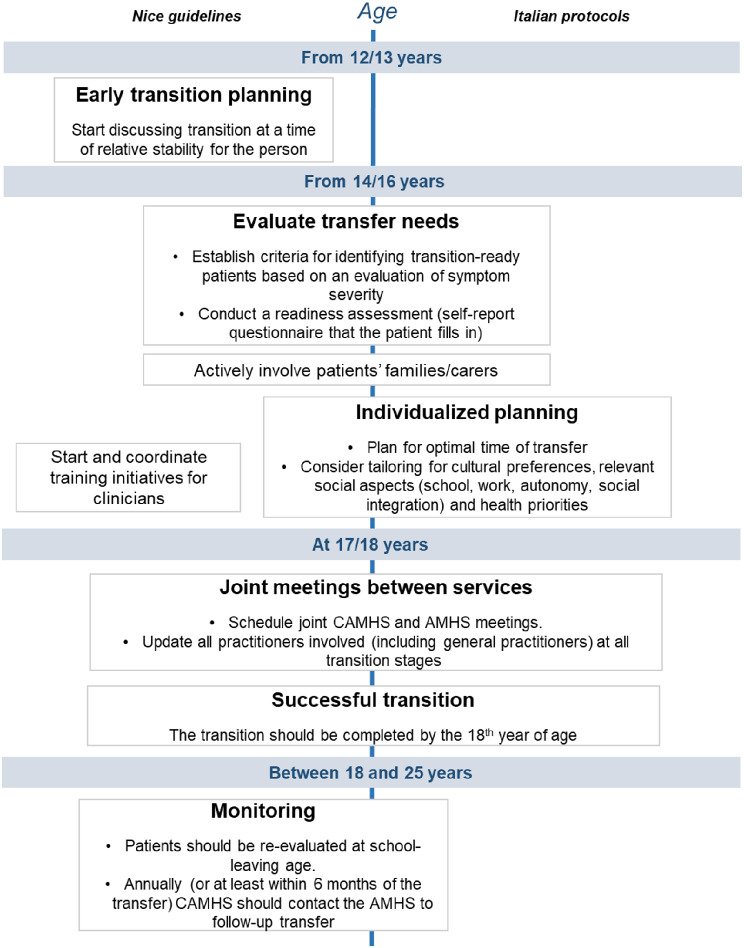
The present study analyzes 6 protocols collected from the 21 Italian services for ADHD patients that took part in the TransiDEA (Transitioning in Diabetes, Epilepsy, and ADHD patients) Project. The protocols' content is described, and a comparison with the National Institute for Clinical Health and Excellence (NICE) guidelines is carried out to determine whether the eight NICE fundamental dimensions were present.
In line with the NICE guidelines, the dimensions addresses in the 6 analyzed documents are: early transition planning (although with variability in age criteria) (6/6), individualized planning (5/6), and the evaluation of transfer needs (5/6). All protocols also foresee joint meetings between child and adult services. The need to include the families is considered by 4 out of 6 protocols, while monitoring (2/6), and training programs (1/6) are less encompassed. In general, a highly heterogeneous picture emerges in terms of quality and quantity of regulations provided.
While some solid points and core elements are in common with international guidelines, the content's variability highlights the need to standardize practices. Finally, future protocols should adhere more to the patients' needs and the resources available to clinicians.
对于从儿童到成人服务过渡的注意力缺陷/多动障碍(ADHD)青年,指导过渡过程的协议至关重要。虽然有一些指南可用,但它们并不总是考虑到有效的工作量和稀缺资源。在意大利,目前几乎没有可用的指南,而且它们不符合共同标准,可能导致使用不统一。
本研究分析了参与 TransiDEA(糖尿病、癫痫和 ADHD 患者过渡)项目的 21 个意大利 ADHD 患者服务机构收集的 6 个协议。描述了协议的内容,并与英国国家卫生与临床优化研究所(NICE)指南进行了比较,以确定是否存在 NICE 的八个基本维度。
与 NICE 指南一致,在分析的 6 份文件中涉及的维度是:早期过渡计划(尽管年龄标准存在差异)(6/6)、个性化计划(5/6)和转介需求评估(5/6)。所有协议还都预见到儿童和成人服务之间的联席会议。有 4 份协议考虑到了将家庭纳入的必要性,而 4 份协议考虑到了监测(2/6)和培训计划(1/6)。总体而言,在提供的法规的质量和数量方面,出现了高度异质性的情况。
虽然与国际指南有一些共同点和核心要素,但内容的可变性突出表明需要标准化实践。最后,未来的协议应更多地关注患者的需求和临床医生的可用资源。