Ha Dat P, Shin Woo-Jin, Liu Ze, Doche Michael E, Lau Roy, Leli Nektaria Maria, Conn Crystal S, Russo Mariangela, Lorenzato Annalisa, Koumenis Constantinos, Yu Min, Mumenthaler Shannon M, Lee Amy S
Department of Biochemistry and Molecular Medicine, Keck School of Medicine, University of Southern California, Los Angeles, CA, 90033, USA.
Norris Comprehensive Cancer Center, Keck School of Medicine, University of Southern California, Los Angeles, CA, 90033, USA.
Cell Biosci. 2024 Sep 6;14(1):115. doi: 10.1186/s13578-024-01297-3.
Despite recent therapeutic advances, combating cancer resistance remains a formidable challenge. The 78-kilodalton glucose-regulated protein (GRP78), a key stress-inducible endoplasmic reticulum (ER) chaperone, plays a crucial role in both cancer cell survival and stress adaptation. GRP78 is also upregulated during SARS-CoV-2 infection and acts as a critical host factor. Recently, we discovered cardiac glycosides (CGs) as novel suppressors of GRP78 stress induction through a high-throughput screen of clinically relevant compound libraries. This study aims to test the possibility that agents capable of blocking stress induction of GRP78 could dually suppress cancer and COVID-19.
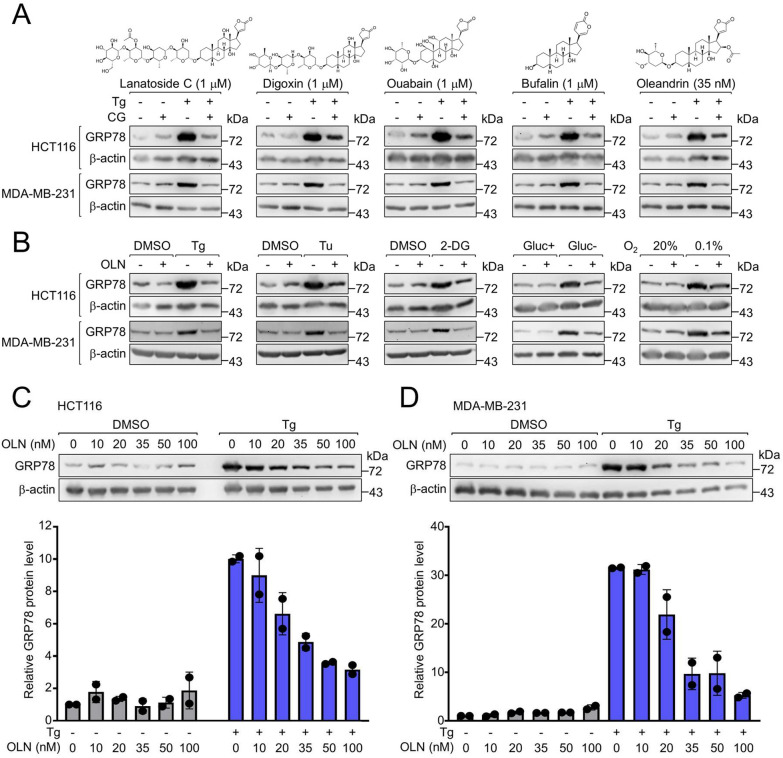
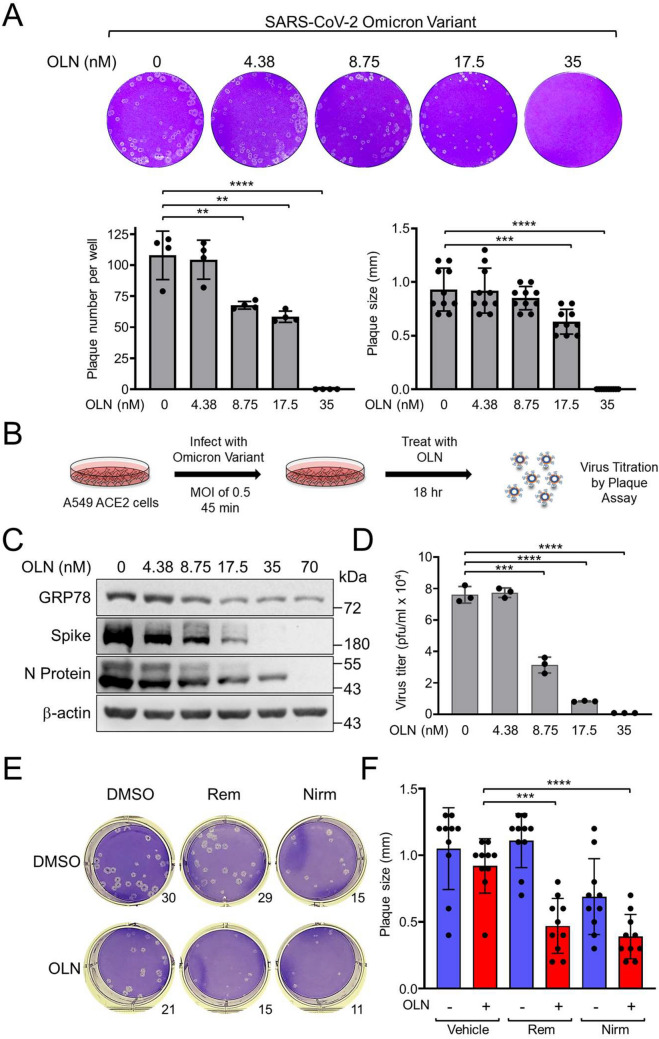
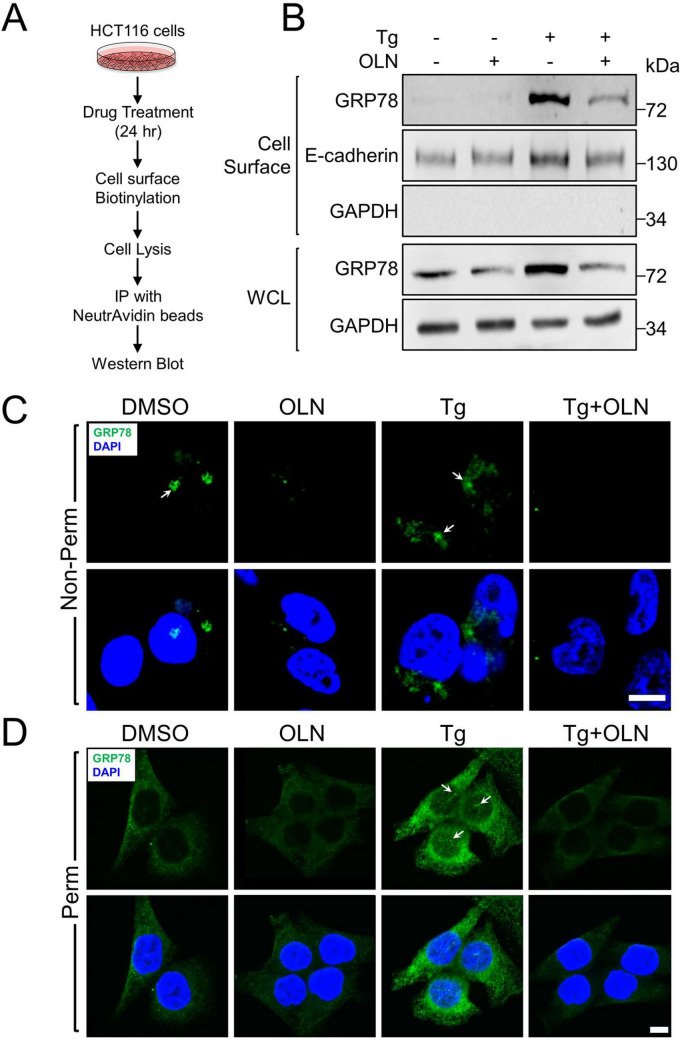
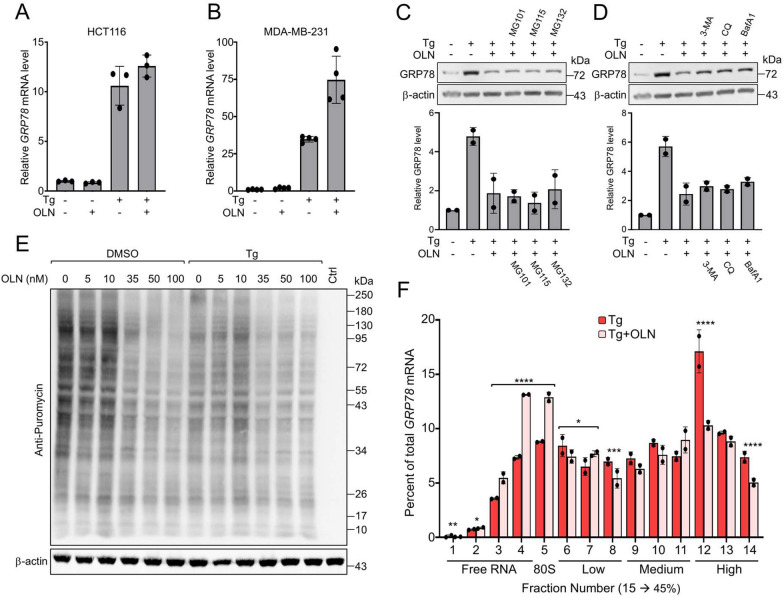
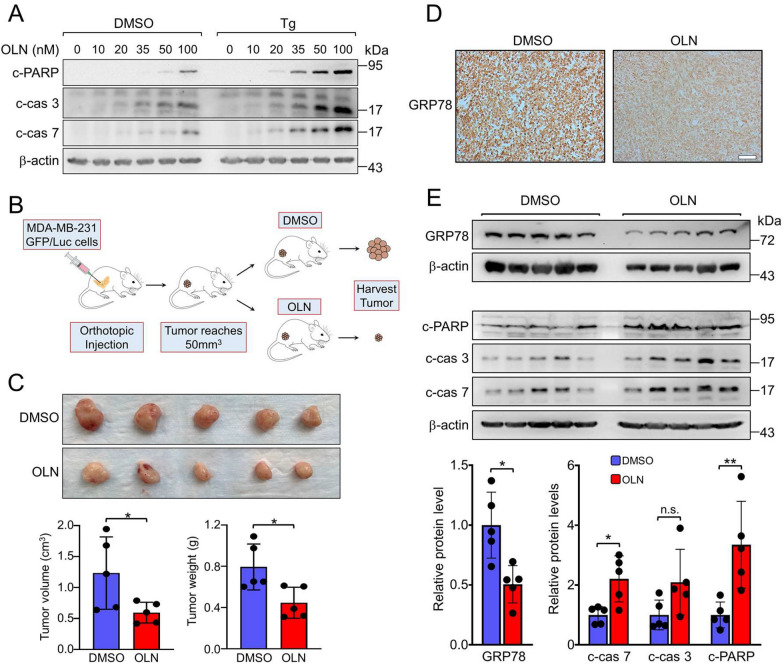
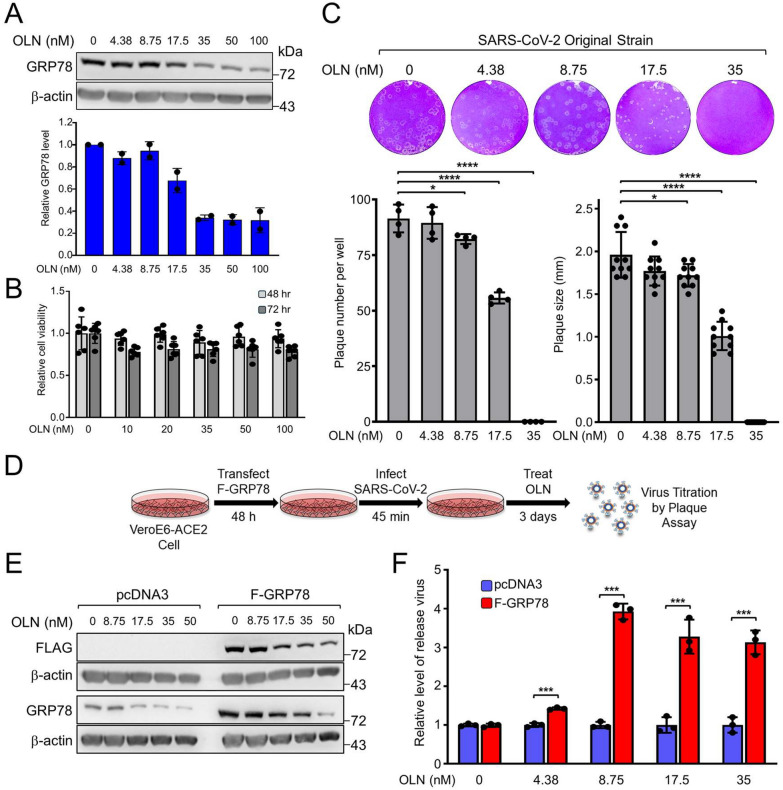
Here we report that oleandrin (OLN), is the most potent among the CGs in inhibiting acute stress induction of total GRP78, which also results in reduced cell surface and nuclear forms of GRP78 in stressed cells. The inhibition of stress induction of GRP78 is at the post-transcriptional level, independent of protein degradation and autophagy and may involve translational control as OLN blocks stress-induced loading of ribosomes onto GRP78 mRNAs. Moreover, the human Na/K-ATPase α3 isoform is critical for OLN suppression of GRP78 stress induction. OLN, in nanomolar range, enhances apoptosis, sensitizes colorectal cancer cells to chemotherapeutic agents, and reduces the viability of patient-derived colon cancer organoids. Likewise, OLN, suppresses GRP78 expression and impedes tumor growth in an orthotopic breast cancer xenograft model. Furthermore, OLN blocks infection by SARS-CoV-2 and its variants and enhances existing anti-viral therapies. Notably, GRP78 overexpression mitigates OLN-mediated cancer cell apoptotic onset and suppression of virus release.
Our findings validate GRP78 as a target of OLN anti-cancer and anti-viral activities. These proof-of-principle studies support further investigation of OLN as a readily accessible compound to dually combat cancer and COVID-19.
尽管近期治疗取得了进展,但对抗癌症耐药性仍然是一项艰巨的挑战。78千道尔顿葡萄糖调节蛋白(GRP78)是一种关键的应激诱导型内质网(ER)伴侣蛋白,在癌细胞存活和应激适应中均发挥着关键作用。GRP78在严重急性呼吸综合征冠状病毒2(SARS-CoV-2)感染期间也会上调,并作为一种关键的宿主因子发挥作用。最近,我们通过对临床相关化合物库进行高通量筛选,发现强心苷(CGs)是GRP78应激诱导的新型抑制剂。本研究旨在测试能够阻断GRP78应激诱导的药物是否可以双重抑制癌症和2019冠状病毒病(COVID-19)。
我们在此报告,在抑制总GRP78的急性应激诱导方面,夹竹桃苷(OLN)是强心苷中最有效的,这也导致应激细胞中GRP78的细胞表面和核形式减少。GRP78应激诱导的抑制作用发生在转录后水平,与蛋白质降解和自噬无关,可能涉及翻译控制,因为OLN会阻断应激诱导的核糖体加载到GRP78 mRNA上。此外,人钠钾ATP酶α3亚型对于OLN抑制GRP78应激诱导至关重要。纳摩尔浓度的OLN可增强细胞凋亡,使结肠癌细胞对化疗药物敏感,并降低患者来源的结肠癌类器官的活力。同样,在原位乳腺癌异种移植模型中,OLN可抑制GRP78表达并阻碍肿瘤生长。此外,OLN可阻断SARS-CoV-2及其变体的感染,并增强现有的抗病毒治疗效果。值得注意的是,GRP78过表达可减轻OLN介导的癌细胞凋亡起始并抑制病毒释放。
我们的研究结果证实GRP78是OLN抗癌和抗病毒活性的靶点。这些原理验证研究支持进一步研究OLN作为一种易于获取的化合物,用于双重对抗癌症和COVID-19。