Department of Biochemistry and Molecular Medicine, University of Southern California, Keck School of Medicine, Los Angeles, California, USA; USC Norris Comprehensive Cancer Center.
Department of Biochemistry and Molecular Medicine, University of Southern California, Keck School of Medicine, Los Angeles, California, USA; USC Norris Comprehensive Cancer Center.
Neoplasia. 2021 Dec;23(12):1213-1226. doi: 10.1016/j.neo.2021.10.004. Epub 2021 Nov 9.
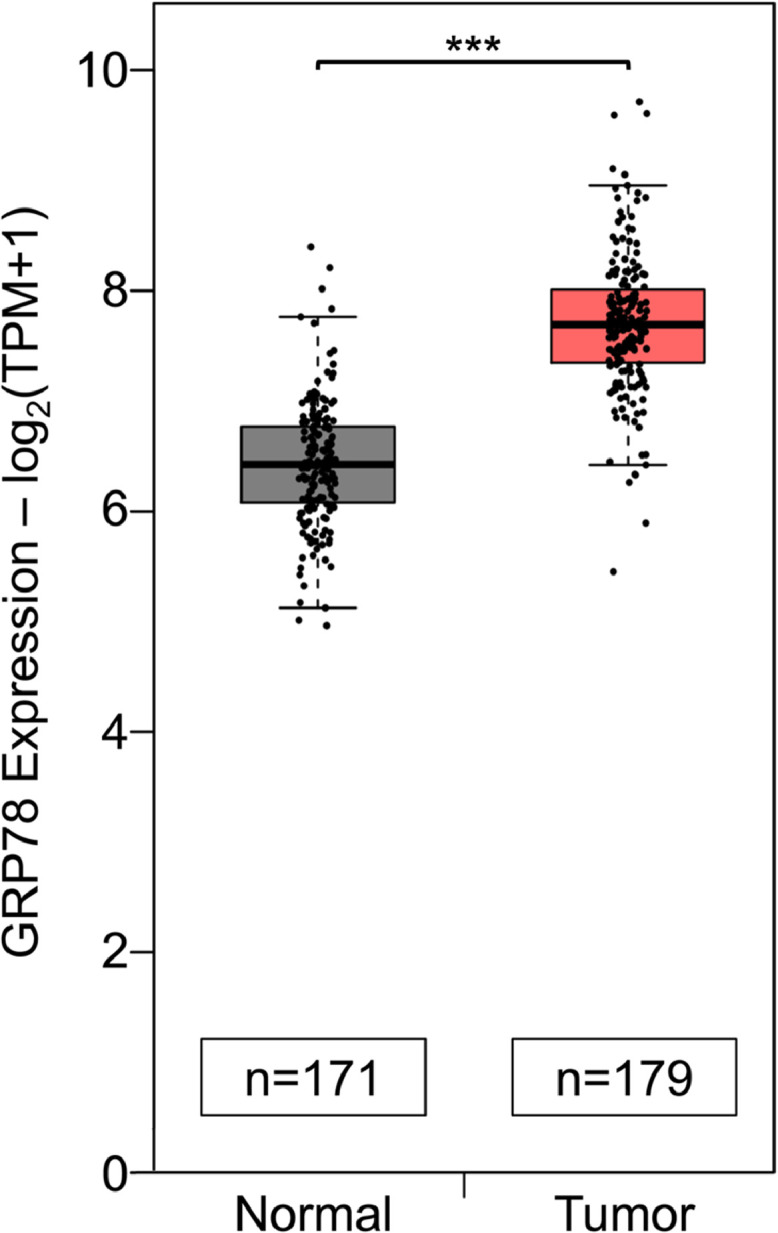
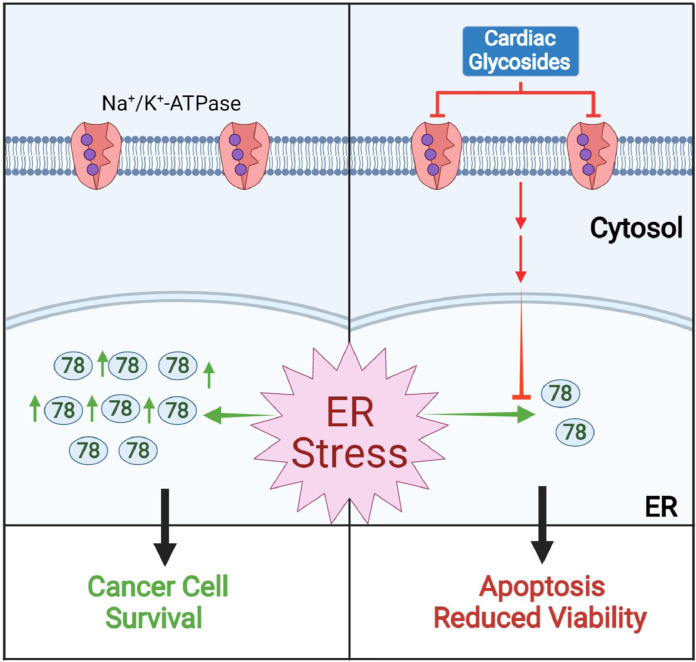
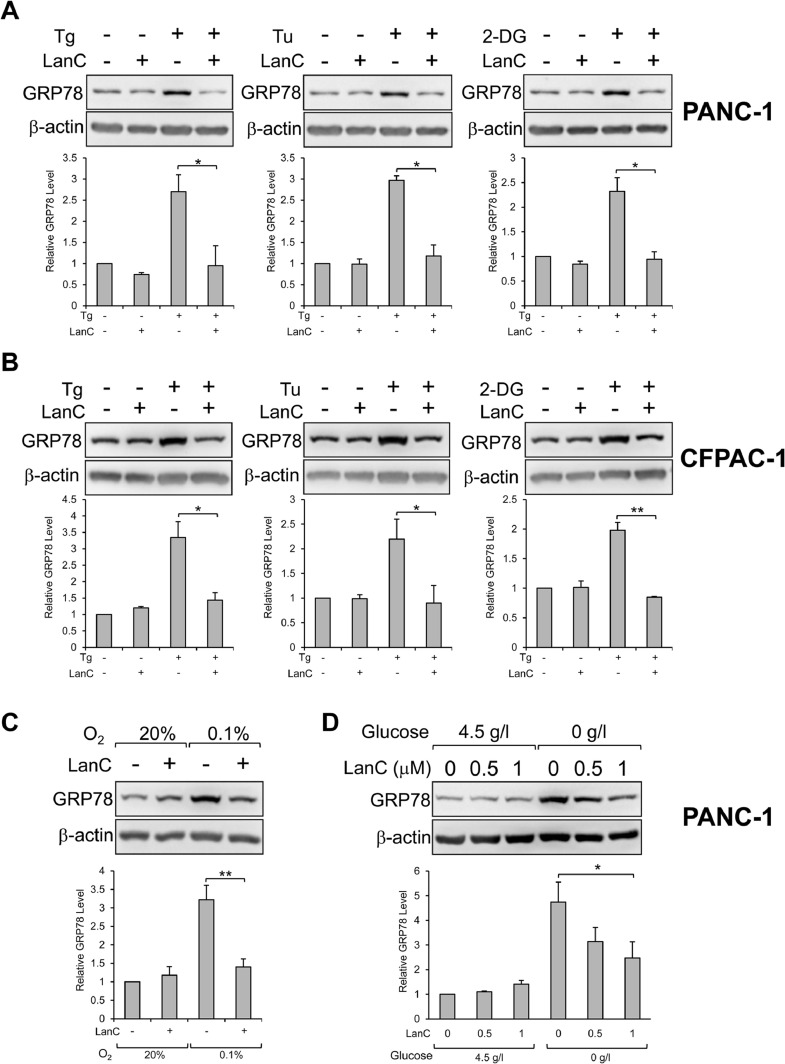
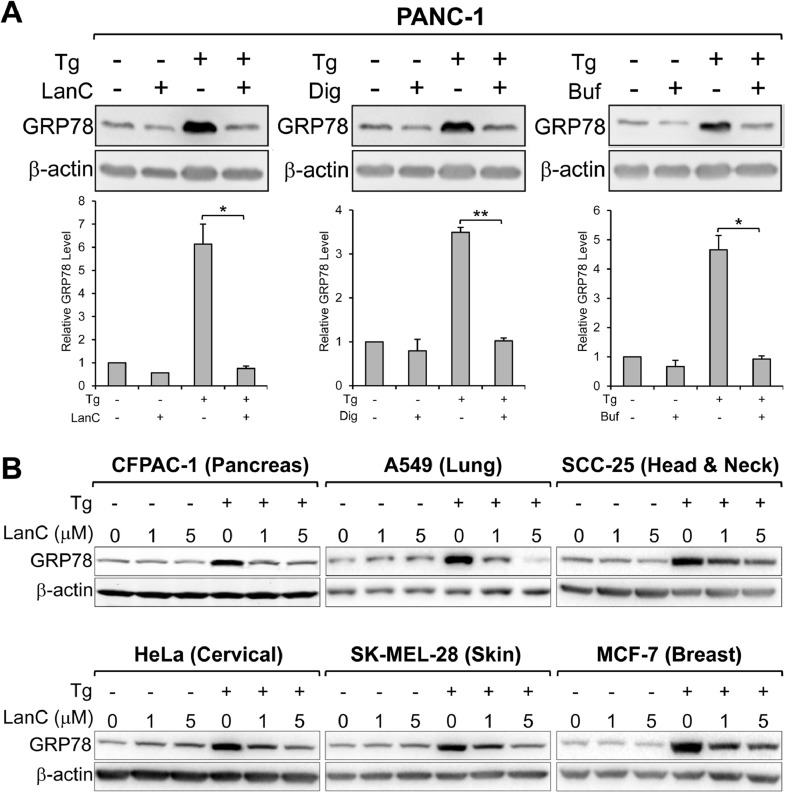
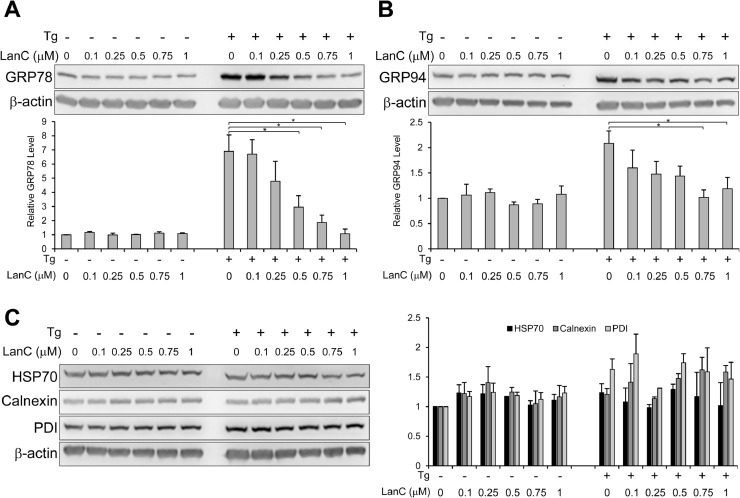
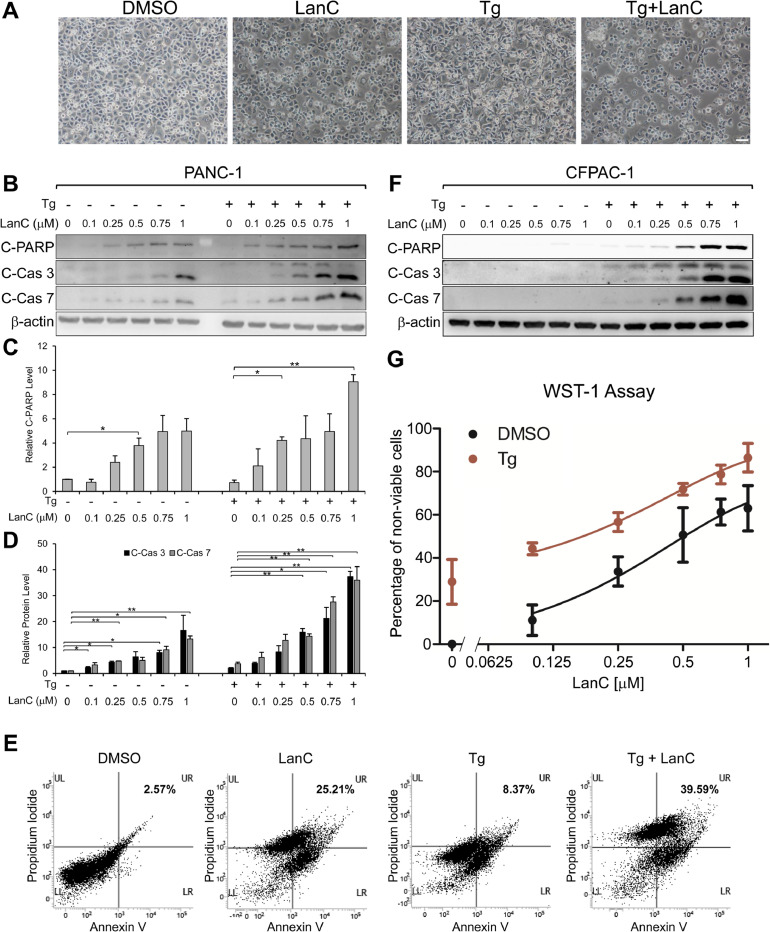
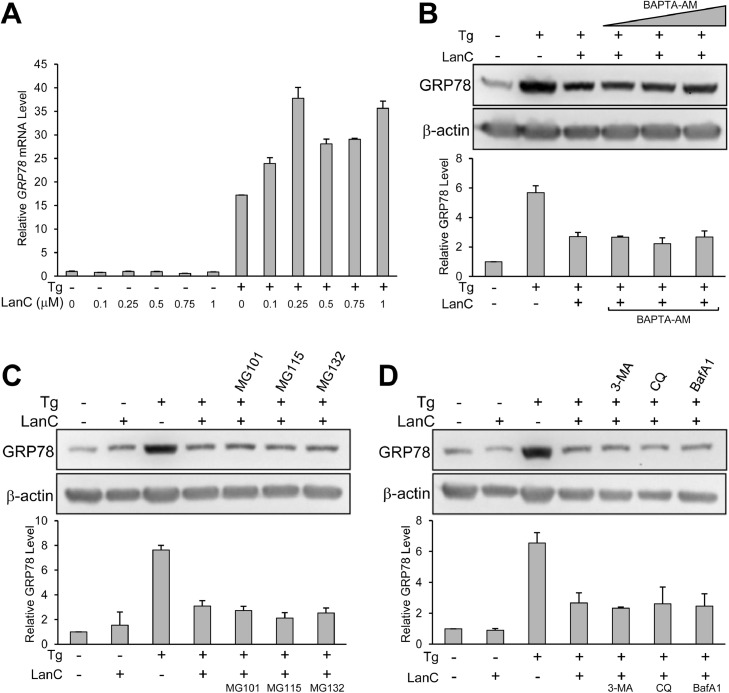
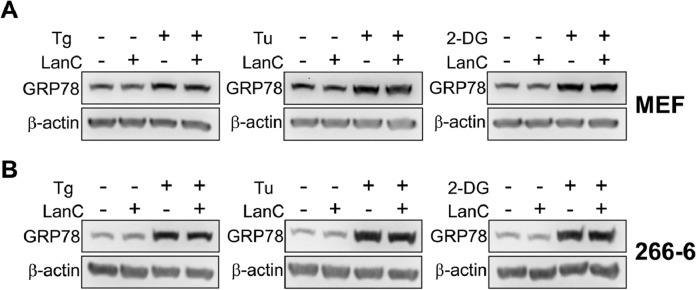
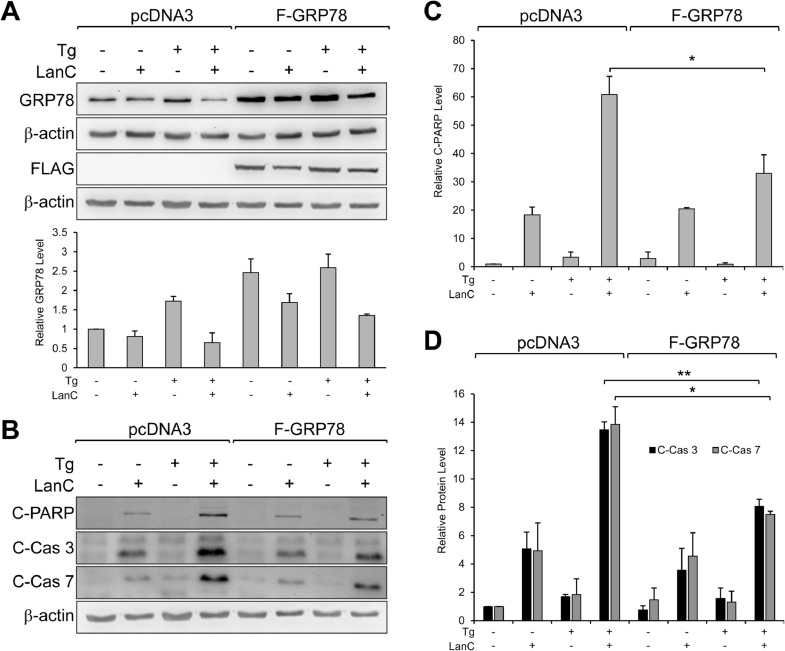
The 78 kilodalton glucose-regulated protein (GRP78) is a major endoplasmic reticulum (ER) molecular chaperone with antiapoptotic properties and a key regulator of the unfolded protein response (UPR). ER-stress induction of GRP78 in cancer cells represents a major pro-survival branch of the UPR. Pancreatic ductal adenocarcinoma (PDAC) remains a highly lethal disease and high level of GRP78 is associated with aggressive disease and poor survival. Recently, we reported that PDAC exhibited high level of ER stress and that GRP78 haploinsufficiency is sufficient to suppress pancreatic tumorigenesis in mice, suggesting the utility of inhibitors of GRP78 expression in combating pancreatic cancer. Screening of clinically relevant compound libraries revealed that cardiac glycosides (CGs) can inhibit ER-stress induction of GRP78 in pancreatic and other types of human cancers. Using the FDA-approved CG compound Lanatoside C (LanC) and human pancreatic cancer cell lines as model systems, we discovered that LanC preferably suppressed ER stress induction of GRP78 and to a lesser extent GRP94. The suppression is at the post-transcriptional level and dependent on the Na/K-ATPase ion pump. Overexpression of GRP78 mitigates apoptotic activities of LanC in ER stressed cells. Our study revealed a new function of CGs as inhibitor of stress induction of GRP78, and that this suppression at least in part contributes to the apoptotic activities of CGs in human pancreatic cancer cells in vitro. These findings support further investigation into CGs as potential antineoplastic agents for pancreatic and other cancers which depend on GRP78 for growth and survival.
78 千道尔顿葡萄糖调节蛋白(GRP78)是内质网(ER)的主要分子伴侣,具有抗凋亡特性,是未折叠蛋白反应(UPR)的关键调节剂。癌细胞中 ER 应激诱导的 GRP78 代表 UPR 的主要生存分支。胰腺导管腺癌(PDAC)仍然是一种高度致命的疾病,高水平的 GRP78 与侵袭性疾病和不良预后相关。最近,我们报道 PDAC 表现出高水平的 ER 应激,并且 GRP78 单倍不足足以抑制小鼠的胰腺肿瘤发生,这表明抑制 GRP78 表达的抑制剂在对抗胰腺癌方面具有应用价值。对临床相关化合物库的筛选表明,强心苷(CGs)可抑制胰腺和其他类型的人类癌症中 ER 应激诱导的 GRP78。使用美国食品和药物管理局批准的 CG 化合物 Lanatoside C(LanC)和人胰腺癌细胞系作为模型系统,我们发现 LanC 优选地抑制 ER 应激诱导的 GRP78,并且在较小程度上抑制 GRP94。抑制作用发生在转录后水平,并依赖于 Na/K-ATPase 离子泵。GRP78 的过表达减轻了 ER 应激细胞中 LanC 的凋亡活性。我们的研究揭示了 CG 作为 GRP78 应激诱导抑制剂的新功能,并且这种抑制至少部分有助于 CG 在体外人胰腺癌细胞中的凋亡活性。这些发现支持进一步研究 CG 作为依赖 GRP78 生长和存活的胰腺和其他癌症的潜在抗肿瘤药物。