Division of Dermatology, Niigata University Graduate School of Medical and Dental Sciences, Niigata 951-8510, Japan.
Chin Med J (Engl). 2024 Oct 5;137(19):2294-2307. doi: 10.1097/CM9.0000000000003250. Epub 2024 Sep 5.
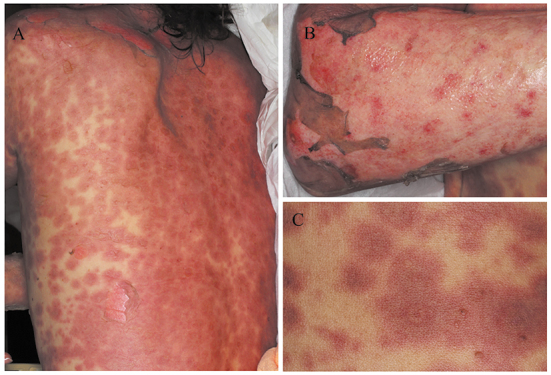
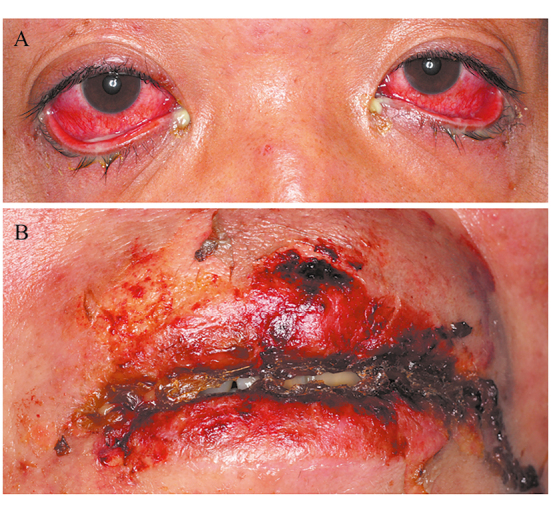
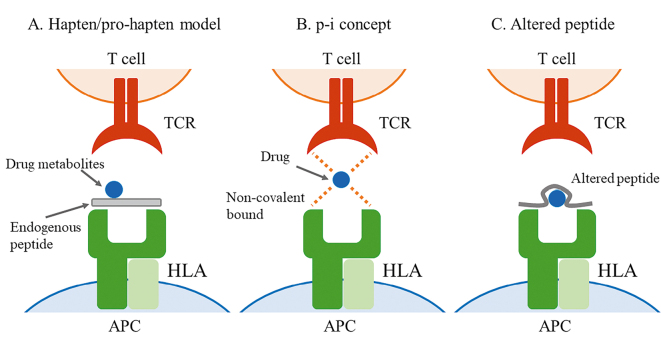
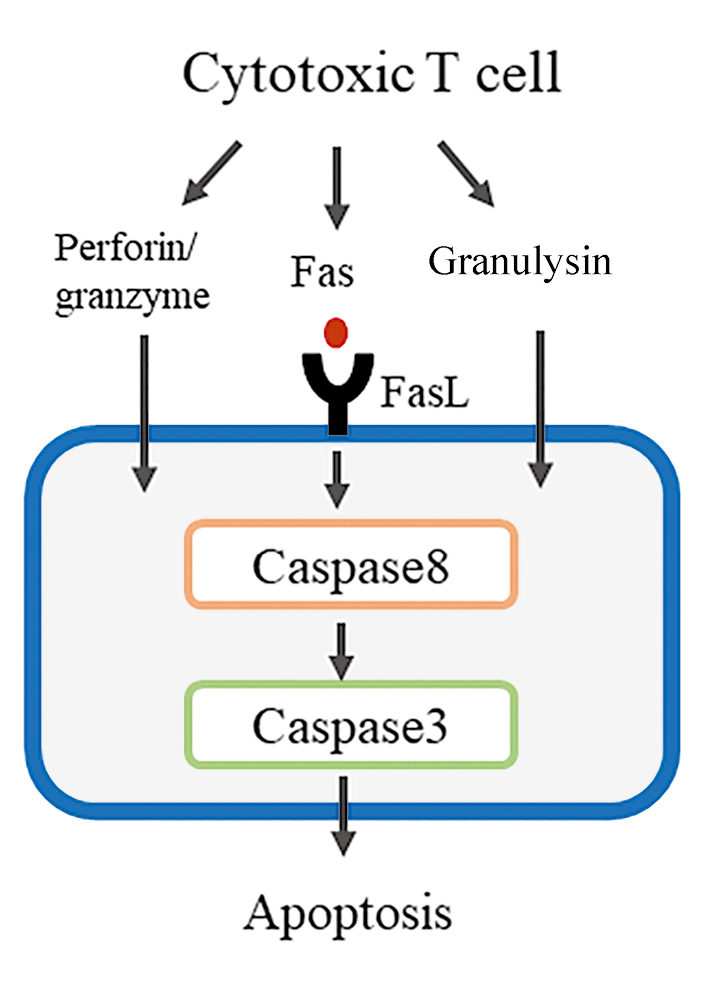
Stevens-Johnson syndrome (SJS) and toxic epidermal necrolysis (TEN) are life-threatening conditions characterized by extensive detachment of the epidermis and mucous membranes. These severe disorders carry a high mortality rate, and their pathogenesis remains largely unclear. Furthermore, optimal therapeutic strategies for SJS/TEN remain a subject of ongoing debate. Early diagnosis of SJS/TEN is challenging, and reliable biomarkers for diagnosis or severity prediction have not been firmly established. Certain drugs, such as carbamazepine and allopurinol, have shown a strong association with specific human leukocyte antigen (HLA) types. Recently, the potential benefits of HLA screening prior to administering these drugs to reduce the incidence of SJS/TEN have been explored. Epidermal cell death in SJS/TEN lesions is caused by extensive apoptosis, primarily through the Fas-Fas ligand (FasL) and perforin/granzyme pathways. Our findings suggest that necroptosis, a form of programmed necrosis, also contributes to epidermal cell death. Annexin A1, released from monocytes, interacts with the formyl peptide receptor 1 to induce necroptosis. Several biomarkers, such as CC chemokine ligand (CCL)-27, interleukin-15, galectin-7, receptor-interacting protein kinases 3 (RIP3), and lipocalin-2, have been identified for diagnostic and prognostic purposes in SJS/TEN. Supportive care is recommended for treating SJS/TEN, but the efficacy of various therapeutic options-including systemic corticosteroids, intravenous immunoglobulin, cyclosporine, and tumor necrosis factor-α antagonists-remains controversial. Recent studies have investigated the potential benefits of tumor necrosis factor-α antagonists. In this review, we discuss recent advances in the understanding and management of SJS/TEN.
史蒂文斯-约翰逊综合征(SJS)和中毒性表皮坏死松解症(TEN)是危及生命的疾病,其特征为广泛的表皮和黏膜脱落。这些严重的疾病具有很高的死亡率,其发病机制在很大程度上仍不清楚。此外,SJS/TEN 的最佳治疗策略仍在不断争论中。SJS/TEN 的早期诊断具有挑战性,并且尚未确定用于诊断或严重程度预测的可靠生物标志物。某些药物,如卡马西平和别嘌呤醇,与特定的人类白细胞抗原(HLA)类型有很强的关联。最近,已经探索了在给予这些药物之前进行 HLA 筛查以降低 SJS/TEN 发生率的潜在益处。SJS/TEN 病变中的表皮细胞死亡是由广泛的细胞凋亡引起的,主要通过 Fas-Fas 配体(FasL)和穿孔素/颗粒酶途径。我们的研究结果表明,程序性坏死形式的坏死也有助于表皮细胞死亡。单核细胞释放的膜联蛋白 A1 通过与甲酰肽受体 1 相互作用诱导坏死。已经确定了几种生物标志物,如 C 趋化因子配体(CCL)-27、白细胞介素 15、半乳凝素-7、受体相互作用蛋白激酶 3(RIP3)和脂钙蛋白-2,用于 SJS/TEN 的诊断和预后目的。建议对 SJS/TEN 进行支持性治疗,但各种治疗选择的疗效-包括全身皮质类固醇、静脉注射免疫球蛋白、环孢素和肿瘤坏死因子-α 拮抗剂-仍存在争议。最近的研究调查了肿瘤坏死因子-α 拮抗剂的潜在益处。在这篇综述中,我们讨论了对 SJS/TEN 的理解和管理的最新进展。