Żełabowski Kacper, Wojtysiak Kacper, Ratka Zuzanna, Biedka Kamil, Chłopaś-Konowałek Agnieszka
Student Society for Psychopharmacology and Forensic Toxicology, Wroclaw Medical University, 4 J. Mikulicza-Radeckiego Street, 50345 Wroclaw, Poland.
Department of Physiology and Pathophysiology, Division of Pathophysiology, Wroclaw Medical University, Chalubinskiego 10, 50368 Wroclaw, Poland.
J Clin Med. 2025 Jun 10;14(12):4103. doi: 10.3390/jcm14124103.
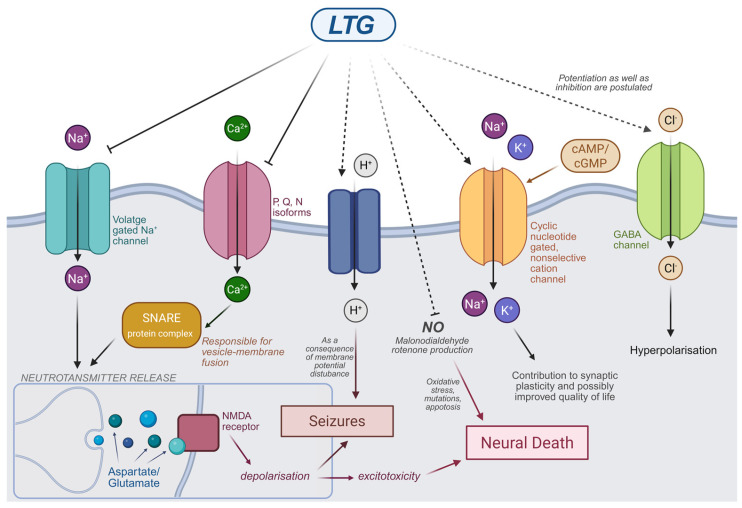
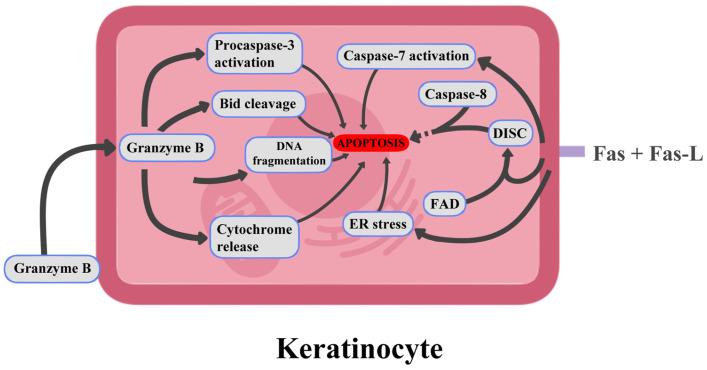
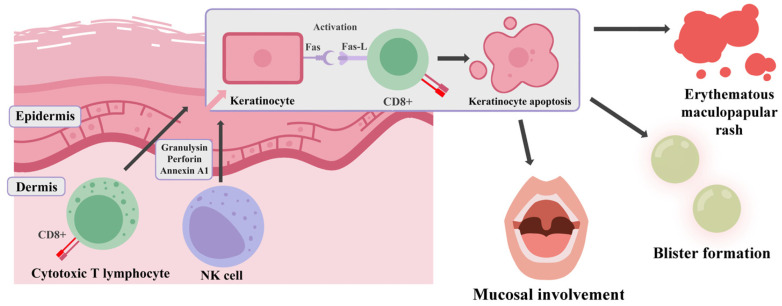
Lamotrigine is the drug of choice for the treatment of depressive episodes in bipolar disorder (BD). Despite its generally favorable tolerability profile, lamotrigine use is associated with a risk of Cutaneous Adverse Drug Reactions (cADRs), including Stevens-Johnson Syndrome (SJS) and Lyell's syndrome, also known as toxic epidermal necrolysis (TEN). Genetic markers HLA and, in particular, HLA-B 15:02 and HLA-A 31:01 are crucial in predicting individuals' susceptibility to developing the symptoms. The symptoms are triggered by type IV hypersensitivity developing because of CTL and NK cell activation, leading to keratinocyte apoptosis, epidermal necrosis and skin detachment. The exact pharmacotherapy that should be widely utilized in treating affected patients has not yet been established. New therapies including JAK inhibitors or cyclosporine show potential in improving outcomes by reducing mortality and enhancing the period of recovery. Key factors in preventing cADRs may include adequate patient observation, gradual titration of the patient's dose, and reduction of risk factors through screening for HLA polymorphisms. When the initial symptoms of cADR are identified, it is imperative to make an immediate decision to discontinue treatment, as this can significantly reduce the risk of progression to SJS/TEN and systemic complications. The purpose of this review is to identify a significant correlation between lamotrigine use in BD and the occurrence of SJS by showing the risk factors, neuropharmacological mechanisms, immune response and correctness of pharmacotherapy.
拉莫三嗪是治疗双相情感障碍(BD)抑郁发作的首选药物。尽管其总体耐受性良好,但使用拉莫三嗪会有发生皮肤药物不良反应(cADR)的风险,包括史蒂文斯-约翰逊综合征(SJS)和莱尔综合征,也称为中毒性表皮坏死松解症(TEN)。基因标记物HLA,尤其是HLA-B 15:02和HLA-A 31:01在预测个体出现这些症状的易感性方面至关重要。这些症状是由IV型超敏反应引发的,该反应因CTL和NK细胞激活而产生,导致角质形成细胞凋亡、表皮坏死和皮肤脱落。目前尚未确定在治疗受影响患者时应广泛使用的确切药物疗法。包括JAK抑制剂或环孢素在内的新疗法在通过降低死亡率和延长恢复时间来改善治疗结果方面显示出潜力。预防cADR的关键因素可能包括对患者进行充分观察、逐步调整患者剂量以及通过筛查HLA多态性来降低风险因素。当识别出cADR的初始症状时,必须立即决定停药,因为这可以显著降低进展为SJS/TEN和全身并发症的风险。本综述的目的是通过展示风险因素、神经药理学机制、免疫反应和药物治疗的正确性,来确定BD患者使用拉莫三嗪与SJS发生之间的显著相关性。