Immune Therapeutic Discovery, Moderna, Inc., 325 Binney Street, Cambridge, MA 02139, USA.
Immune Therapeutic Discovery, Moderna, Inc., 325 Binney Street, Cambridge, MA 02139, USA.
Cell Rep Med. 2024 Sep 17;5(9):101717. doi: 10.1016/j.xcrm.2024.101717. Epub 2024 Sep 6.
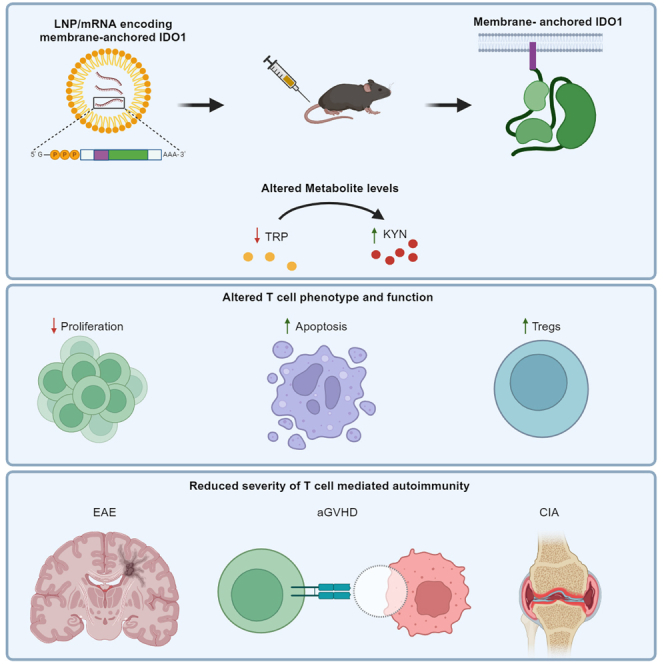
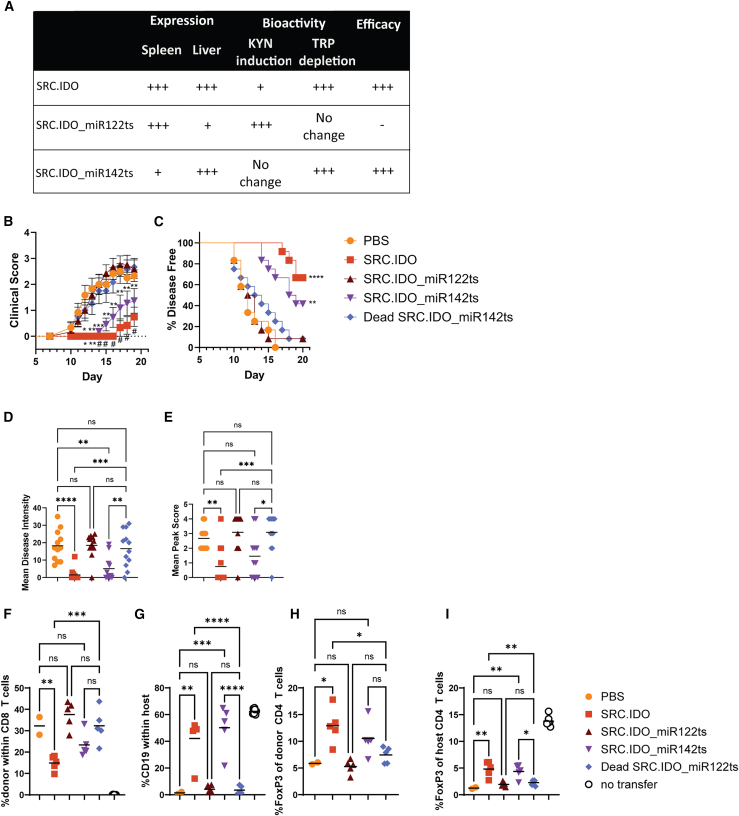
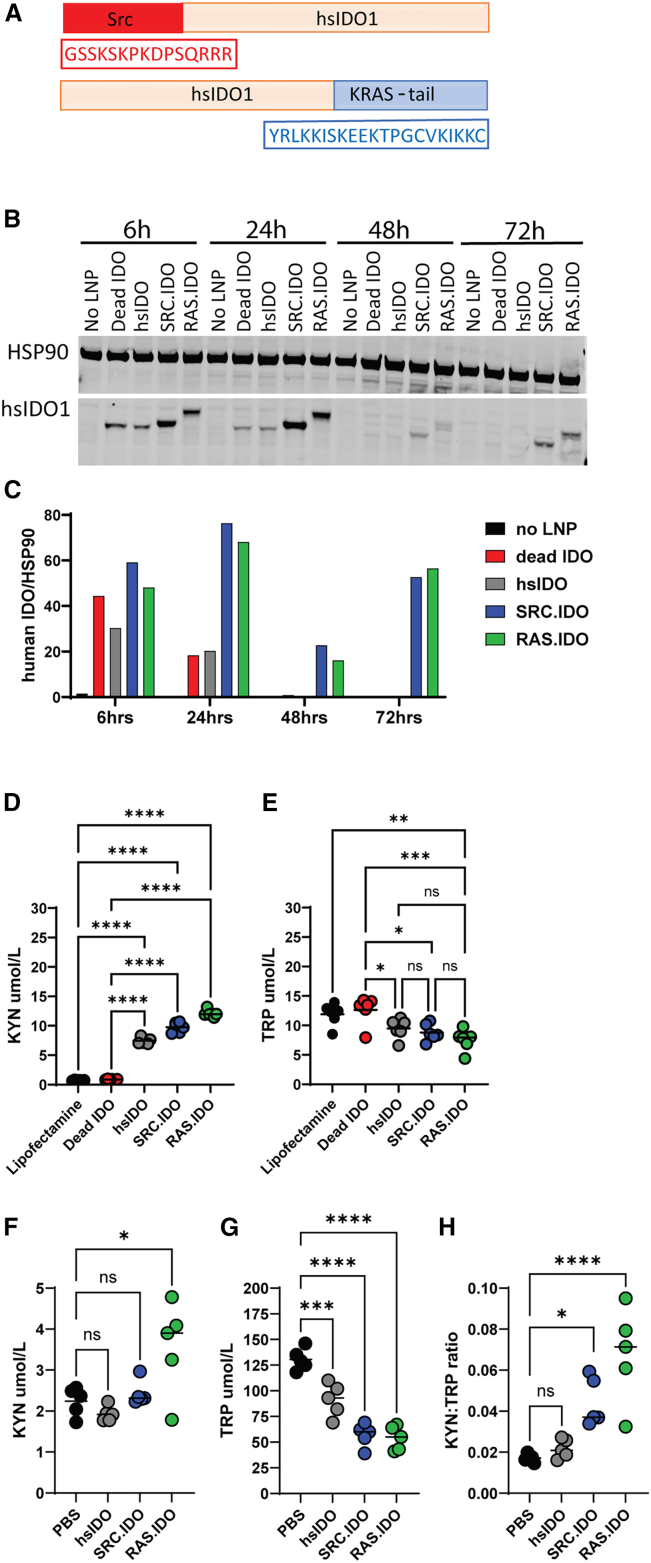
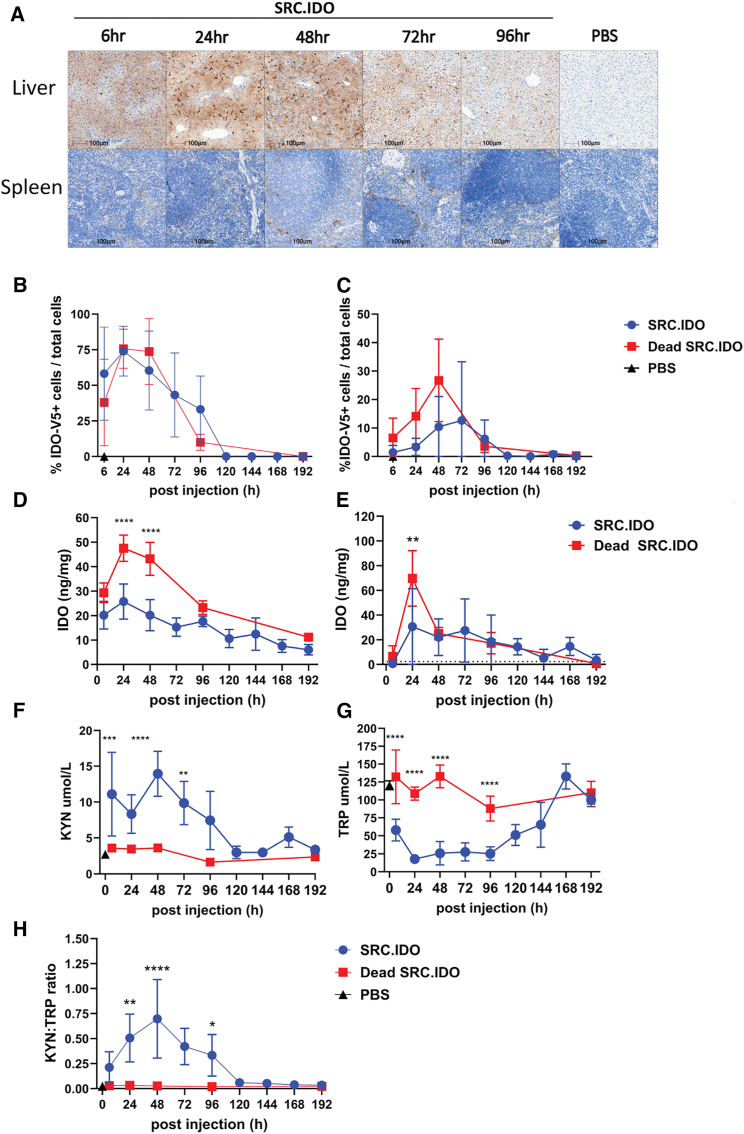
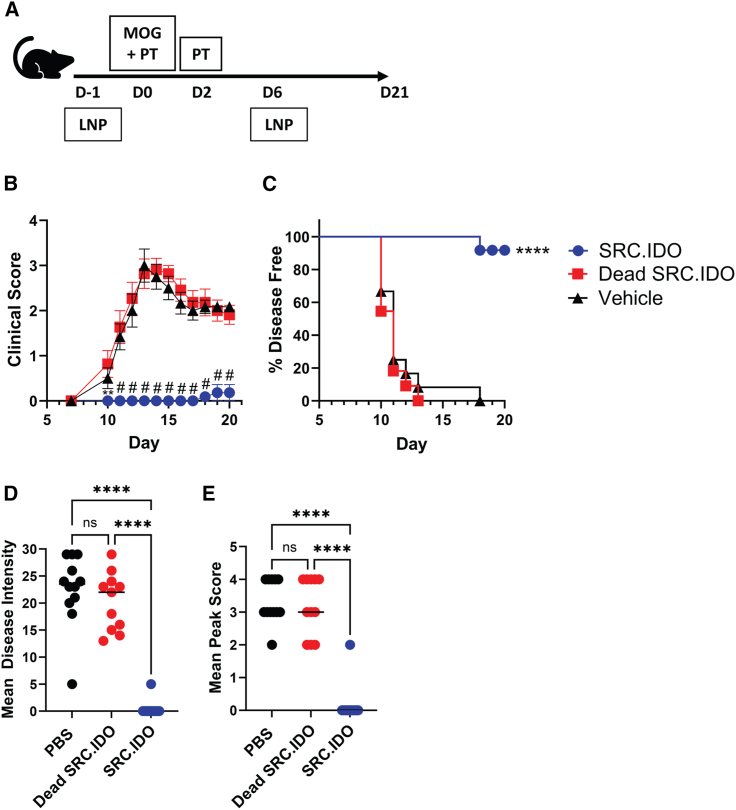
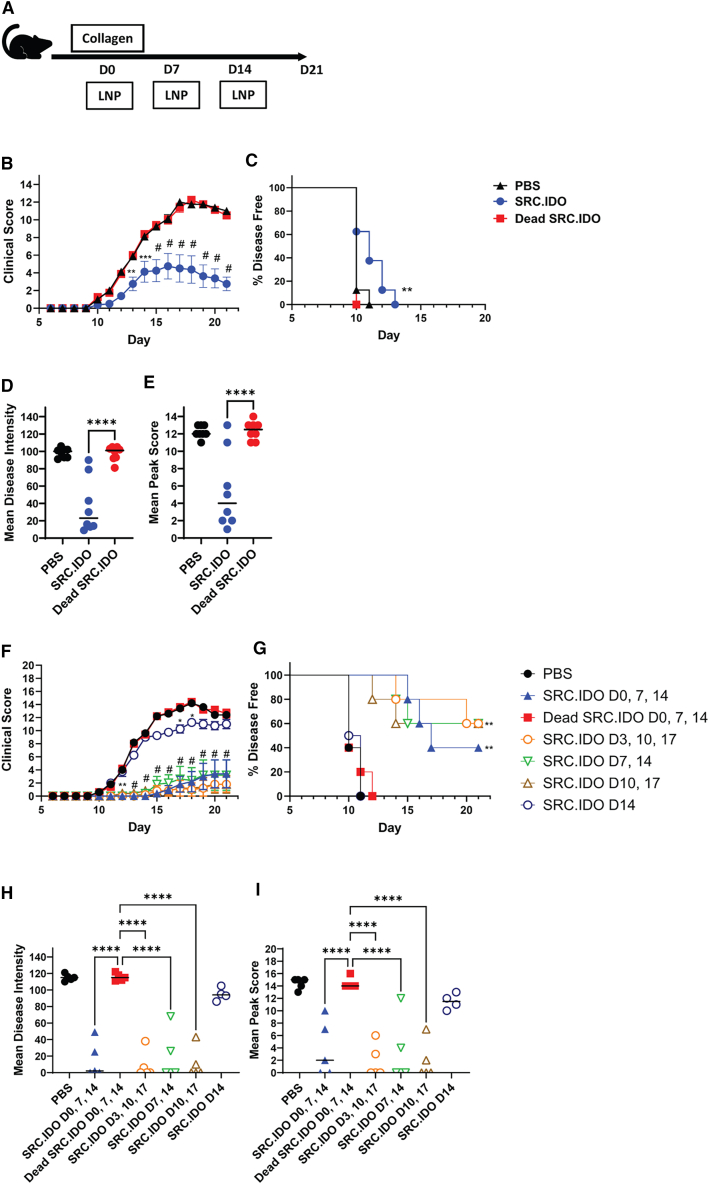
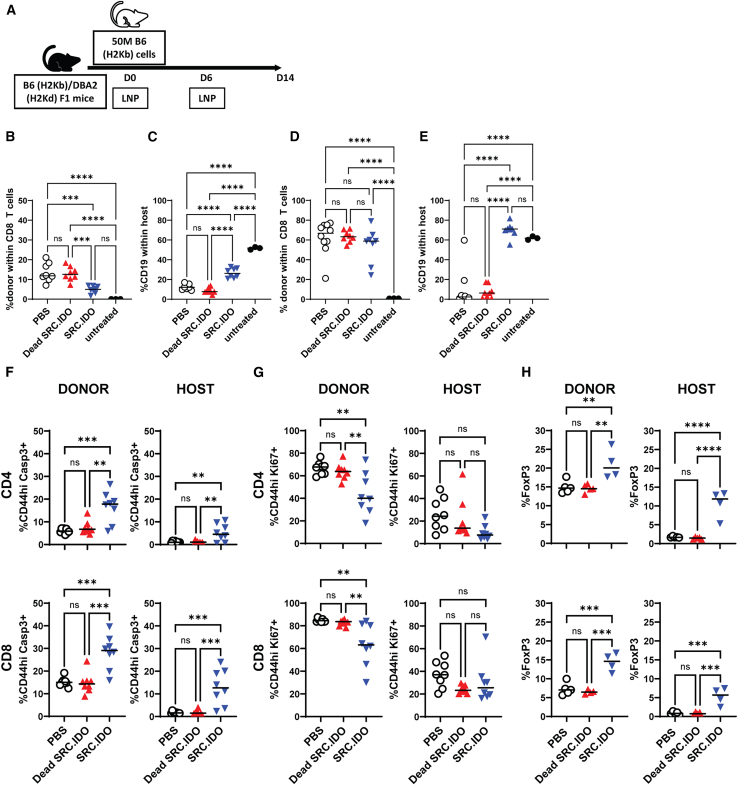
Indoleamine-2,3-dioxygenase (IDO)1 degrades tryptophan, obtained through dietary intake, into immunoregulatory metabolites of the kynurenine pathway. Deficiency or blockade of IDO1 results in the enhancement of autoimmune severity in rodent models and increased susceptibility to developing autoimmunity in humans. Despite this, therapeutic modalities that leverage IDO1 for the treatment of autoimmunity remain limited. Here, we use messenger (m)RNA formulated in lipid nanoparticles (LNPs) to deliver a human IDO1 variant containing the myristoylation site of Src to anchor the protein to the inner face of the plasma membrane. This membrane-anchored IDO1 has increased protein production, leading to increased metabolite changes, and ultimately ameliorates disease in three models of T cell-mediated autoimmunity: experimental autoimmune encephalomyelitis (EAE), rat collagen-induced arthritis (CIA), and acute graft-versus-host disease (aGVHD). The efficacy of IDO1 is correlated with hepatic expression and systemic tryptophan depletion. Thus, the delivery of membrane-anchored IDO1 by mRNA suppresses the immune response in several well-characterized models of autoimmunity.
吲哚胺 2,3-双加氧酶 (IDO)1 可将饮食中摄入的色氨酸降解为犬尿氨酸途径的免疫调节代谢物。IDO1 的缺乏或阻断会导致啮齿动物模型中自身免疫严重程度的增强,并增加人类自身免疫的易感性。尽管如此,利用 IDO1 治疗自身免疫的治疗方法仍然有限。在这里,我们使用信使 (m)RNA 包裹在脂质纳米颗粒 (LNP) 中,将包含Src 豆蔻酰化位点的人 IDO1 变体递送至质膜的内表面,以将蛋白锚定在质膜上。这种膜锚定的 IDO1 可增加蛋白产量,导致代谢物变化增加,最终改善三种 T 细胞介导的自身免疫模型中的疾病:实验性自身免疫性脑脊髓炎 (EAE)、大鼠胶原诱导性关节炎 (CIA) 和急性移植物抗宿主病 (aGVHD)。IDO1 的疗效与肝脏表达和全身色氨酸耗竭相关。因此,mRNA 递送膜锚定的 IDO1 可抑制几种经过充分表征的自身免疫模型中的免疫反应。