Division of Orthodontics, University Clinics of Dental Medicine, Faculty of Medicine, University of Geneva, Geneva, Switzerland.
Discipline of Orthodontics and Paediatric Dentistry, Sydney Dental School, Faculty of Medicine and Health, The University of Sydney, Sydney, Australia.
Prog Orthod. 2024 Sep 9;25(1):36. doi: 10.1186/s40510-024-00534-2.
The anatomic characteristics of the masticatory muscles differ across craniofacial skeletal patterns.
To identify differences in the anatomic characteristics of masticatory muscles across different sagittal and vertical craniofacial skeletal patterns.
Studies measuring the thickness, width, cross-sectional area (CSA), volume and orientation of masticatory muscles in healthy patients of different sagittal (Class I, Class II, and Class III) and/or vertical (normodivergent, hypodivergent, and hyperdivergent) patterns.
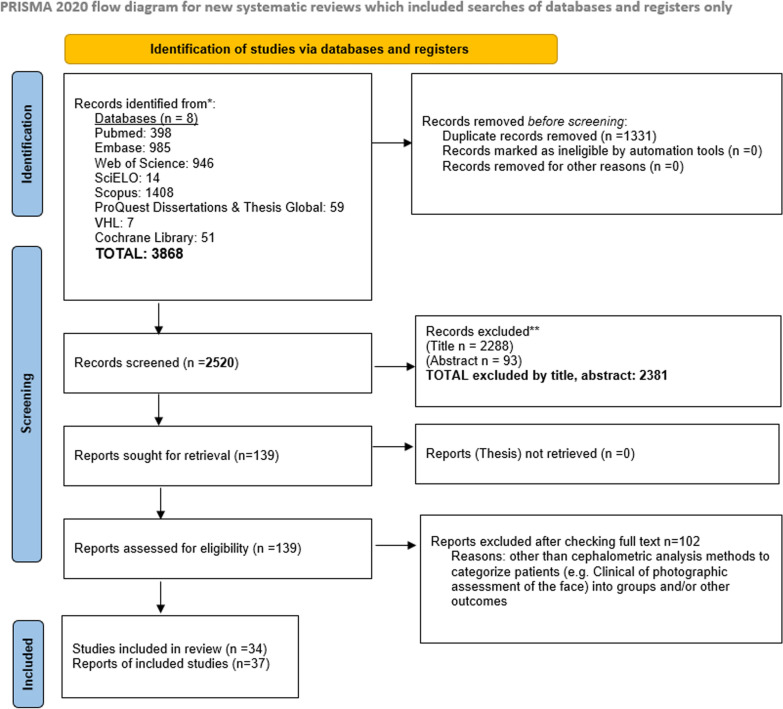
Unrestricted literature searches in 8 electronic databases/registers until December 2023.
Study selection, data extraction, and risk of bias assessment with a customised tool were performed independently in duplicate. Random-effects meta-analysis and assessment of the certainty of clinical recommendations with the GRADE approach were conducted.
34 studies (37 publications) were selected with a total of 2047 participants and data from 16 studies were pulled in the meta-analysis. Masseter muscle thickness in relaxation was significantly greater by 1.14 mm (95% CI 0.74-1.53 mm) in hypodivergent compared to normodivergent patients while it was significantly decreased in hyperdivergent patients by - 1.14 mm (95% CI - 1.56 to - 0.73 mm) and - 2.28 mm (95% CI - 2.71 to - 1.85 mm) compared to normodivergent and hypodivergent patients respectively. Similar significant differences were seen between these groups in masseter muscle thickness during contraction as well as masseter muscle CSA and volume. Meta-analyses could not be performed for sagittal categorizations due to insufficient number of studies.
Considerable differences in masseter muscle thickness, CSA and volume were found across vertical skeletal configurations being significantly reduced in hyperdivergent patients; however, results should be interpreted with caution due to the high risk of bias of the included studies. These variations in the anatomic characteristics of masticatory muscles among different craniofacial patterns could be part of the orthodontic diagnosis and treatment planning process.
PROSPERO CRD42022371187 .
咀嚼肌的解剖学特征因颅面骨骼模式的不同而有所差异。
确定不同矢状面和垂直面颅面骨骼模式下咀嚼肌的解剖学特征差异。
测量不同矢状面(I 类、II 类和 III 类)和/或垂直面(正常生长型、低生长型和高生长型)患者咀嚼肌厚度、宽度、横截面积(CSA)、体积和方向的健康患者的研究。
2023 年 12 月前在 8 个电子数据库/登记处进行的无限制文献检索。
独立地对研究选择、数据提取和风险偏倚评估使用定制工具进行了重复操作。采用 GRADE 方法进行随机效应荟萃分析和临床推荐的确定性评估。
共选择了 34 项研究(37 篇文献),共有 2047 名参与者,16 项研究的数据纳入荟萃分析。与正常生长型患者相比,低生长型患者的咀嚼肌放松时的厚度显著增加 1.14mm(95%CI 0.74-1.53mm),而高生长型患者的咀嚼肌厚度显著减少-1.14mm(95%CI-1.56 至-0.73mm)和-2.28mm(95%CI-2.71 至-1.85mm)与正常生长型和低生长型患者相比。在收缩期间,以及咀嚼肌 CSA 和体积方面,这些组之间也存在相似的显著差异。由于研究数量不足,无法对矢状面分类进行荟萃分析。
在垂直骨骼结构中,咀嚼肌厚度、CSA 和体积存在相当大的差异,高生长型患者的咀嚼肌明显减少;然而,由于纳入研究的高度偏倚风险,结果应谨慎解释。不同颅面模式下咀嚼肌的解剖学特征差异可能是正畸诊断和治疗计划过程的一部分。
PROSPERO CRD42022371187 。